
ScanTitan maps your entire attack surface, every internet-facing asset you own, the forgotten subdomain, the staging server nobody decommissioned, the public cloud bucket, then scores each exposure so your team fixes the two that matter this week. Built for lean teams, not a Fortune 500 SOC.
150 billion web app and API attacks, 2023 to 2024 (Akamai)
39% of cloud environments carry a significant exploitable risk (Wiz Research)
Shadow IT is the #1 breach entry point
PCI DSS 4.0 · NIST CSF 2.0 · SOC 2 · ISO 27001
Gartner CTEM: continuous, not quarterly
150 billion web app and API attacks, 2023 to 2024 (Akamai)
39% of cloud environments carry a significant exploitable risk (Wiz Research)
Shadow IT is the #1 breach entry point
PCI DSS 4.0 · NIST CSF 2.0 · SOC 2 · ISO 27001
Gartner CTEM: continuous, not quarterly
Attack surface management is the continuous process of discovering every internet-facing asset your organization owns, then monitoring each one for exposure before an attacker reaches it. It covers the assets you know about, the ones you forgot, and the ones a developer created without telling anyone.
Attackers do not start with your flagship application. They start with your forgotten one: the subdomain a contractor spun up in 2023, the staging server nobody decommissioned, the storage bucket a developer opened for a five-minute test. Traditional scanners cannot help here, because they test a list you hand them, and the assets that breach you are missing from that list.
Whether you are an IT manager at a 30-person company, a DevSecOps engineer connecting cloud accounts, or a CISO tracking exposure for compliance, ScanTitan gives you attacker-perspective discovery without the enterprise-grade complexity.
Enter one domain and ScanTitan enumerates subdomains, IP ranges, cloud services, login pages, APIs, and exposed services using certificate transparency logs, passive DNS, and WHOIS data. The first pass is passive, so it never touches your production systems.
ScanTitan fingerprints each discovered asset: its software, open ports, running services, and certificate health, building a live picture of what an outsider can reach right now, not what your spreadsheet says you own.
Every discovered asset is compared against the inventory you can actually name. The delta, the unmanaged assets, gets flagged as shadow IT with a first-seen date and an owner so nothing stays invisible.
ScanTitan detects dangling DNS records pointing at deprovisioned cloud services, the exact condition an attacker uses to claim a live host on your own domain, before that record becomes a phishing page.
Link AWS, Azure, and Google Cloud so ScanTitan inventories cloud assets from the inside and cross-checks them against what is reachable from the outside, catching the public bucket a developer opened and forgot.
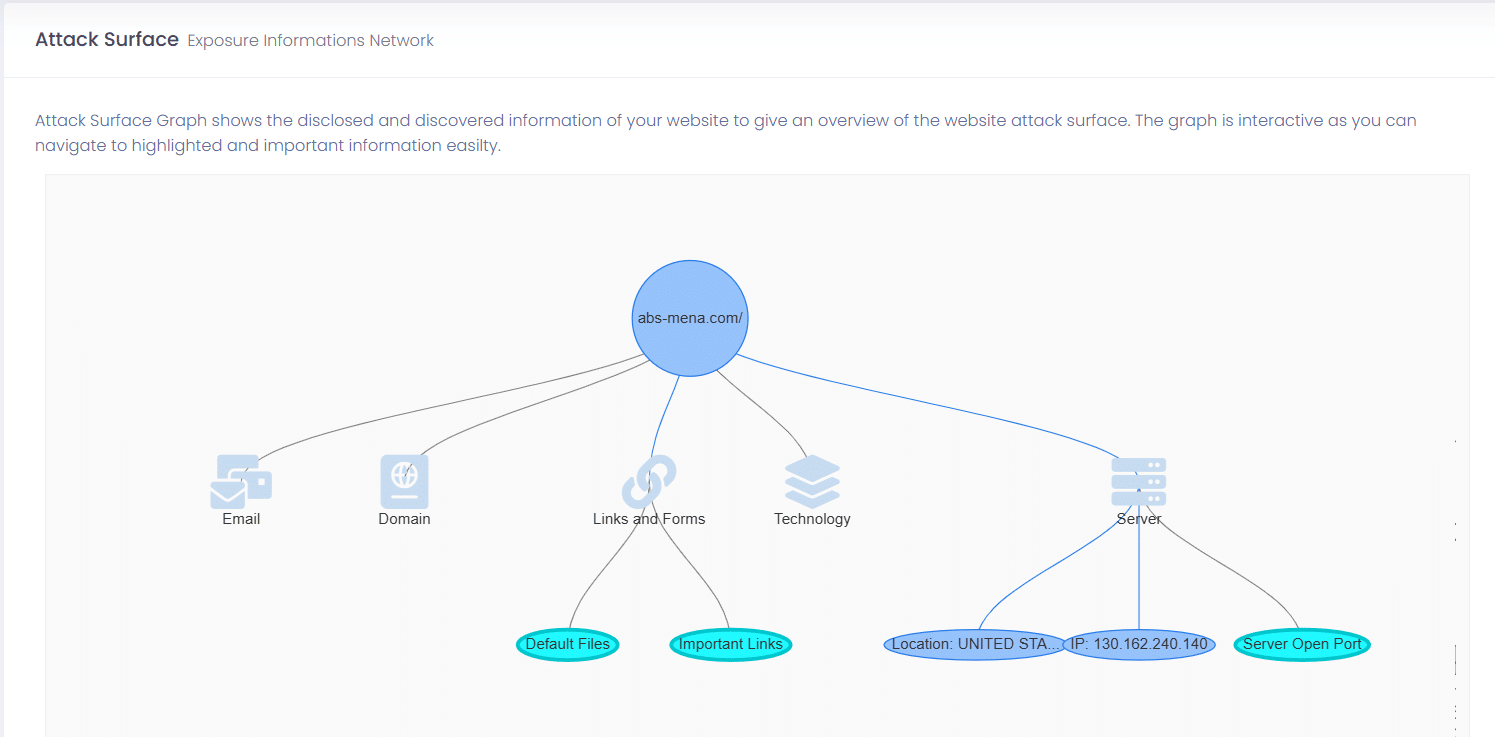
Real result (placeholder), A 40-person SaaS company connected ScanTitan and, on the first scan, surfaced 61 live subdomains against the 22 its IT lead could name. Two were forgotten staging environments running a database admin panel open to the internet. Both were closed inside 48 hours.
A CVE existing on a host is theoretical. An attacker being able to reach that host and exploit it is validated. ScanTitan confirms reachable exposure before it reaches your queue, so your team sees confirmed risk, not a wall of unverified findings.
Findings are scored on reachability, exploitability, and business impact, not raw severity alone. ScanTitan uses EPSS (Exploit Prediction Scoring System) to weight findings by the probability a flaw gets exploited in the wild, and it surfaces toxic combinations: individually low-severity issues that become critical when they land on the same asset.
The difference, An exposed port, a known exploit, and a path to sensitive data are each low priority alone. On the same asset, they are the first thing to fix. ScanTitan ranks that combination to the top so a lean team fixes the genuine priority, not the loudest one.
Your attack surface changes every time an engineer provisions a resource, so a one-time scan is outdated within hours. ScanTitan re-scans on a schedule and reacts to change, kicking off a new assessment when a fresh subdomain appears or a new cloud service spins up.
When a new critical CVE drops, ScanTitan checks your entire discovered surface against it automatically, so you learn you are exposed before the exploit is weaponized rather than after. This is the operational core of a Gartner CTEM program.
Why it matters, A forgotten asset that goes live on a Tuesday gets assessed on Tuesday, not at the next audit. Continuous coverage is what turns attack surface management from a compliance checkbox into an actual reduction in the window an attacker has to work with.
Most tools hand a lean team a raw dump of every finding. ScanTitan hands them a ranked queue, scored on reachability, exploitability, and business impact, so one person can triage in an hour instead of a day.
Every exposure is validated as reachable before it reaches your dashboard, and each one explains what it is, why it is exposed, and how to close it. Attacker’s-eye, not probability-based.
Every finding is weighted by whether an outsider can actually reach it, so an internet-facing panel outranks a theoretical issue on an internal host.
Findings are weighted by the probability a flaw gets exploited in the wild, not raw CVSS alone, so the queue reflects real-world attacker behavior.
Individually low-severity issues that become critical on the same asset, an open port plus a known exploit plus a path to data, get surfaced together.
Every shadow asset ships with an owner and a first-seen date, so remediation becomes a targeted fix instead of a ticket nobody claims.
Each capability maps to a dedicated deep-dive page. Together they cover the full external footprint: the assets you know about, the ones you forgot, and the ones nobody logged.
Enumerate subdomains, hosts, and IP ranges from a single seed using certificate transparency logs, passive DNS, and WHOIS. Flags subdomain takeover risk before it becomes a phishing host.
Surface the assets IT does not know it owns: the unmanaged host, the trial SaaS account, the API a contractor left running. The delta against your known inventory, with an owner attached.
Scan discovered hosts for open ports and fingerprint the service and version behind each one, so an exposed database on 3306 or admin panel on 8080 links straight to known CVEs.
Track every certificate across your assets. Alert before expiry, not after the outage, and flag weak ciphers, self-signed certs on production, and mismatched hostnames.
Catch cloud resources with provider-assigned addresses that sit outside your DNS: public S3 buckets, Azure Blob containers, serverless endpoints, and orphaned resources across AWS, Azure, and GCP.
Re-scan on a schedule and react to change. A new subdomain or cloud service triggers a fresh assessment, and every new critical CVE is checked against your full surface automatically.
Score each exposure on reachability, exploitability, and business impact using EPSS, and surface toxic combinations so the top of your queue is genuinely the thing to fix first.
Enumerate subdomains, hosts, and IP ranges from a single seed using certificate transparency logs, passive DNS, and WHOIS. Flags subdomain takeover risk before it becomes a phishing host.
Surface the assets IT does not know it owns: the unmanaged host, the trial SaaS account, the API a contractor left running. The delta against your known inventory, with an owner attached.
Re-scan on a schedule and react to change. A new subdomain or cloud service triggers a fresh assessment, and every new critical CVE is checked against your full surface automatically.
Scan discovered hosts for open ports and fingerprint the service and version behind each one, so an exposed database on 3306 or admin panel on 8080 links straight to known CVEs.
Track every certificate across your assets. Alert before expiry, not after the outage, and flag weak ciphers, self-signed certs on production, and mismatched hostnames.
Catch cloud resources with provider-assigned addresses that sit outside your DNS: public S3 buckets, Azure Blob containers, serverless endpoints, and orphaned resources across AWS, Azure, and GCP.
Score each exposure on reachability, exploitability, and business impact using EPSS, and surface toxic combinations so the top of your queue is genuinely the thing to fix first.
| Category | What it does | Perspective | Starts from | Best for |
|---|---|---|---|---|
| EASM | Discovers unknown internet-facing assets, then flags exposure | Outside-in | A seed domain, no list needed | Finding shadow and forgotten assets |
| Vulnerability scanning | Tests known assets against CVEs and OWASP | Inside-out | A list you provide | Deep testing of assets you track |
| CAASM | Aggregates internal tool data into one inventory | Inside-out | API integrations | Building a unified asset inventory |
| CSPM | Detects cloud misconfigurations | Inside-out | Cloud account access | Cloud config compliance |
Every report is structured for two audiences at once: the engineer who fixes the exposure and the executive who needs to understand the risk. Exportable in PDF, JSON, and HTML.
Every discovered asset with type, first-seen date, owner, and known vs shadow classification.
Findings ranked by reachability, EPSS, and business impact, with toxic combinations flagged.
The unmanaged assets not in your inventory, the ones that most often start a breach.
Expiring certs, weak ciphers, and exposed services with the exact version behind each open port.
Public buckets, serverless endpoints, and orphaned cloud resources across AWS, Azure, and GCP.
Mapped to PCI DSS 4.0, NIST CSF 2.0, SOC 2, and ISO 27001 asset controls, formatted for auditors.
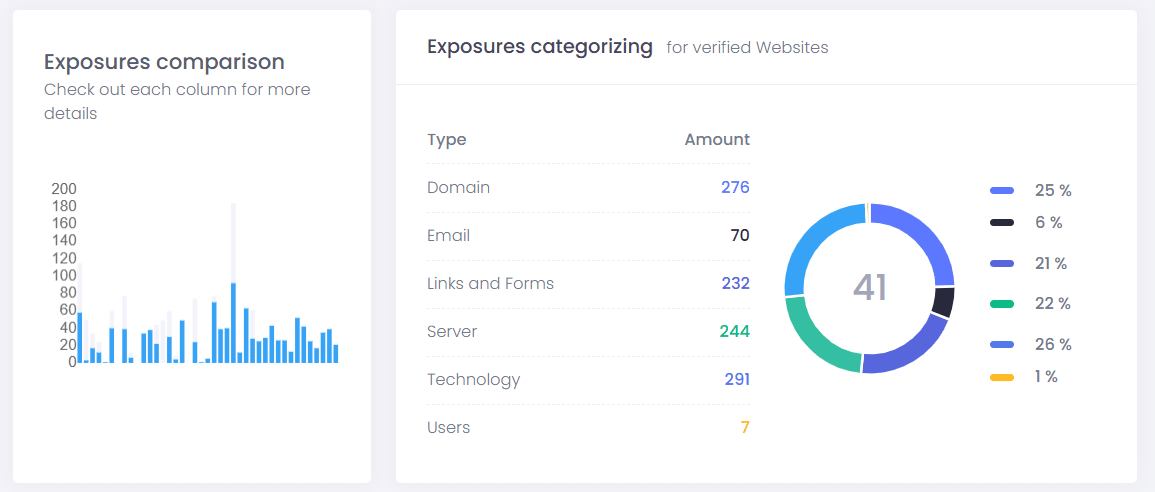
Trigger discovery from the API, connect your cloud accounts once, and let ScanTitan kick off a scan whenever a new service is spun up. Findings flow into Jira and Slack automatically.
# Map the attack surface from a seed domain curl -X POST https://api.scantitan.com/v1/surface \ -H "Authorization: Bearer YOUR_API_KEY" \ -H "Content-Type: application/json" \ -d '{ "seed": "acme.com", "discovery": "passive+active", "notify": ["slack","jira"] }' # Response { "surface_id": "as_7hk3xz", "status": "discovering", "assets_found": 61 }- trigger: new_cloud_asset source: aws,azure,gcp action: scantitan/assess@v2 with: alert_on: public_exposure,open_port min_epss: 0.5Asset + bucket discovery
Blob + VNet exposure
Storage + GKE assets
DNS + subdomain feed
Exposure alerts
Auto-create tickets
Compliance evidence
SIEM export
Any tool via JSON
Real outcomes from real scans. Numbers are placeholders, replace with verified client data before publishing.
June 2026
The prioritization engine now weights every exposure by its Exploit Prediction Scoring System probability alongside reachability and business impact, so the top of the queue reflects real-world attacker behavior.
April 2026
ScanTitan now correlates individually low-severity issues, an open port plus a known exploit plus a path to sensitive data, and surfaces them together as a single critical finding.
February 2026
Google Cloud joins AWS and Azure. Connect an account and ScanTitan inventories storage, GKE, and serverless assets from the inside, cross-checked against external reachability.
December 2025
Expanded dangling-DNS fingerprints across 40+ cloud and SaaS providers, catching takeover-prone records before an attacker can claim the host.
| ScanTitan | Bitsight | CyCognito | Intruder | |
|---|---|---|---|---|
| Built for | SMB / mid-market | Enterprise | Enterprise | SMB / growing |
| Attacker-perspective discovery | ✓ | ✓ | ✓ | ✓ |
| Continuous monitoring | ✓ | ✓ | ✓ | ✓ |
| Validated (not theoretical) exposure | ✓ | Partial | ✓ | Partial |
| Feeds directly into vuln testing | ✓ one platform | ✗ | ✗ | ✓ |
| Plain-language findings for lean teams | ✓ | ✗ | ✗ | Partial |
| Honest fit guidance | ✓ | ✗ | ✗ | ✗ |
| Entry point | Free scan | Enterprise quote | Enterprise quote | Paid tiers |
4.8
G2 · placeholder
4.9
Capterra · placeholder
"The first scan found 39 assets we did not know we owned. Two were staging servers with database panels open to the internet. We closed them the same day. That alone paid for the year."
Attack surface management (ASM) is the continuous process of finding every internet-facing asset your organization owns, then watching each one for exposure before an attacker gets there first. Think of it as an always-current map of every door and window an outsider could try, including the ones you forgot you built. Unlike a traditional vulnerability scan, which tests a list of assets you already know about, ASM discovers the unknown and shadow assets, the forgotten subdomain, the public cloud bucket, the leftover staging server, that never made it onto any inventory and are usually where a breach actually starts.
Attack surface management (ASM) is the broad discipline covering your full attack surface, internal and external. External attack surface management (EASM) is the subset focused on internet-facing assets, the ones any outsider can reach without first getting inside your network. Most teams start with EASM because the external surface is where opportunistic attackers begin. ScanTitan leads with EASM, the attacker's-eye view of what is exposed, and connects it to internal cloud context so you also see what a discovered asset can reach once compromised.
A vulnerability scanner tests a list of assets you hand it and reports the flaws it finds. Attack surface management builds that list for you first, discovering assets the scanner would never know to check. The two are complementary: discovery finds the asset, testing finds the flaw. The gap that breaches most companies is the asset that was never on the scanner's list in the first place. ScanTitan runs both as one loop, so a newly discovered asset is tested automatically rather than waiting for someone to add it manually.
Continuously. Your attack surface changes every time an engineer provisions a resource, connects a SaaS tool, or registers a subdomain, so any fixed schedule leaves a window where new exposure sits undiscovered. A quarterly or even monthly scan is a snapshot that is outdated within hours. ScanTitan monitors continuously and re-checks your entire surface whenever a new critical CVE is disclosed. This continuous model is what Gartner calls CTEM.
Domains and subdomains, IP addresses and ranges, open ports and the services behind them, SSL/TLS certificates, cloud assets like S3 buckets and serverless endpoints, exposed and undocumented APIs, login and admin panels, and forgotten dev, staging, and legacy environments, plus third-party assets tied to your domain. ScanTitan groups these into seven capabilities so you see not just what exists but which of it is actually exposed and worth fixing first.
Shadow IT is any asset your IT team does not know it owns: an unmanaged host, a trial SaaS account wired to your domain, an API a contractor left running, a cloud bucket a developer opened and forgot. It matters because you cannot patch, monitor, or decommission an asset you have never logged, which makes shadow IT the most common starting point for a breach. ASM surfaces it by comparing everything it discovers against the inventory you can actually name and flagging the difference as unmanaged.
Yes, and arguably more so than for an enterprise, because a small business rarely has a dedicated team maintaining an asset inventory by hand. The forgotten subdomain and the public cloud bucket are just as exploitable at a 30-person company, but the small company usually has no idea they exist. The catch is that most ASM tools are priced and built for enterprise security operations centers. ScanTitan is built for lean teams: continuous discovery that maintains itself, a ranked queue instead of an alert flood, and plain-language findings an IT generalist can act on.
The first pass is passive. ScanTitan enumerates assets using certificate transparency logs, passive DNS, and WHOIS data, so it never sends traffic to your production systems during initial discovery. That means you can safely map a domain, a client, or an acquisition target without permission friction. Active fingerprinting and port checks are scheduled against off-peak windows and use non-intrusive probes, so assessment confirms exposure without degrading a live service.
OSCP · CISSP · 12 years in web application security · Author profile →