
100,000+ CVEs matched · CVSS + EPSS scoring
65+ new CVEs disclosed every day
Log4Shell · BlueKeep · EternalBlue · CitrixBleed detected
100,000+ CVEs matched · CVSS + EPSS scoring
65+ new CVEs disclosed every day
Log4Shell · BlueKeep · EternalBlue · CitrixBleed detected
A network vulnerability scanner tests every host on your network, internal and external, for known CVEs, misconfigurations, weak credentials, and exposed services before an attacker reaches them. It discovers live systems across your IP ranges, identifies the service and version behind each open port, and matches those versions against a CVE database.
Raw scanners bury real issues under false positives. ScanTitan confirms exploitable findings with the request and response evidence that proves them, then ranks them by CVSS and EPSS so a lean team fixes the exploitable few first.
Whether you run on-premise servers, cloud instances, or a hybrid network, ScanTitan reaches the routers, switches, and firewalls that agent-only scanners cannot, with no software to install for external scanning.
ScanTitan sweeps the IP ranges you define with host discovery and ping sweeps, separating active systems from dead space before any deeper testing begins.
Each live host is scanned for open ports, and ScanTitan fingerprints the exact service and version behind them, from SSH and RDP to SMB, DNS, SMTP, and VNC.
Every detected service version is cross-referenced against a CVE database using multiple detection engines, so an outdated service becomes a named CVE with a CVSS score.
Provide credentials and ScanTitan logs into hosts for deeper checks: missing patches, insecure configuration, and benchmarks against CIS and NIST baselines.
Each finding ships with the request and response that confirmed it, tagging genuinely exploitable issues so your queue is signal, not false-positive noise.
Findings are ranked by CVSS, EPSS, and exploit availability, each with a plain-language fix and a one-click re-scan that verifies the issue is closed.
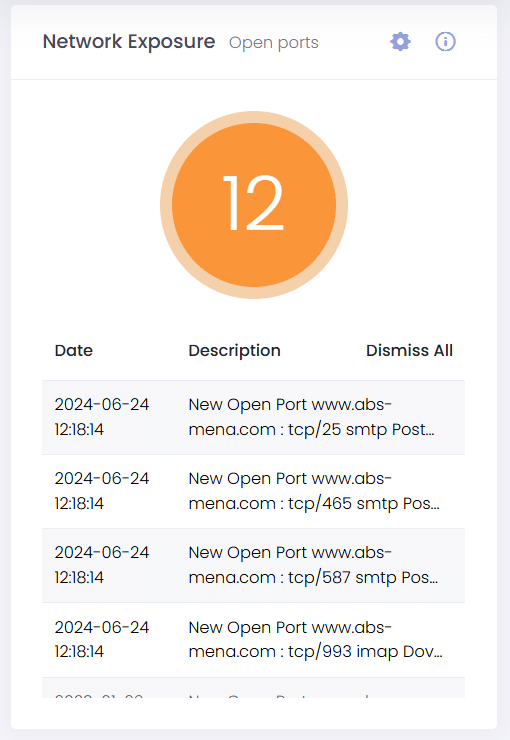
A 15-location retailer scanned its full internal range and found an unpatched SMB service exposed to EternalBlue on a forgotten back-office server, plus three printers with default credentials on the payment VLAN. All four were closed before the next PCI DSS assessment.
Most breaches begin at the perimeter but do their damage laterally inside. Scanning only one side leaves half the attack path unwatched, so ScanTitan runs both from one platform.
External scan assesses every internet-facing IP for exposed services, missing patches, and weak encryption, the view a remote attacker has. PCI DSS Requirement 11.3 mandates this quarterly. Internal scan reaches hosts behind the firewall through a lightweight connector, testing servers, workstations, and, unlike agent-only scanners, the routers, switches, and firewalls where one default credential opens a whole segment.
The Intruder gap, Agent-only scanners install software on each device and cannot scan network hardware at all. ScanTitan tests the devices themselves, so a switch running admin/admin does not stay invisible.
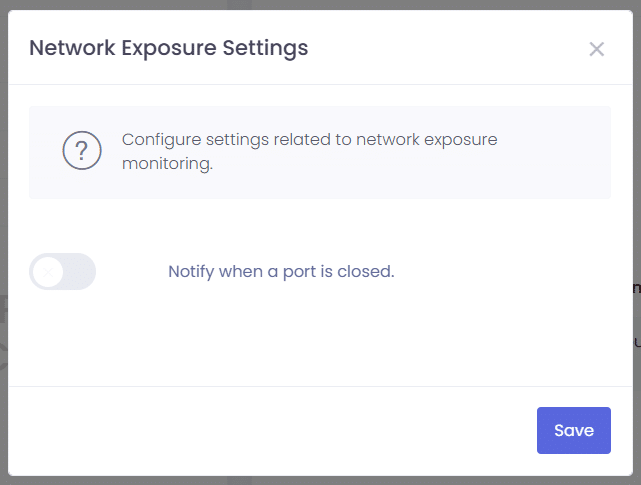
A network scan can return thousands of findings, and you will never fix them all. ScanTitan scores each on more than raw severity, combining CVSS with EPSS, the probability a flaw is exploited in the wild, plus exploit availability and host reachability.
A CVSS 7.0 on an internet-facing service with a live exploit outranks a CVSS 9.0 on an unreachable internal host. Each finding carries a plain-language fix, and a one-click re-scan verifies closure and attaches audit-ready evidence.
Ranked, not dumped, The top of your queue is genuinely the thing to fix first, so a two-person team gets the risk reduction of a much larger one.
Raw network scanners are famous for burying real issues under false positives, and a lean team cannot triage a thousand maybes a week. ScanTitan validates findings before they reach your dashboard.
Where competitors quote a low false-positive rate as a statistic, ScanTitan shows the request and response evidence for each finding, so you or your auditor can reproduce it. Proof-based, not probability-based.
Genuinely exploitable issues are marked confirmed after ScanTitan interprets the request sent and the response received.
The exact traffic that triggered the finding, reproducible by your team or auditor. No black-box guesses.
An internet-facing service with a live exploit outranks a theoretical bug on a host nobody can reach.
Version-based matching plus active service checks run in parallel for broad coverage across vendors and the long tail.
From the CVE on a public host to the default password on an internal switch. Each check maps to how networks actually get breached.
Every fingerprinted version matched to 100,000+ CVEs, including Log4Shell, BlueKeep, EternalBlue, and CitrixBleed across Microsoft, Cisco, Citrix, and Atlassian.
Exposed databases, open management ports, unnecessary services, directory listing, and misconfigured firewalls that quietly widen your attack surface.
Tests discovered services for default and weak credentials, so the switch on admin/admin or the database with a blank password surfaces before an intruder finds it.
Scans routers, switches, and firewalls that agent-only scanners cannot reach, where a single default credential can open an entire network segment.
Expiring or misconfigured certificates, weak cipher suites, and deprecated protocols like SSLv3 and early TLS that break both security and compliance.
Flags services running unsupported software versions, a latent exposure even before a CVE is published, because unmaintained software is where the next one lands.
Extends the same scanning to cloud instances and containerized workloads across AWS, Azure, and GCP, so hybrid infrastructure is covered in one view.
Credentialed scans log into hosts for missing-patch detection, insecure configuration, and CIS and NIST benchmark checks an outside view cannot see.
Every finding scored by severity, real-world exploit probability, and reachability, so the top of your queue is genuinely the thing to fix first.
Every fingerprinted version matched to 100,000+ CVEs, including Log4Shell, BlueKeep, EternalBlue, and CitrixBleed across Microsoft, Cisco, Citrix, and Atlassian.
Flags services running unsupported software versions, a latent exposure even before a CVE is published, because unmaintained software is where the next one lands.
Every finding scored by severity, real-world exploit probability, and reachability, so the top of your queue is genuinely the thing to fix first.
Exposed databases, open management ports, unnecessary services, directory listing, and misconfigured firewalls that quietly widen your attack surface.
Expiring or misconfigured certificates, weak cipher suites, and deprecated protocols like SSLv3 and early TLS that break both security and compliance.
Extends the same scanning to cloud instances and containerized workloads across AWS, Azure, and GCP, so hybrid infrastructure is covered in one view.
Tests discovered services for default and weak credentials, so the switch on admin/admin or the database with a blank password surfaces before an intruder finds it.
Scans routers, switches, and firewalls that agent-only scanners cannot reach, where a single default credential can open an entire network segment.
Credentialed scans log into hosts for missing-patch detection, insecure configuration, and CIS and NIST benchmark checks an outside view cannot see.
| Vulnerability | CVE | Affected service | Severity |
|---|---|---|---|
| Log4Shell | CVE-2021-44228 | Apache Log4j (Java services) | CVSS 10.0 |
| BlueKeep | CVE-2019-0708 | Remote Desktop (RDP) | CVSS 9.8 |
| EternalBlue | MS17-010 | Windows SMB | CVSS 9.3 |
| CitrixBleed | CVE-2023-4966 | Citrix NetScaler / ADC | CVSS 7.5 |
| ProxyShell | CVE-2021-34473 | Microsoft Exchange | CVSS 9.8 |
Every live host, open port, and identified service with its version across the scanned ranges.
CVE ID, CVSS score, EPSS probability, and confirmed-exploitable status.
Request and response for each confirmed finding, reproducible by your team or auditor.
Findings ordered by real-world risk so remediation starts where it matters most.
A specific fix per finding, followed by a one-click re-scan that verifies closure.
Mapped to PCI DSS 11.3, ISO 27001, SOC 2, and HIPAA, formatted for auditors.
OpenVAS is free but demands setup and maintenance most SMBs cannot staff. Nessus is deep but starts in the thousands per year. ScanTitan runs from the cloud with confirmed findings and prioritization built in, and an API to automate it all.
# Scan an internal range, authenticated
curl -X POST https://api.scantitan.com/v1/net-scans \
  -H "Authorization: Bearer YOUR_API_KEY" \
  -H "Content-Type: application/json" \
  -d '{
    "targets": "10.0.2.0/24",
    "scan_type": "authenticated",
    "ports": "top-1000",
    "notify": ["slack","jira"]
  }'

# Response
{
  "scan_id": "net_6d2f9a",
  "status": "queued",
  "hosts": 254
}- schedule: quarterly
scope: external_ips
profile: pci_dss_11_3
alert_on: new_cve,critical,highNo install to scan externally
Quarterly PCI, monthly hygiene
Critical finding alerts
Auto-create tickets
Reaches behind the firewall
Export findings
AWS, Azure, GCP hosts
Trigger + pull results
Any tool via JSON
July 2026
Network findings are now ranked by the Exploit Prediction Scoring System alongside CVSS and reachability, so an exploitable internet-facing service outranks a high-CVSS bug on an unreachable host.
May 2026
Expanded credentialed checks for routers, switches, and firewalls, including default-credential detection on management interfaces that agent-only scanners cannot reach.
March 2026
When a major new network CVE is disclosed, ScanTitan automatically re-checks your hosts against it, so you learn you are exposed before the exploit is weaponized.
January 2026
Every confirmed finding now attaches the full request and response that validated it, reproducible by your team or auditor for dispute-proof reporting.
| ScanTitan | Nessus | Rapid7 InsightVM | Intruder | OpenVAS | |
|---|---|---|---|---|---|
| Internal + external scanning | ✓ | ✓ | ✓ | Split | ✓ |
| Scans routers, switches, firewalls | ✓ | ✓ | ✓ | ✗ | ✓ |
| Confirmed findings with proof | ✓ | Partial | Partial | Partial | ✗ |
| EPSS + exploitability prioritization | ✓ | ✓ | ✓ | Partial | ✗ |
| No install, cloud-based | ✓ | ✗ | Partial | ✓ | ✗ |
| Plain-language fix + re-scan | ✓ | Partial | ✓ | ✓ | ✗ |
| Built for lean teams | ✓ | Analyst-heavy | Enterprise | ✓ | DIY |
| Entry point | Free scan | ~$4,790/yr | Enterprise quote | Paid tiers | Free (self-host) |
CISSP · GXPN · GCIH · GWAPT · CISA · CEH · EnCE · ISO 27001 Lead Auditor · COBIT 5 · 12+ years in information security · Author profile →