Practical security insights for teams without a SOC
No vendor fluff. No recycled threat reports. Real guidance on vulnerability scanning, malware, and attack surface management — written by practitioners.
The 15 different types of malware below are the families every security guide names, and each one is explained from a site owner’s point of view: what it does to
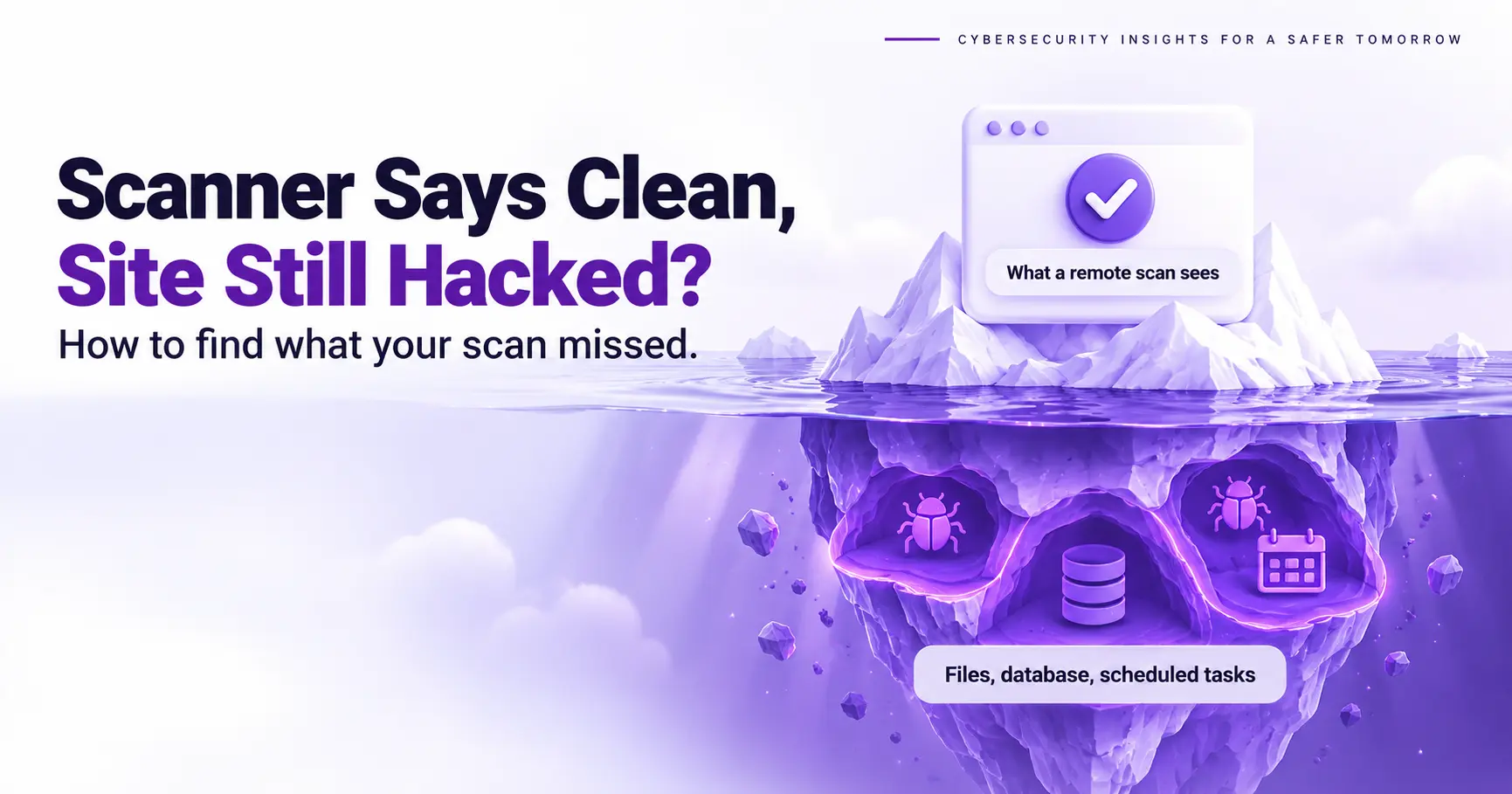
A clean malware scan is a report that says the scanner found nothing it recognizes, and it is not proof that a site is clean. When a malware scanner says
A malicious redirect is code that sends visitors from your page to a spam, scam or malware site without their consent. It often fires only for some visitors, which is
The Japanese keyword hack is a form of SEO spam in which attackers inject thousands of auto-generated Japanese pages into a compromised website. It works by cloaking: Google and search
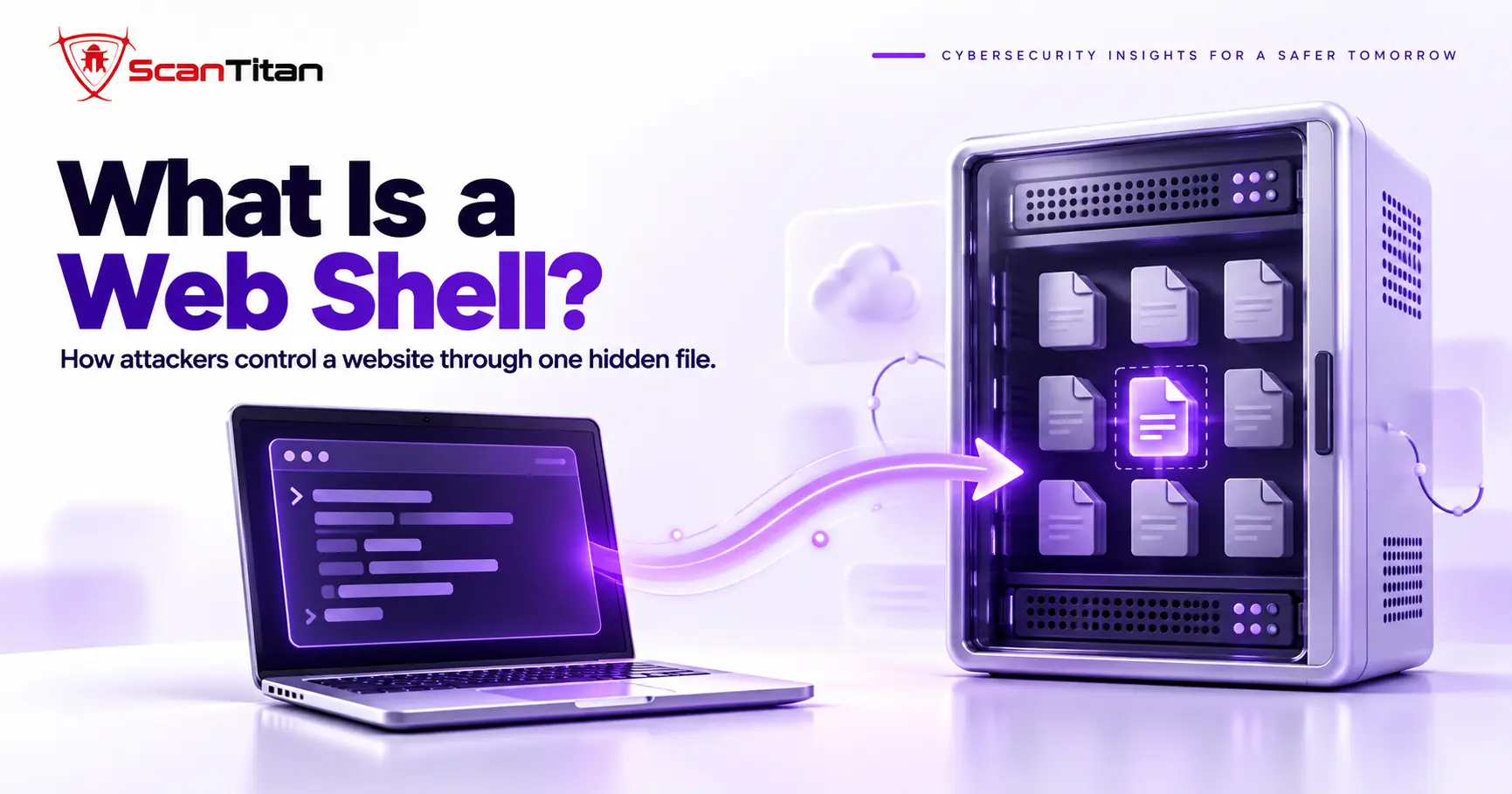
A web shell is a server-side script that an attacker can use to maintain remote access to a compromised web server. Depending on its capabilities and the privileges of the
The Deceptive Site Ahead warning is a red Chrome screen that appears when Google Safe Browsing detects behavior associated with phishing or social engineering on a page. For visitors, it
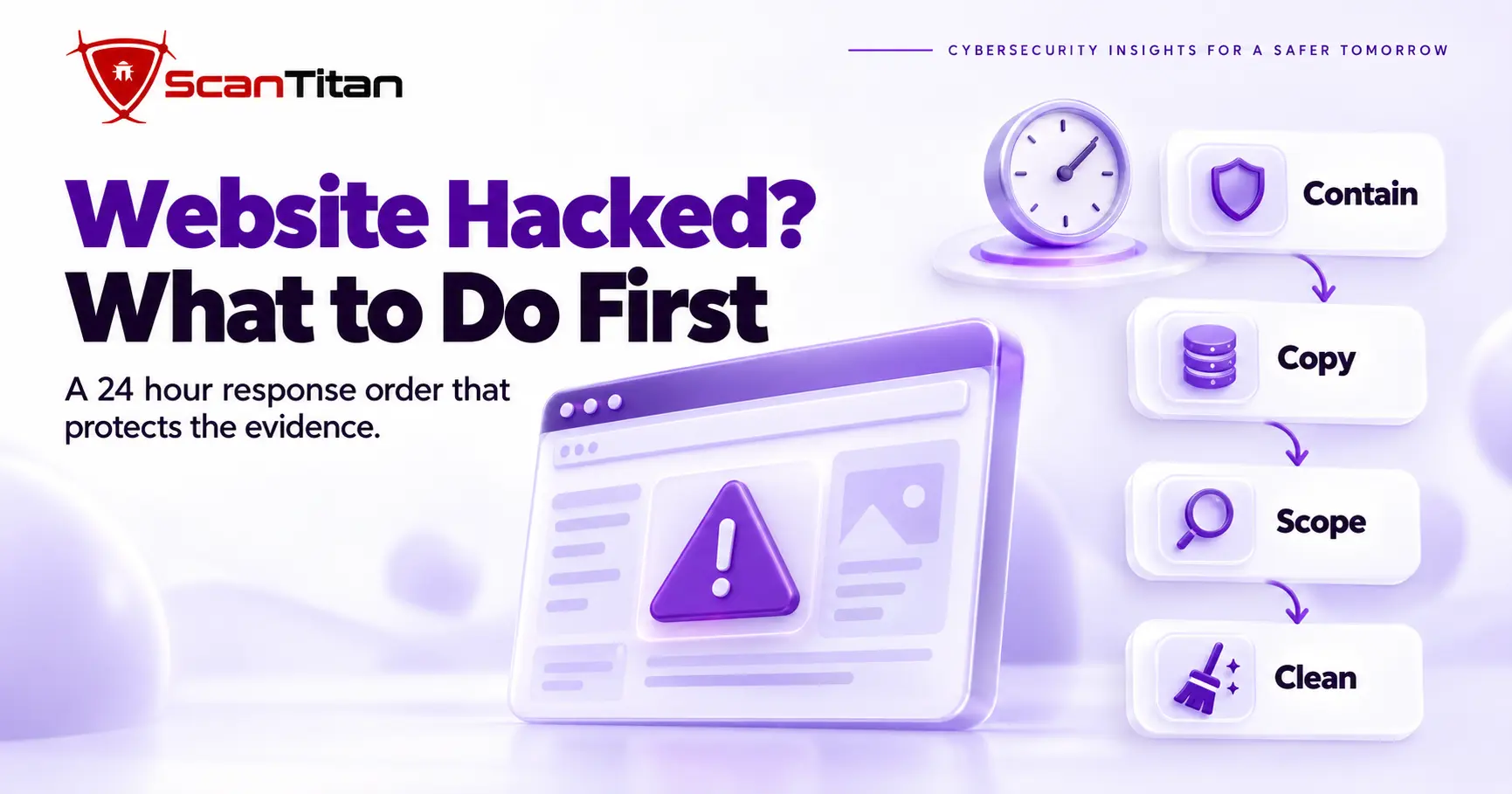
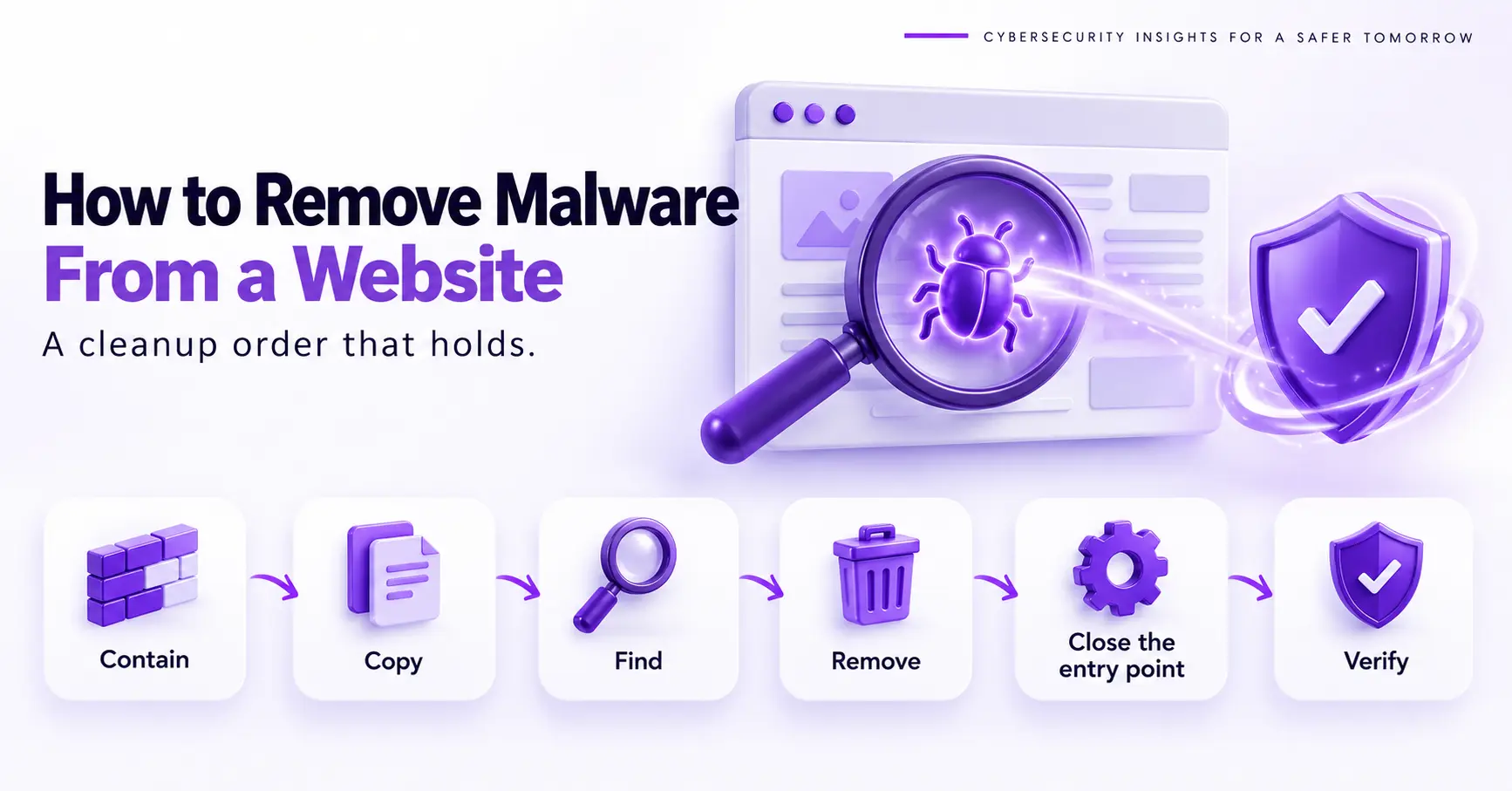
A website malware cleanup is the ordered process you follow to remove malware from website files and databases without leaving a way back in. It runs in six steps: contain
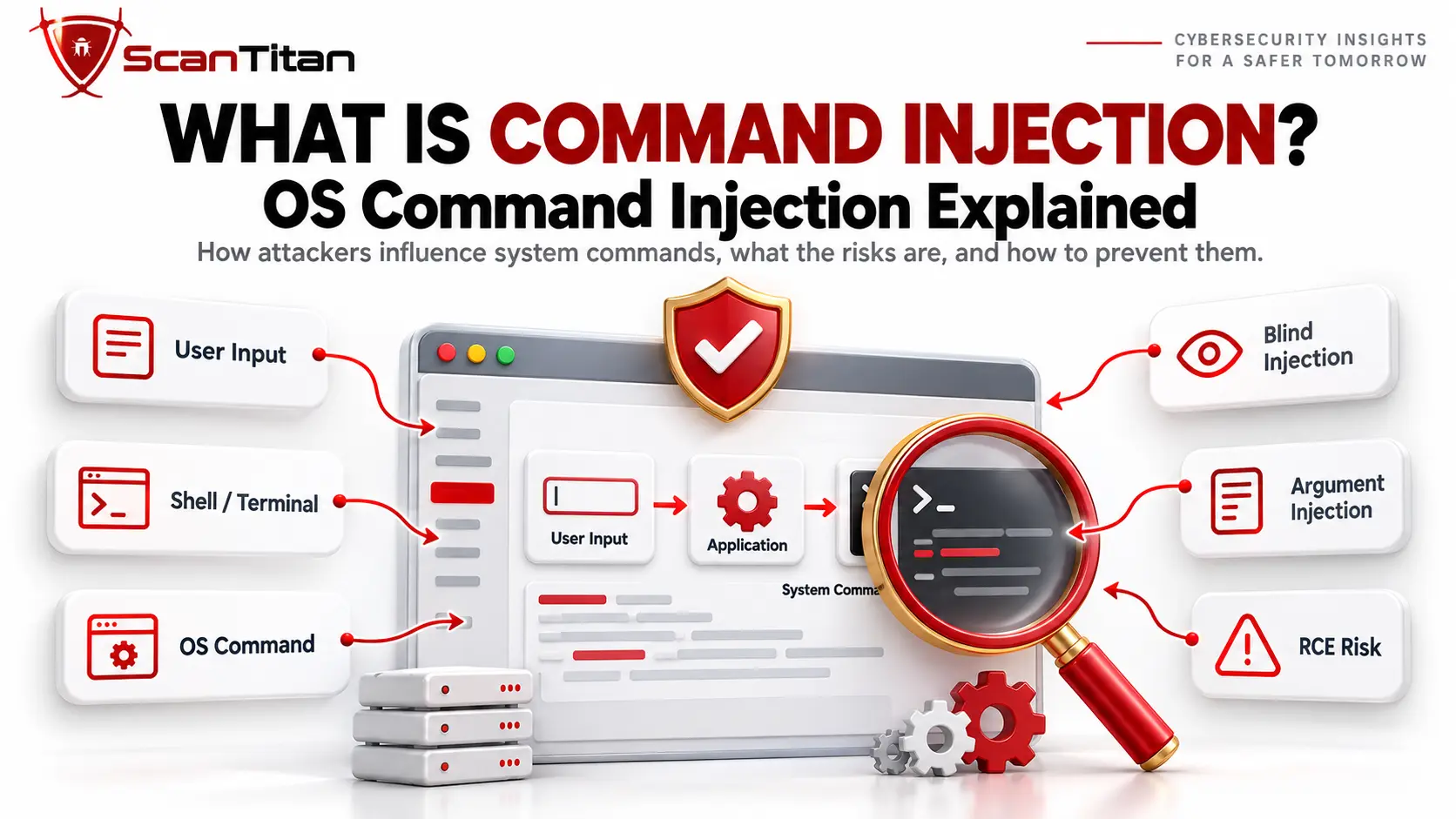
Command injection, usually referring to OS command injection, is a security vulnerability in which attacker-controlled input changes an operating-system command executed by an application, allowing unintended command behavior or additional
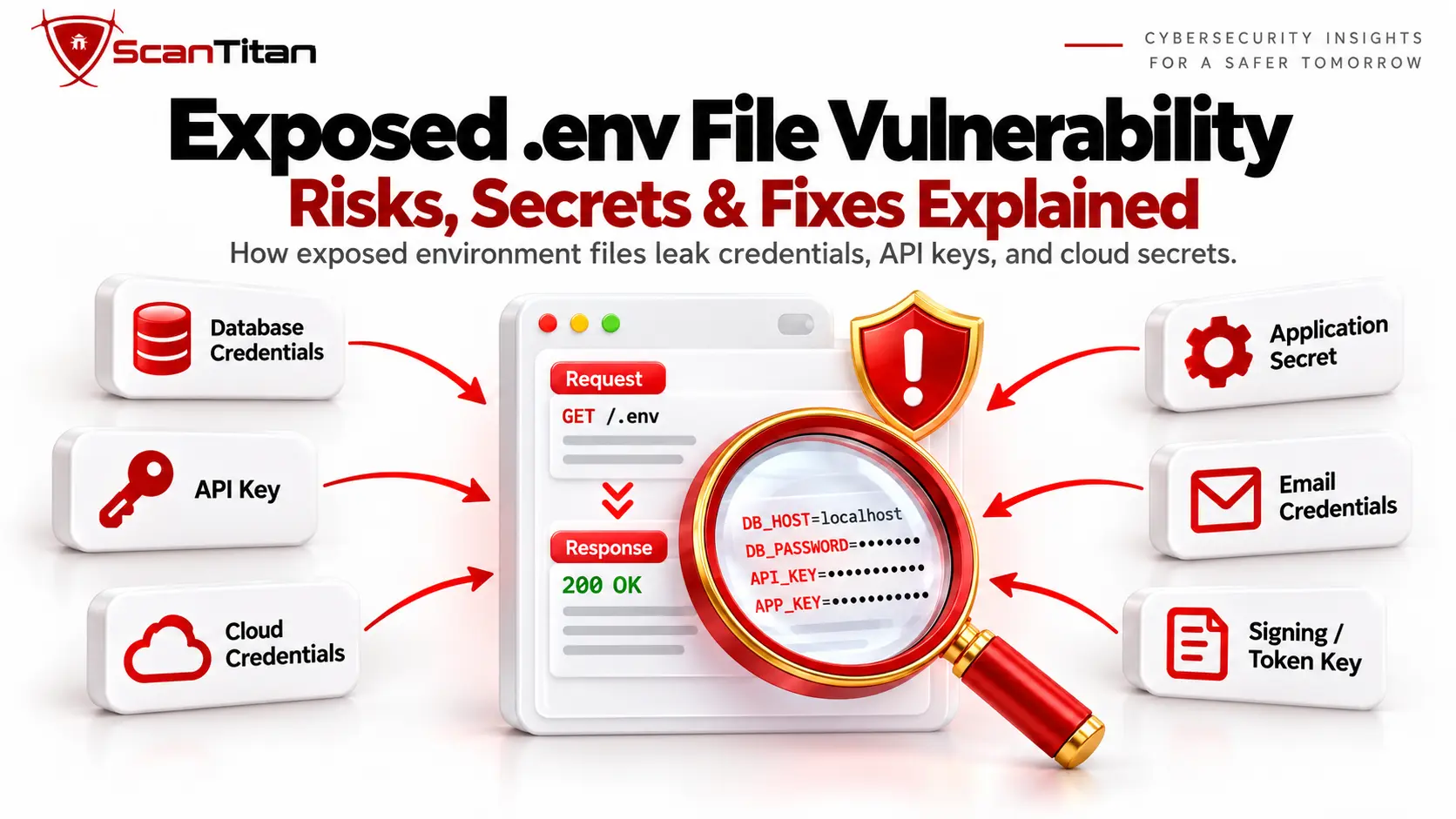
An exposed .env file vulnerability occurs when a web server allows unauthorized users to retrieve an environment configuration file. A publicly accessible .env file can reveal database credentials, API keys,
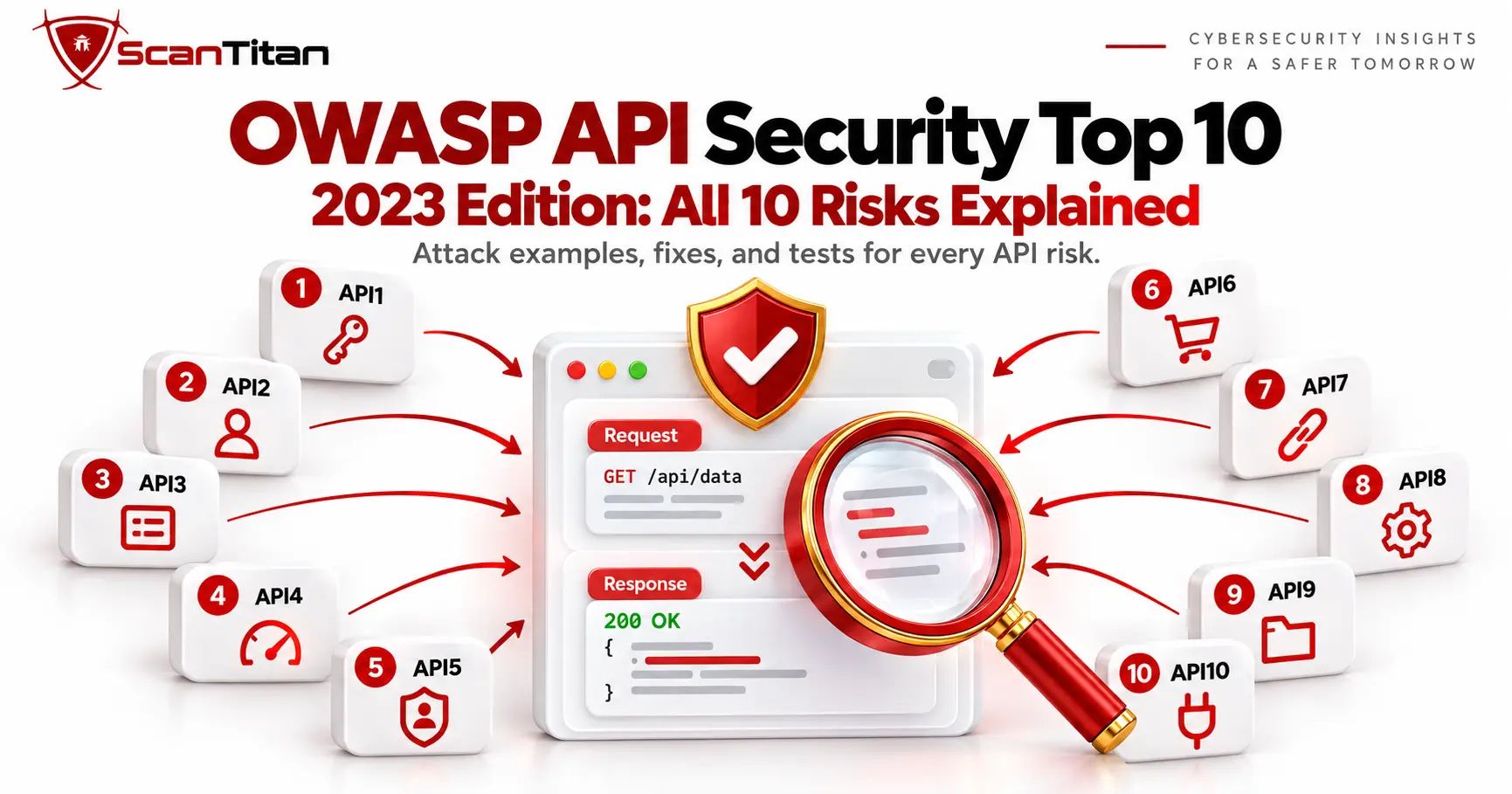
The OWASP API Top 10 is a ranked list of the ten most critical API security risks, and the 2023 edition is still the current version. It covers broken authorization,
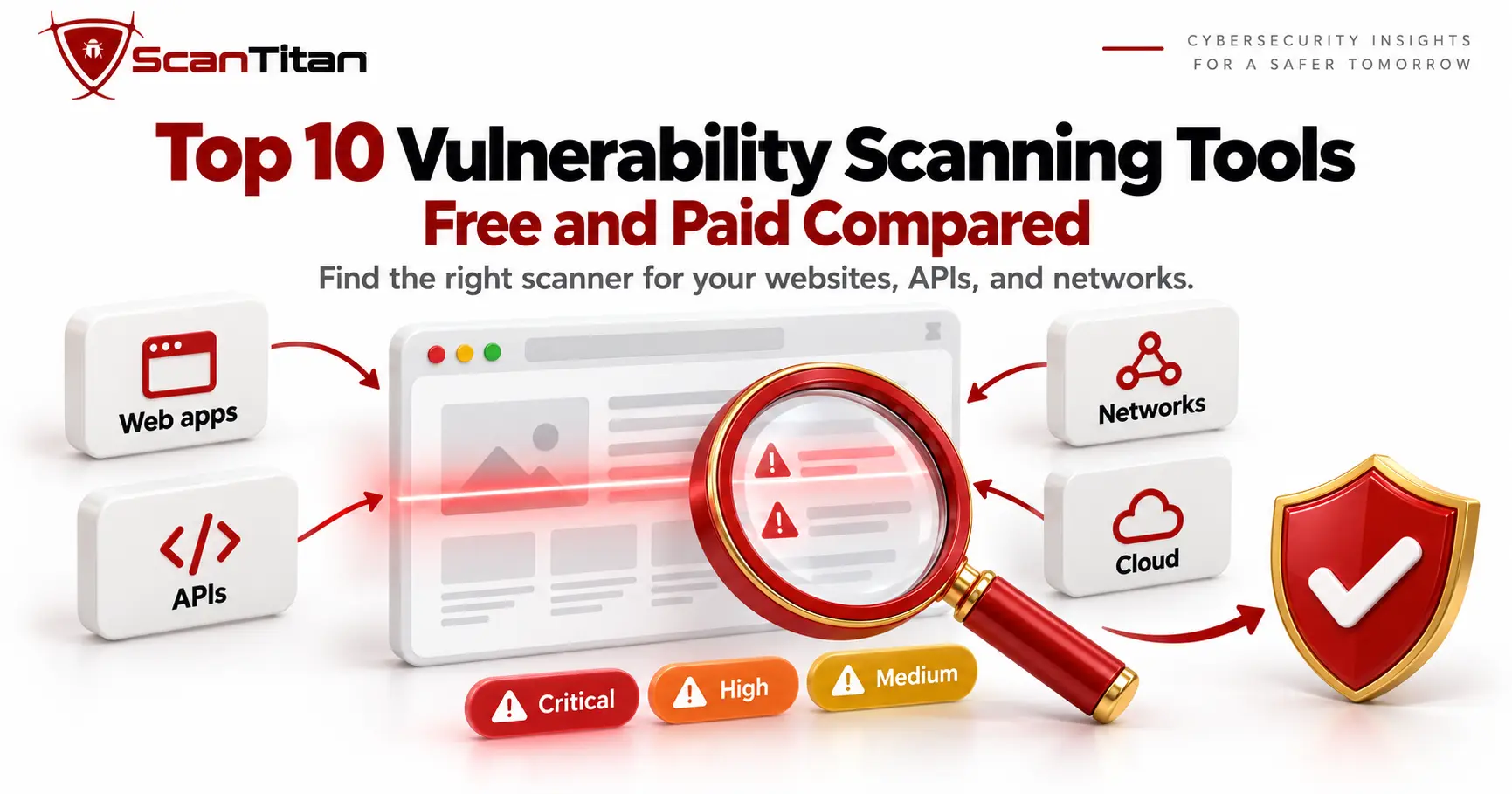
The best vulnerability scanning tools in 2026 depend on what you need to scan. ScanTitan, Intruder, and HostedScan serve small teams that want cloud scanning without a security department, Tenable
This guide will tell you how to monitor your website availability and uptime by using ScanTitan free online website monitor. As the world evolves today, websites become an increasingly vital
This guide will tell you how to scan your website against malware which includes viruses, webshells, malicious javascript and others by using ScanTitan free website malware scanner. What is website
This guide will tell you how to find your website security vulnerabilities and weakness by using ScanTitan free online vulnerability scanner. What is website vulnerability? According to research, it has
This guide will tell you how to reduce your website and online services attack surface by finding your security exposures using ScanTitan free online vulnerability scanner. What is website security
This guide will tell you how to know your network exposure and running services on your edge device like a firewall or router and how to monitor network exposure using
This article will guide you on how to monitor your cyber brand security using ScanTitan cyber brand monitoring to prevent digital image issues, traffic drops, and your customer trust loss.
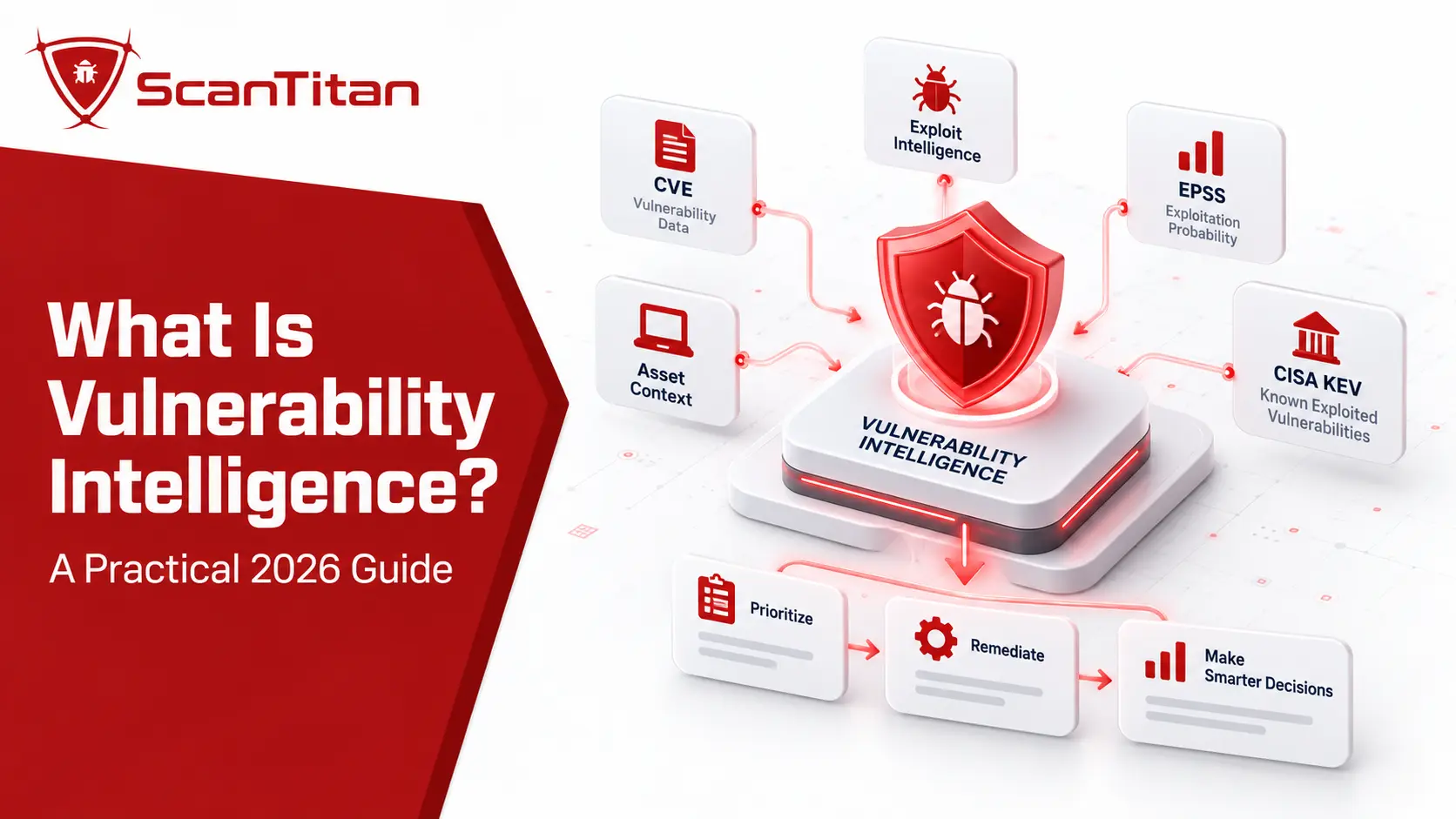
Vulnerability intelligence is the process of turning raw vulnerability data into decisions about what to fix first. It combines CVE records with exploit activity, technical severity, affected products, patch status,
This guide will tell you what is cyber threat intelligence and how it is important to identify relevant threats of your business using ScanTitan Threat Intelligence platform. What is Threat
Command injection, usually referring to OS command injection, is a security vulnerability in which attacker-controlled input changes an operating-system command executed by an application, allowing unintended command behavior or additional
An exposed .env file vulnerability occurs when a web server allows unauthorized users to retrieve an environment configuration file. A publicly accessible .env file can reveal database credentials, API keys,
The OWASP API Top 10 is a ranked list of the ten most critical API security risks, and the 2023 edition is still the current version. It covers broken authorization,
The best vulnerability scanning tools in 2026 depend on what you need to scan. ScanTitan, Intruder, and HostedScan serve small teams that want cloud scanning without a security department, Tenable
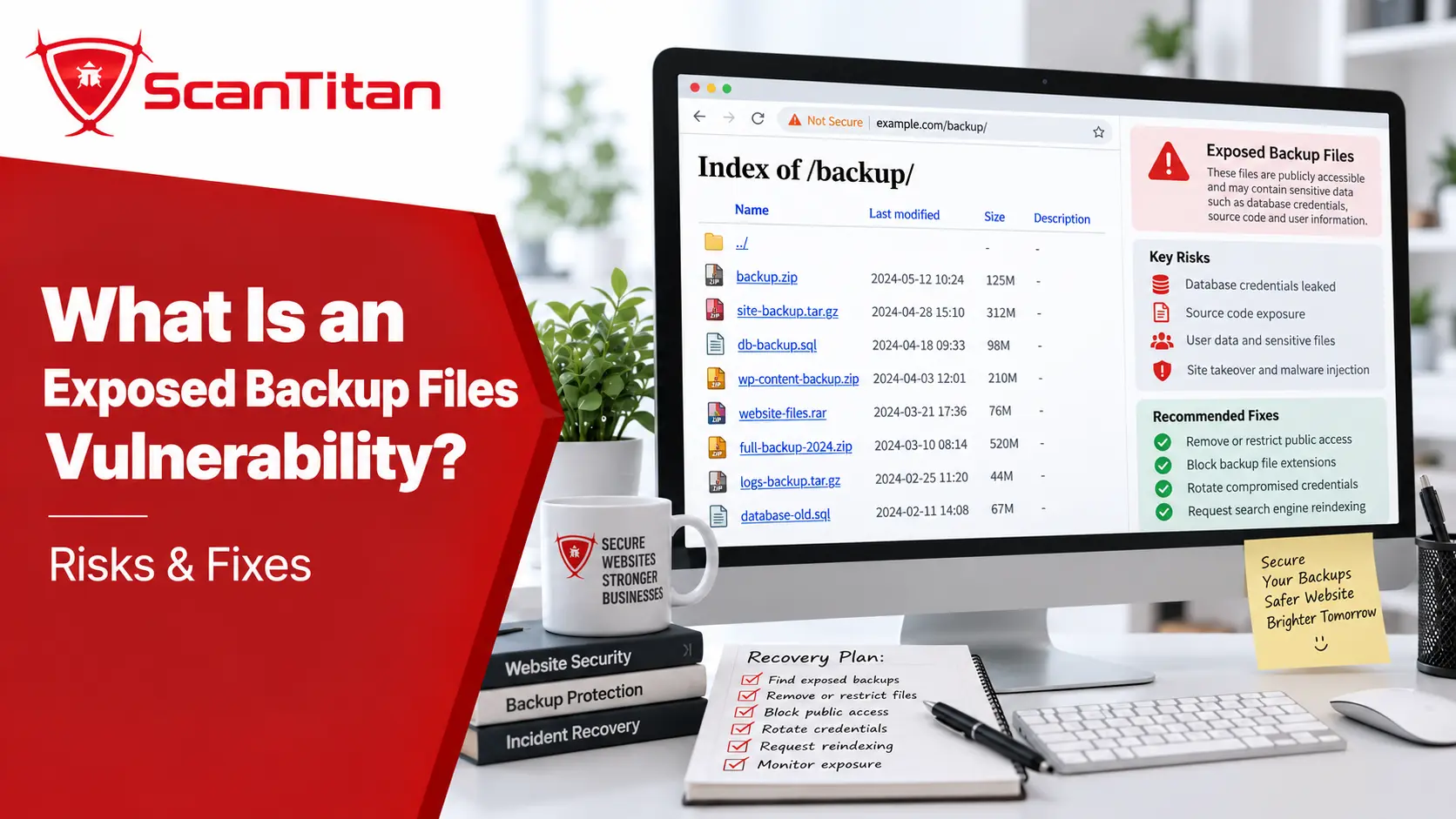
An exposed backup files vulnerability occurs when a backup, database dump, old source-code copy, deployment archive, or editor-generated file is publicly accessible from a web server. Files such as config.php.bak,
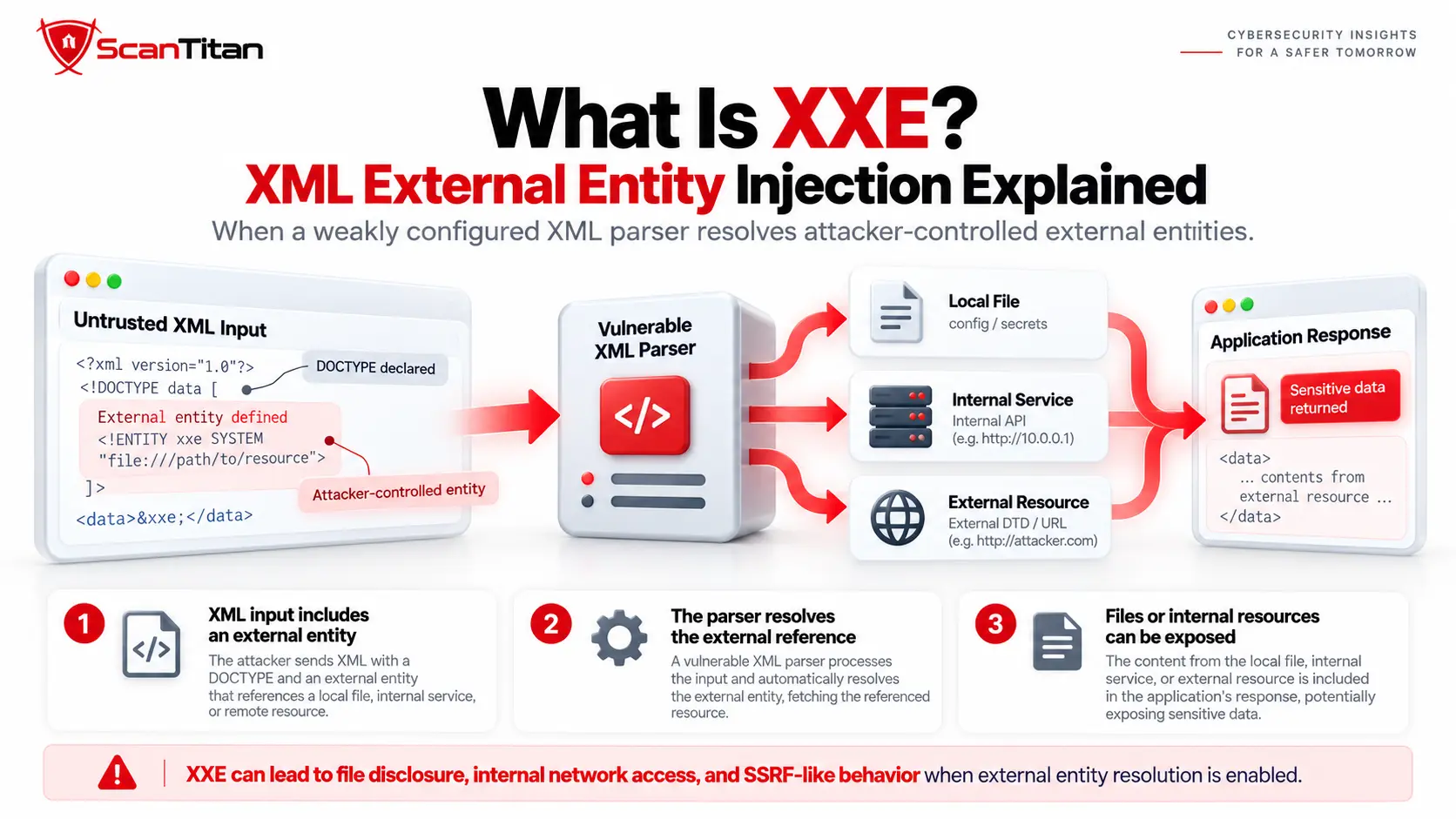
XML External Entity (XXE) Injection is a web security vulnerability in which an application processes attacker-controlled XML with a parser that is allowed to resolve external entities or other external
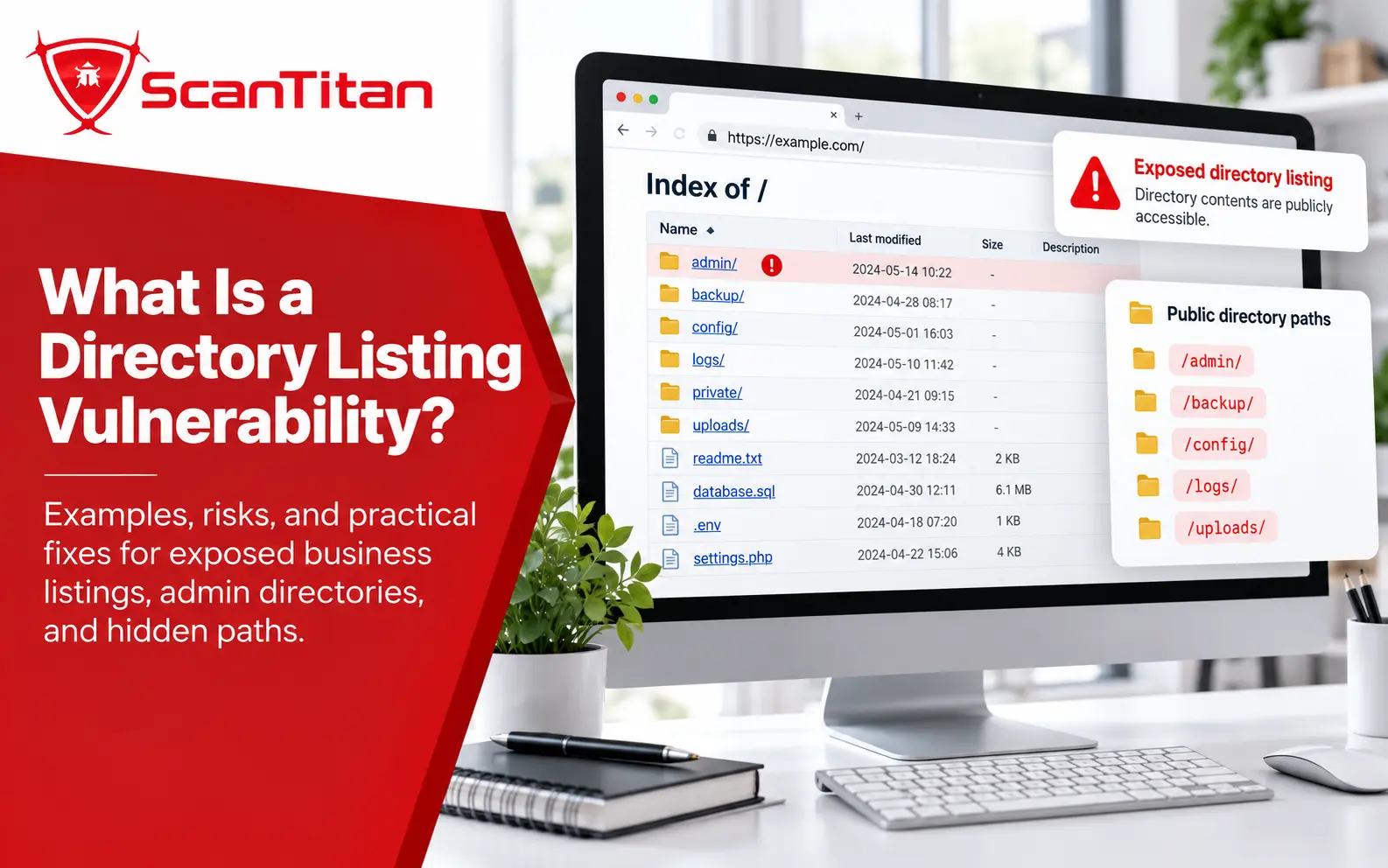
A directory listing vulnerability occurs when a web server exposes a browsable index of files and subdirectories that were not intended to be discovered this way. Instead of returning an
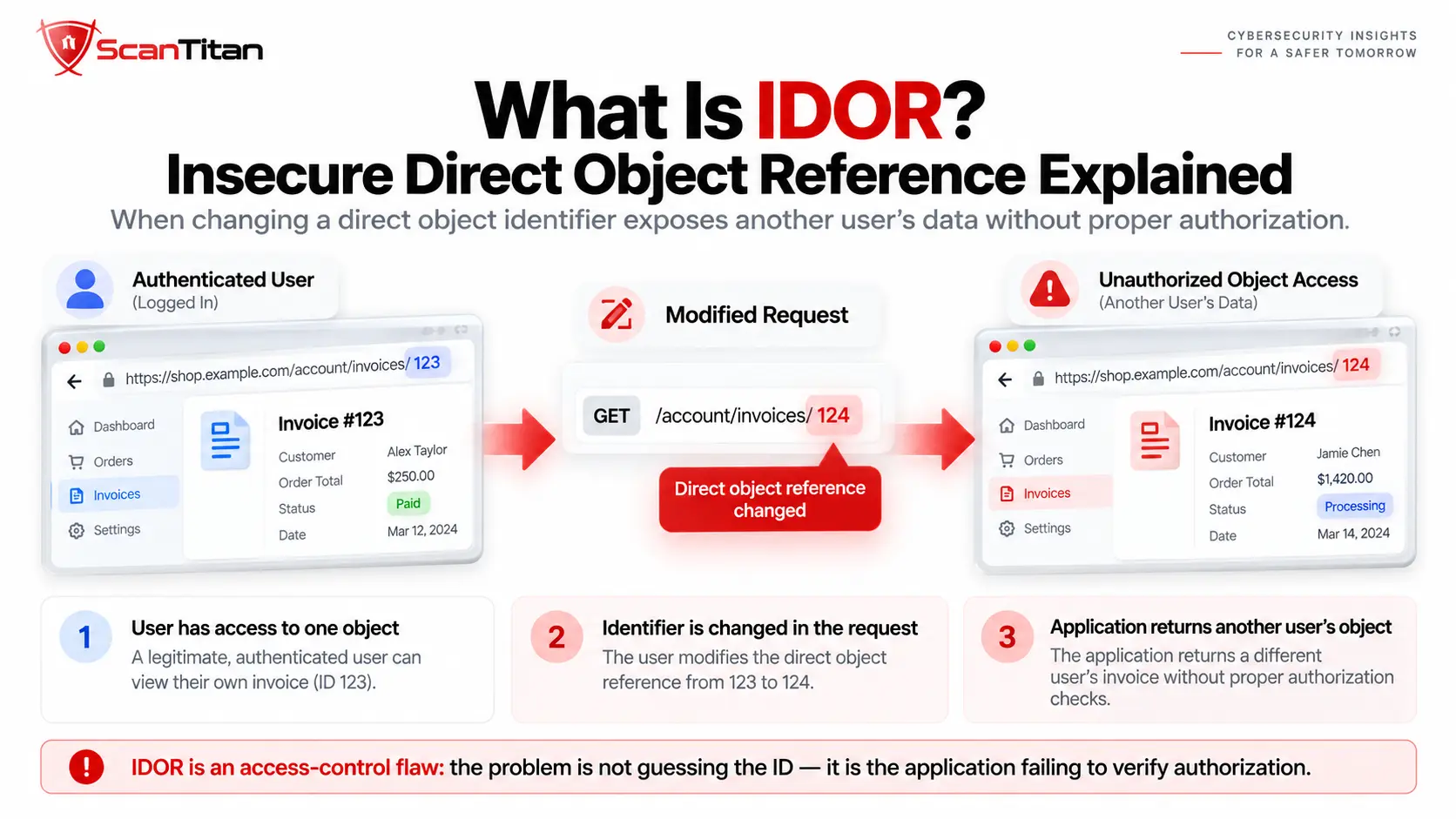
Insecure Direct Object Reference (IDOR) is an access control vulnerability in which an application uses a user-controllable reference to retrieve, change, delete, or otherwise act on an object without verifying
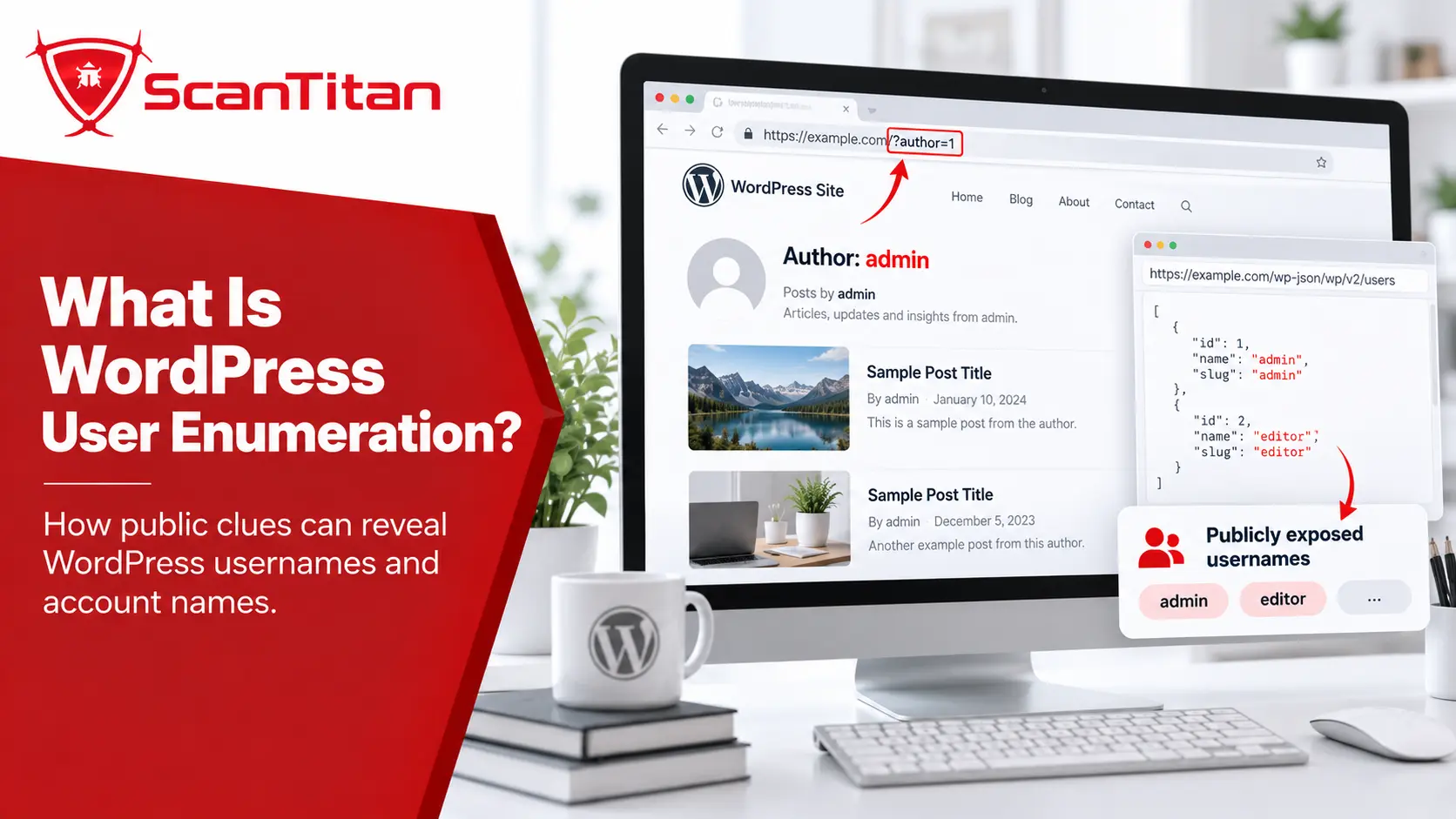
WordPress user enumeration is the process of discovering information that identifies valid WordPress accounts, such as user IDs, display names, author slugs, author URLs, or whether an account exists. WordPress
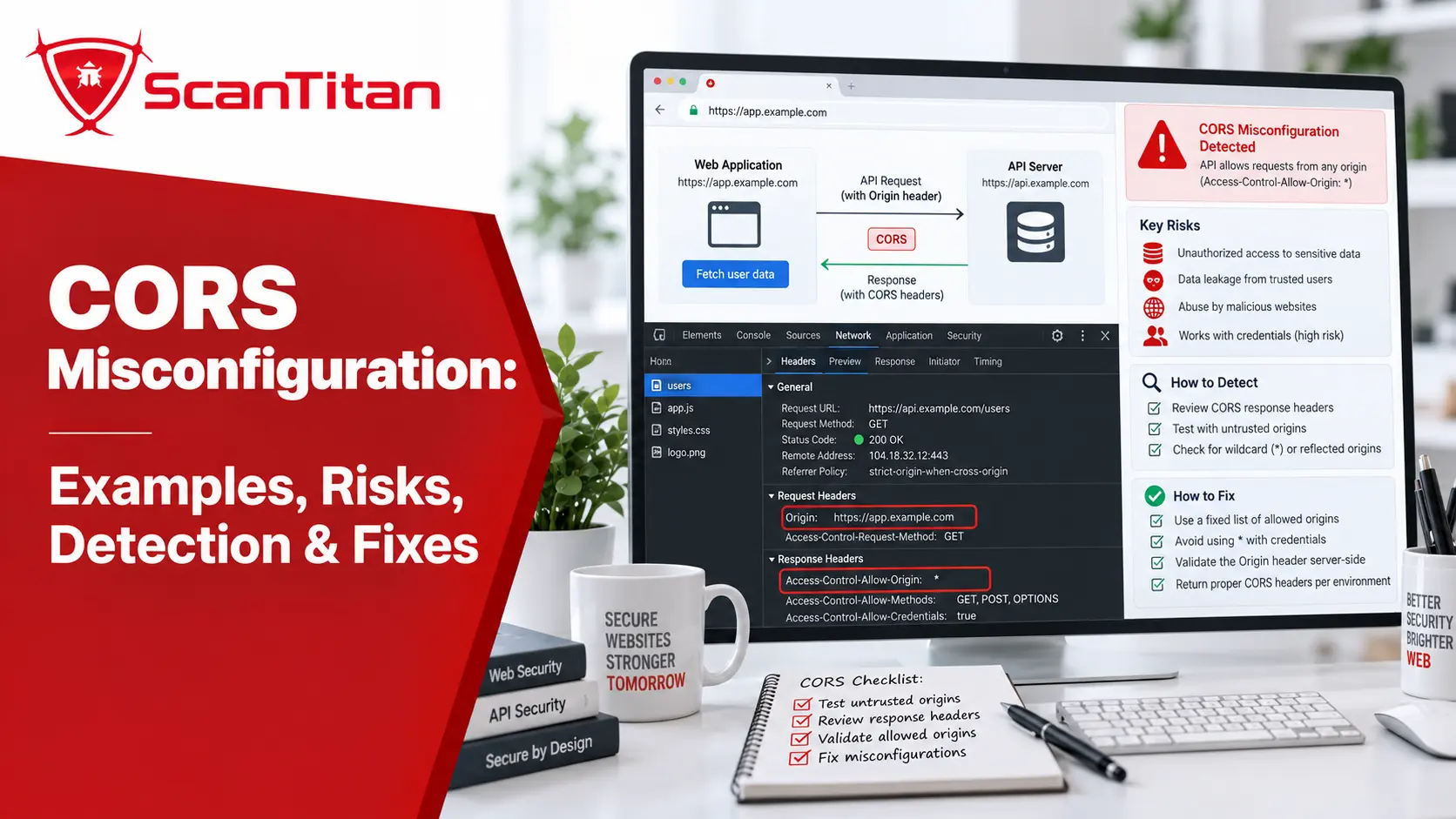
A CORS misconfiguration occurs when a web application allows an untrusted origin to read cross-origin responses that should only be available to trusted websites. Common causes include reflecting arbitrary Origin
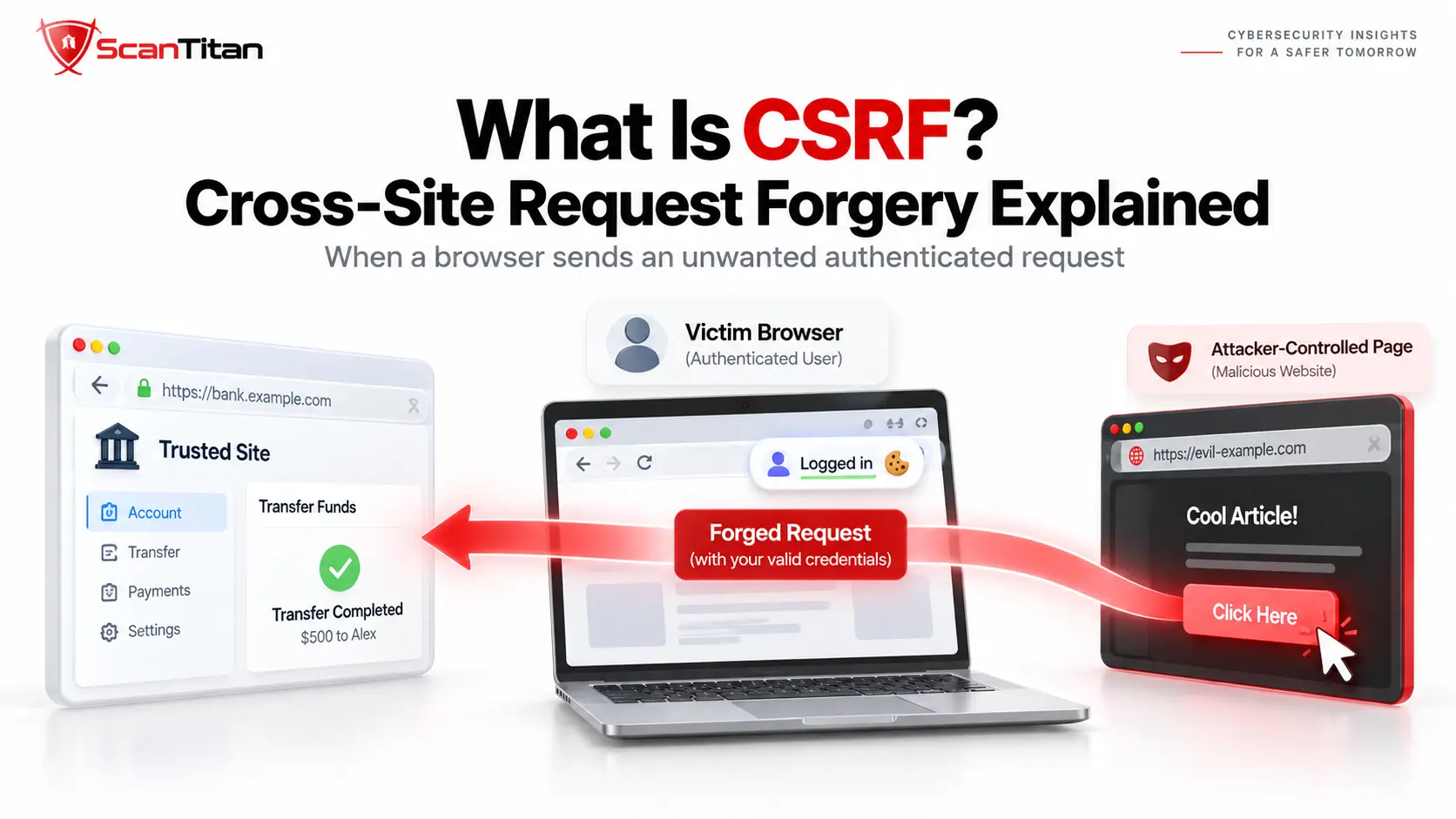
Cross-Site Request Forgery (CSRF) is a web security vulnerability in which an attacker causes a user’s browser to send an unintended request to an application that accepts the user’s automatically
A WordPress pharma hack is a post-compromise SEO spam infection that adds pharmaceutical keywords, links, pages, redirects, or hidden content to a WordPress website without the owner’s permission. It is
The 15 different types of malware below are the families every security guide names, and each one is explained from a site owner’s point of view: what it does to
A clean malware scan is a report that says the scanner found nothing it recognizes, and it is not proof that a site is clean. When a malware scanner says
A malicious redirect is code that sends visitors from your page to a spam, scam or malware site without their consent. It often fires only for some visitors, which is
The Japanese keyword hack is a form of SEO spam in which attackers inject thousands of auto-generated Japanese pages into a compromised website. It works by cloaking: Google and search
A web shell is a server-side script that an attacker can use to maintain remote access to a compromised web server. Depending on its capabilities and the privileges of the
The Deceptive Site Ahead warning is a red Chrome screen that appears when Google Safe Browsing detects behavior associated with phishing or social engineering on a page. For visitors, it
A website malware cleanup is the ordered process you follow to remove malware from website files and databases without leaving a way back in. It runs in six steps: contain
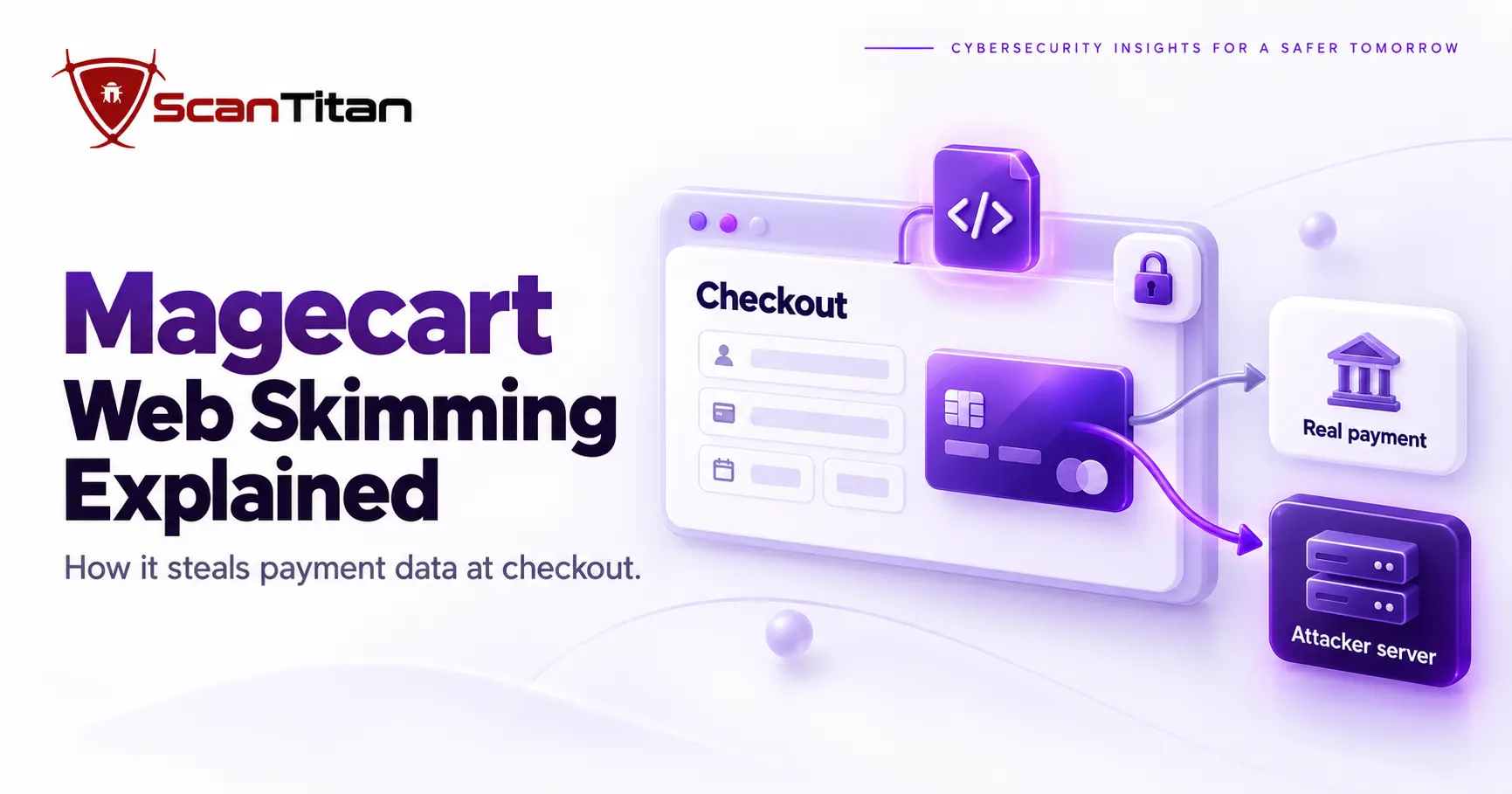
Magecart is the name for criminal groups that steal payment card data from online checkout pages, usually by planting JavaScript that copies card details while the real purchase goes through.
12+ years in information security. Specialises in web application security, vulnerability management, and external attack surface reduction for SMB and mid-market organisations.
New CVEs, practical guides, and scan methodology updates. One email per week. No sales pitch.
No spam. Unsubscribe any time. GDPR compliant.
Editorial standards: All ScanTitan blog content is reviewed by certified InfoSec professionals before publication. Technical claims are tested against live scan results or cited from primary sources (CVE database, OWASP, NIST NVD). We do not accept sponsored posts or paid placements.
Try a free scan
Run a free vulnerability scan on your domain. No account required.