Practical security insights for teams without a SOC
No vendor fluff. No recycled threat reports. Real guidance on vulnerability scanning, malware, and attack surface management — written by practitioners.
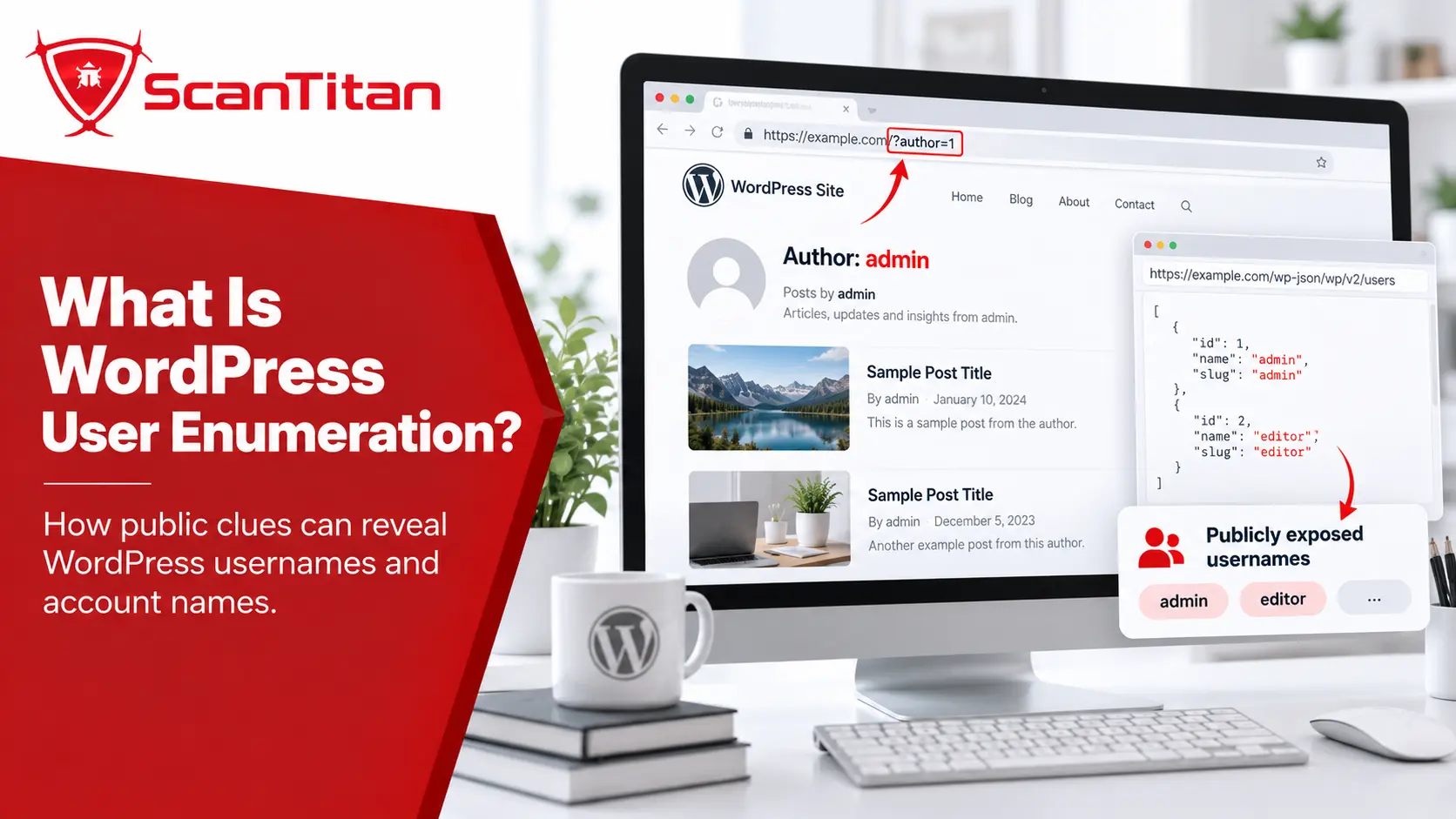
WordPress user enumeration is the process of discovering information that identifies valid WordPress accounts, such as user IDs, display names, author slugs, author URLs, or whether an account exists. WordPress can expose some of this information intentionally through author pages, REST API responses, sitemaps, and login behavior. Enumeration does not bypass authentication and does not […]
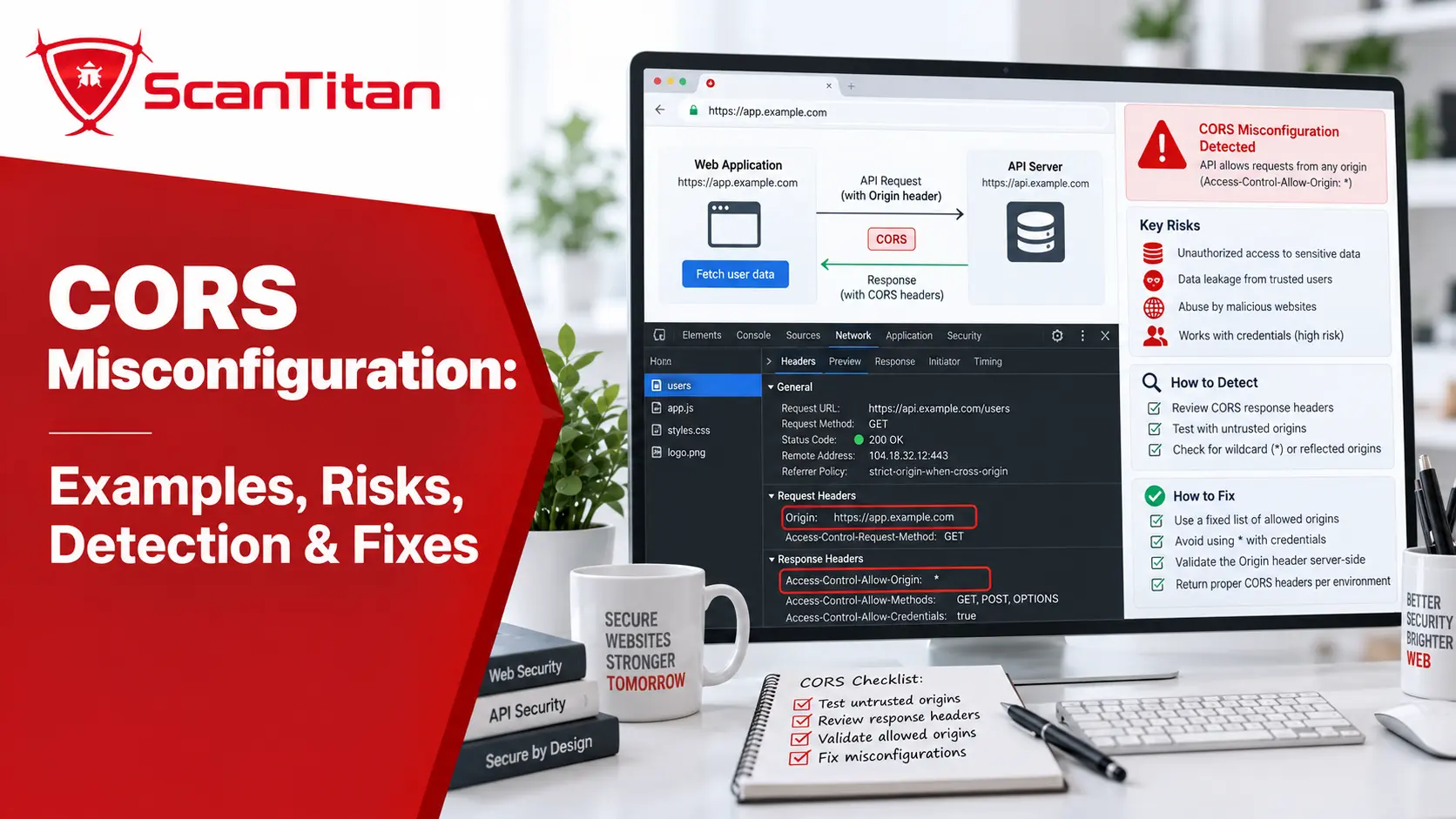
A CORS misconfiguration occurs when a web application allows an untrusted origin to read cross-origin responses that should only be available to trusted websites. Common causes include reflecting arbitrary Origin values, weak origin validation, trusting null, or allowing origins that attackers can control.Not every permissive CORS response is an exploitable vulnerability. The real risk depends […]
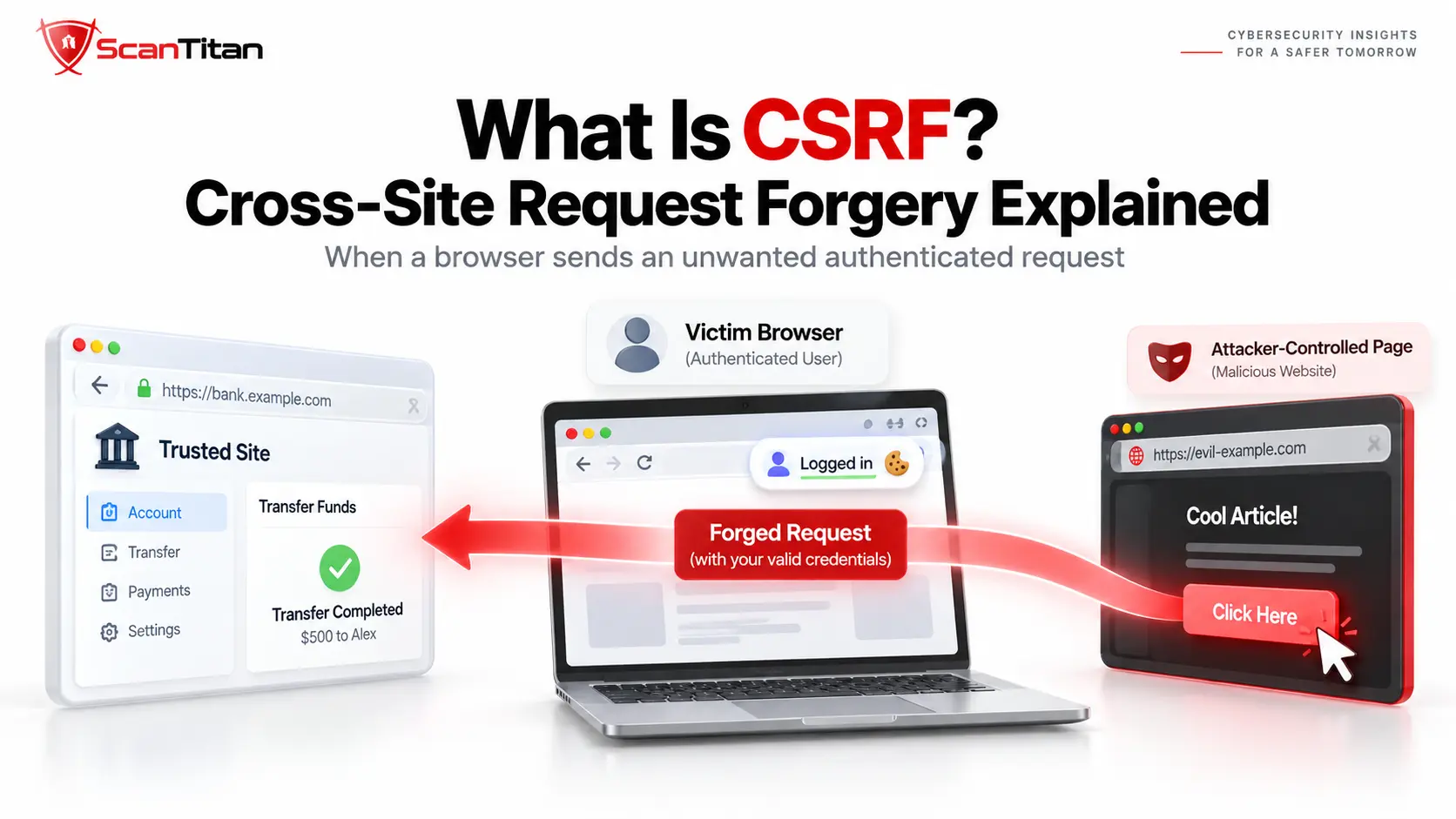
Cross-Site Request Forgery (CSRF) is a web security vulnerability in which an attacker causes a user’s browser to send an unintended request to an application that accepts the user’s automatically supplied credentials or authority. The browser may be authenticated, but the application fails to verify that the user actually intended the action.That distinction is the […]
A WordPress pharma hack is a post-compromise SEO spam infection that adds pharmaceutical keywords, links, pages, redirects, or hidden content to a WordPress website without the owner’s permission. It is also commonly called a Viagra hack, pharmaceutical spam hack, or pharma SEO spam.The infection can be confusing because the website may look normal when you […]
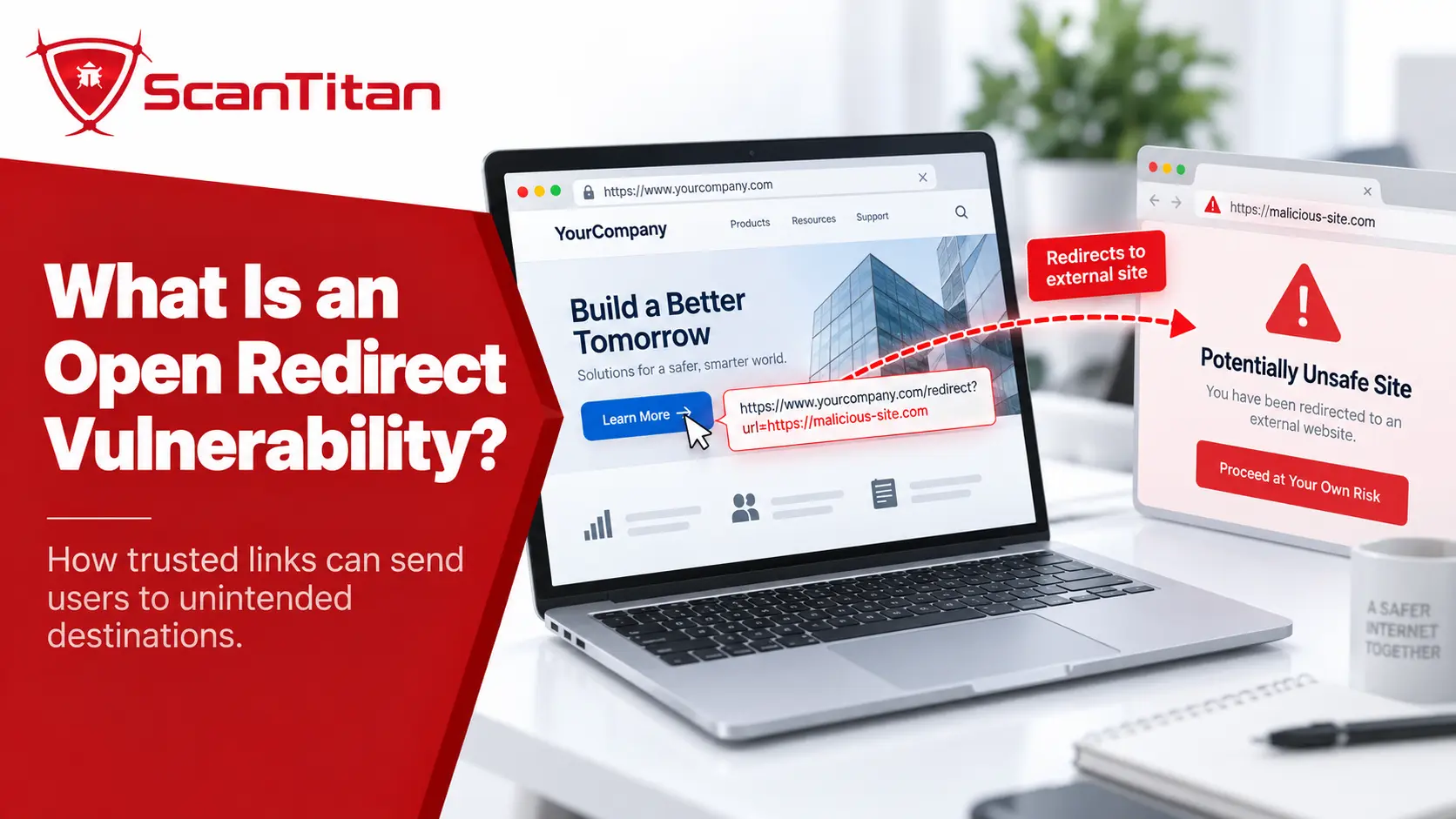
An open redirect vulnerability occurs when a web application lets attacker-controlled input determine where a user is redirected without sufficiently restricting the final destination. An attacker can then create a link that begins on a legitimate domain but sends the victim to an external site chosen by the attacker.The simplest impact is phishing: the trusted […]
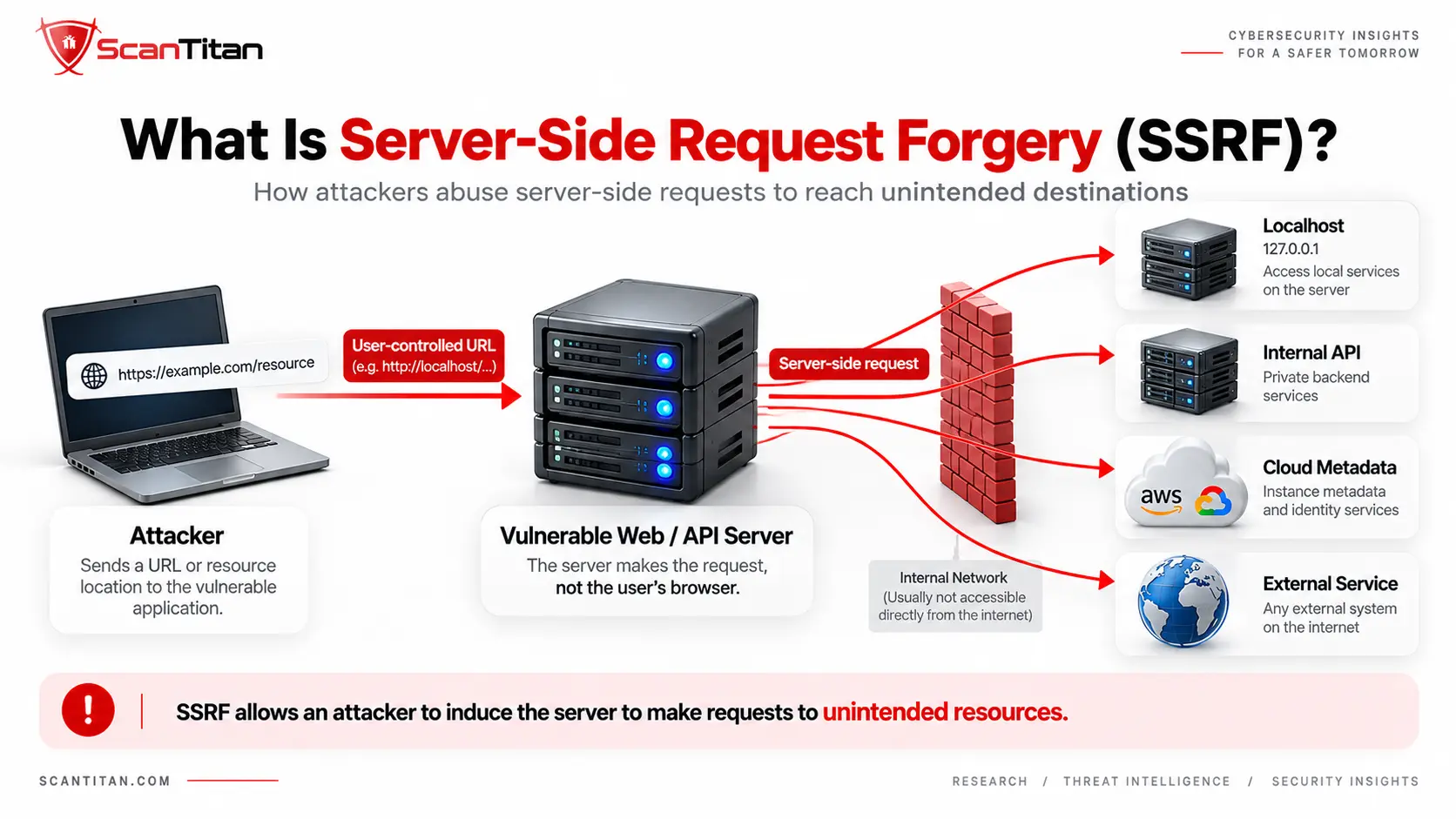
Server-Side Request Forgery (SSRF) is a web application security vulnerability in which attacker-controlled input causes a server-side component to send a network request to an unintended destination. The defining characteristic is that the sensitive request originates from the server, not from the attacker’s browser.That distinction matters because an application server may be able to reach […]
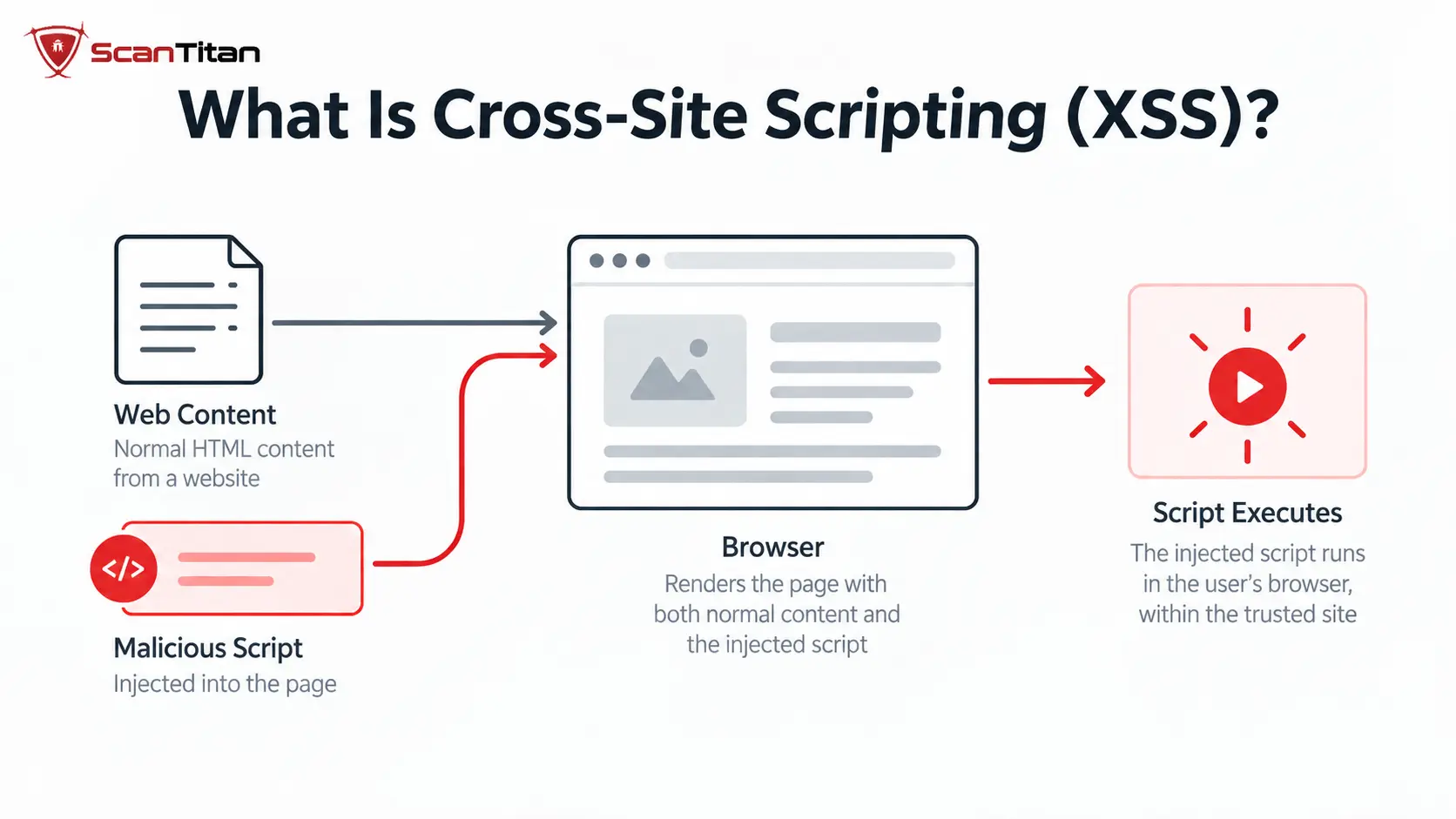
Cross-site scripting (XSS) is a web application vulnerability that allows untrusted data to reach a browser in a context where the browser interprets it as executable code instead of ordinary content. The attacker does not need to compromise the browser itself. The vulnerable website delivers or processes the attacker-controlled content in a way that makes […]
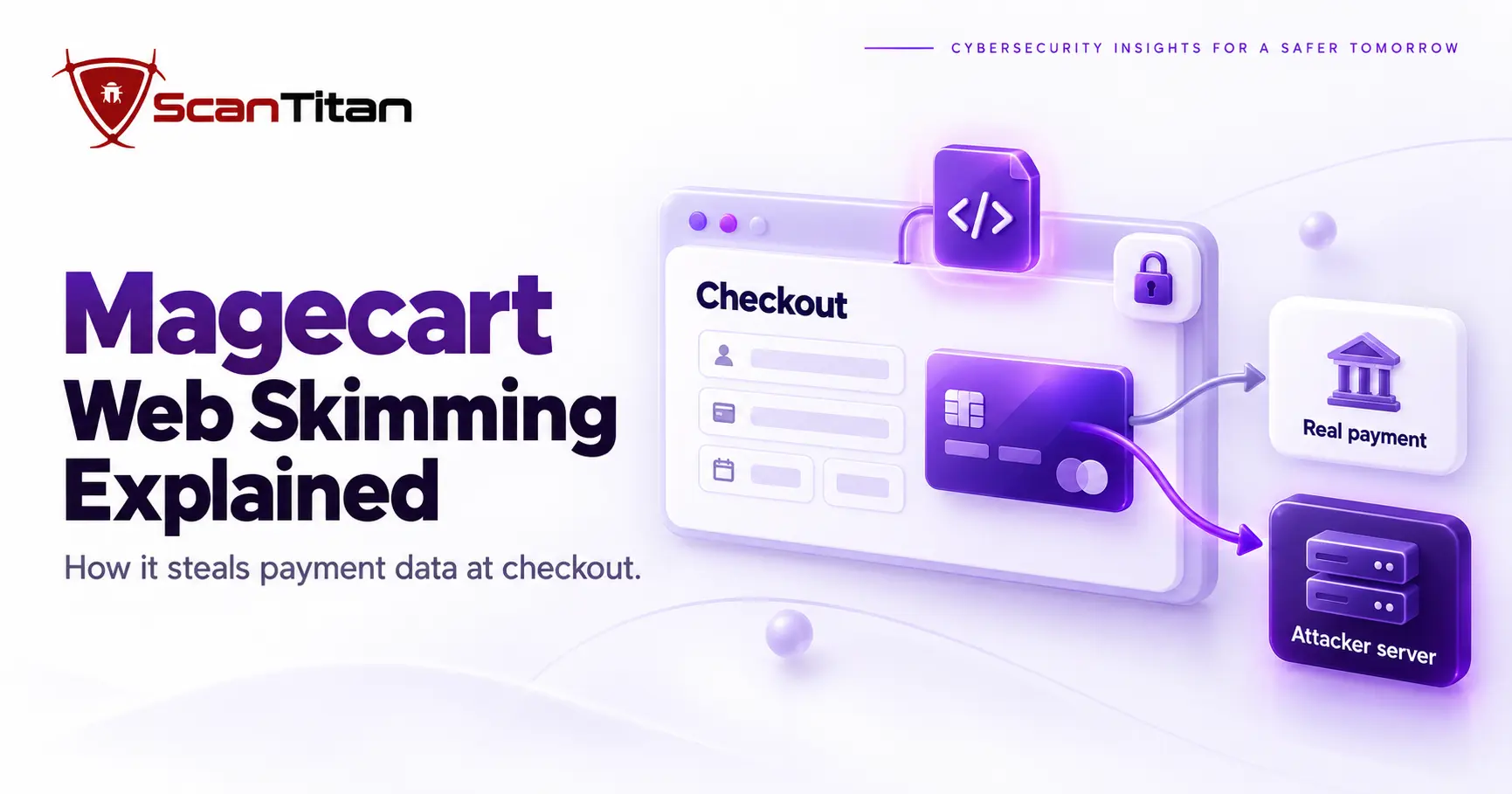
Magecart is the name for criminal groups that steal payment card data from online checkout pages, usually by planting JavaScript that copies card details while the real purchase goes through. The code may sit on your own site, in a third-party script or in a tag manager, so a store can leak cards without a […]
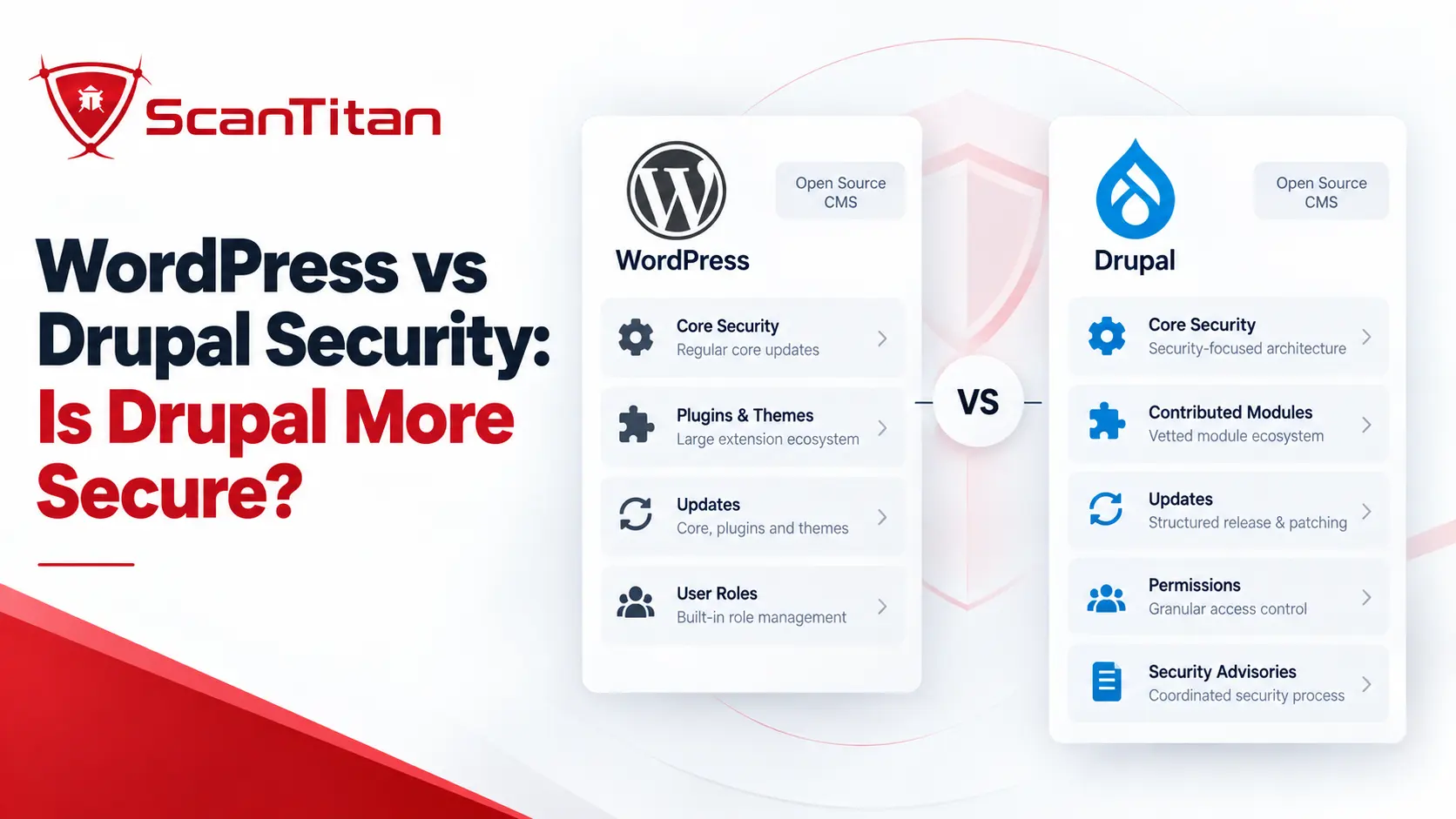
WordPress vs Drupal security is not as simple as comparing vulnerability counts. Drupal generally provides stronger security and governance defaults for complex, multi-user websites, especially around permissions, configuration management, and controlled deployments. WordPress core also has a mature security process and stronger native update automation, but its enormous plugin and theme ecosystem creates more third-party […]
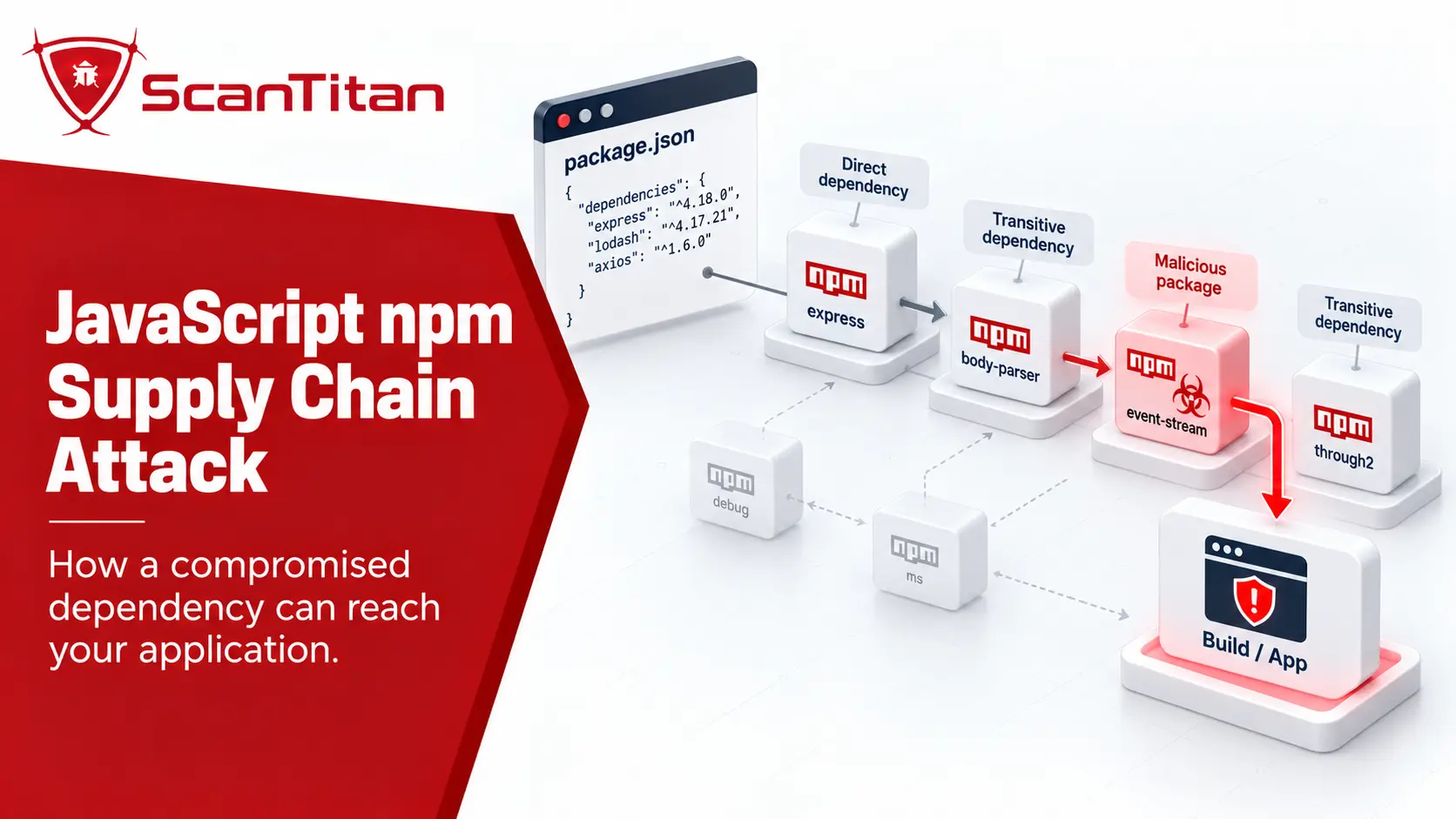
A JavaScript npm supply chain attack targets the software and infrastructure between an npm package maintainer and the application that eventually installs that package. Instead of exploiting a flaw in your own JavaScript first, an attacker may compromise a trusted package, publish a lookalike dependency, abuse package resolution, steal publishing credentials, or execute malicious code […]
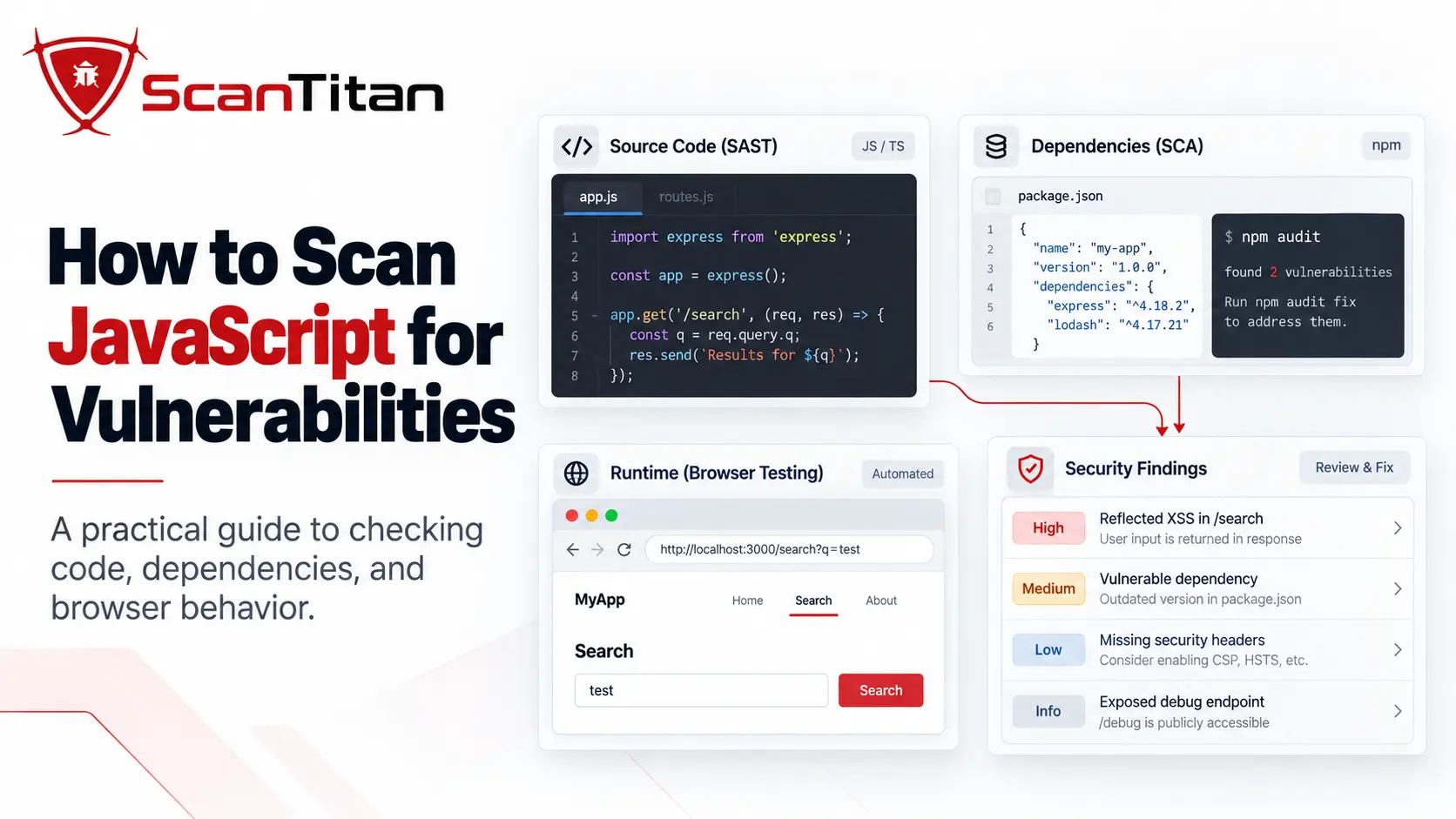
If you want to know how to scan JavaScript for vulnerabilities, do not rely on a single security check. A modern JavaScript application can contain weaknesses in the code your team writes, known vulnerabilities in npm dependencies, and security issues that appear only after the application runs in a browser. A useful JavaScript security assessment […]
Internet exposed services are applications, protocols, or management interfaces that can be reached from the public internet. A public website is intentionally exposed, while an administration panel, database, remote desktop service, or forgotten staging system may be exposed unintentionally. Exposure alone does not mean a service is vulnerable, but every reachable service gives an external […]
Joomla security features are one of the platform’s real advantages: the core ships controls that most content management systems leave to plugins. Out of the box you get two-factor authentication, granular access control, forced HTTPS, input filtering, and a dedicated Security Strike Team behind the code. This guide walks through every built-in feature Joomla 4, […]
Is Joomla secure in 2026? Yes, when it runs on a supported release and is maintained properly. Joomla includes multi-factor authentication, granular access control, security-header tooling, and a dedicated security-response team, but those controls do not make an outdated site safe. The August 2026 release fixed an MFA bypass, access-control flaws, XSS, CORS validation issues, […]
Joomla SQL injection is a vulnerability that lets untrusted input change the SQL query a Joomla component, extension, or API endpoint sends to its database. A Joomla SQL injection can expose or alter data when application code places request-controlled values into SQL without the correct parameter binding, type enforcement, or identifier handling. Joomla has fixed […]
Threat Intelligence vs Vulnerability Management is one of the most common points of confusion in security, and the two are partners, not competitors. Vulnerability management is the internal discipline of finding, prioritizing, and fixing the weaknesses in your own systems. Threat intelligence is the external discipline of understanding attackers, their tools, and which flaws they […]
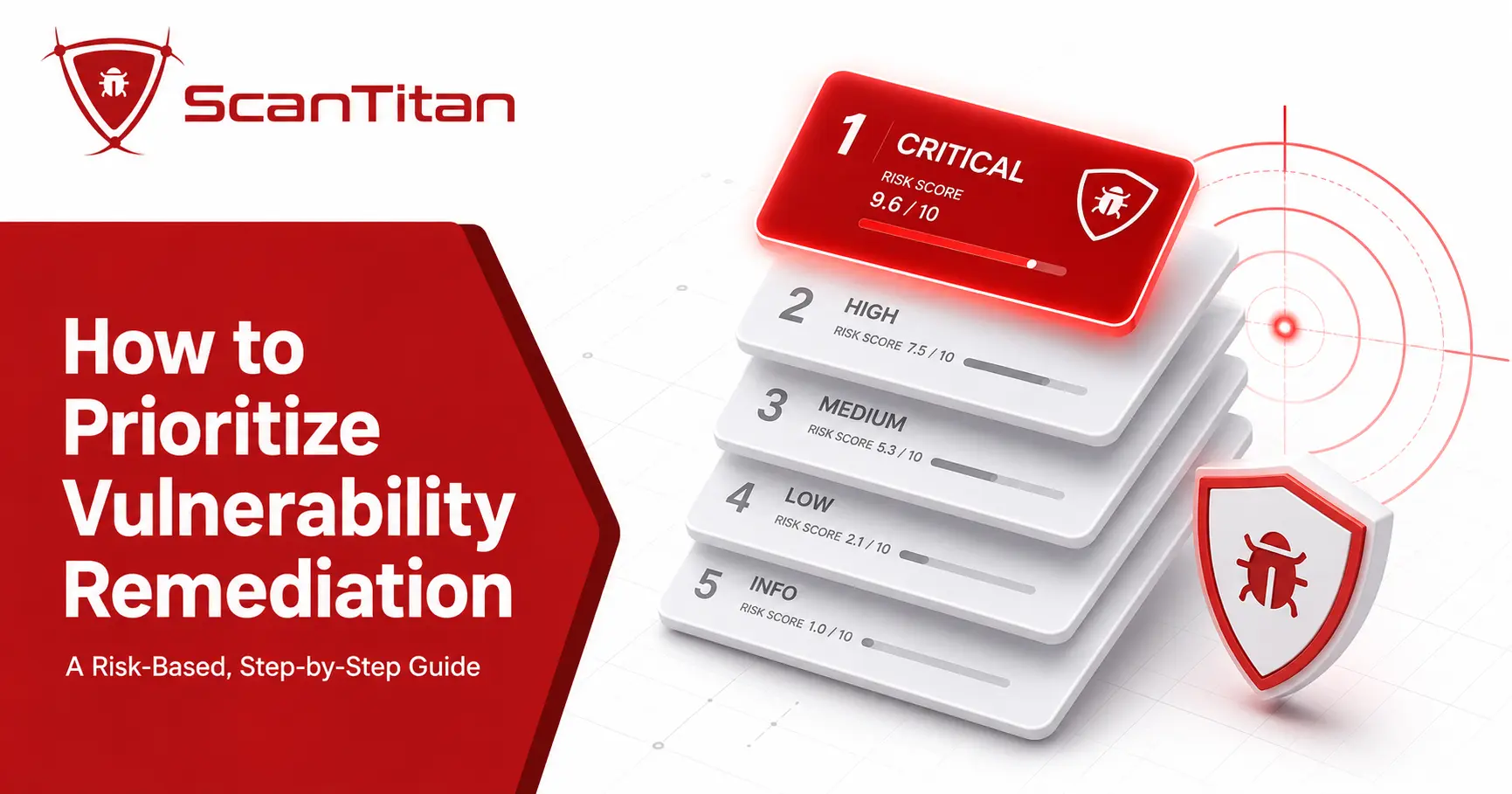
Learning How to Prioritize Vulnerability Remediation means deciding which security flaws to fix first based on the real risk they pose, not just their severity score. With scanners flagging thousands of findings and no team able to patch them all, prioritization is the decision layer that separates the handful of vulnerabilities attackers can actually exploit […]
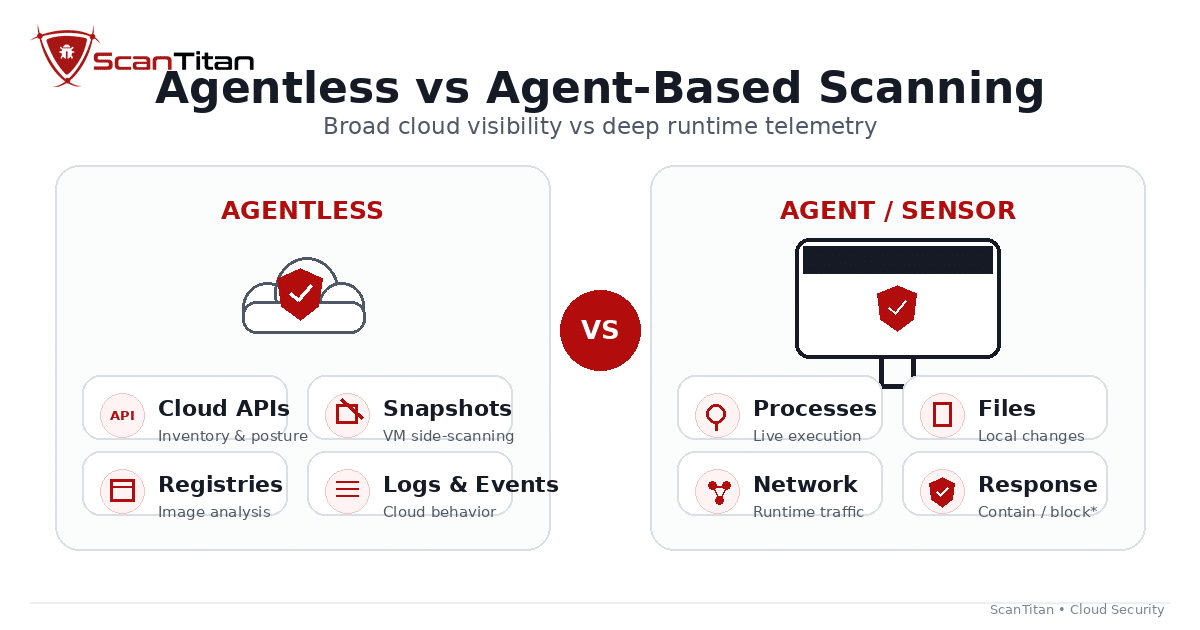
Agentless vs Agent Based scanning is the central design choice in cloud security tooling. Agentless scanning assesses your cloud without installing a security sensor inside each workload, using cloud-native techniques such as APIs, snapshots, registries, and logs. Agent-based scanning deploys a sensor on the systems that need deep runtime visibility, watching activity from the inside. […]
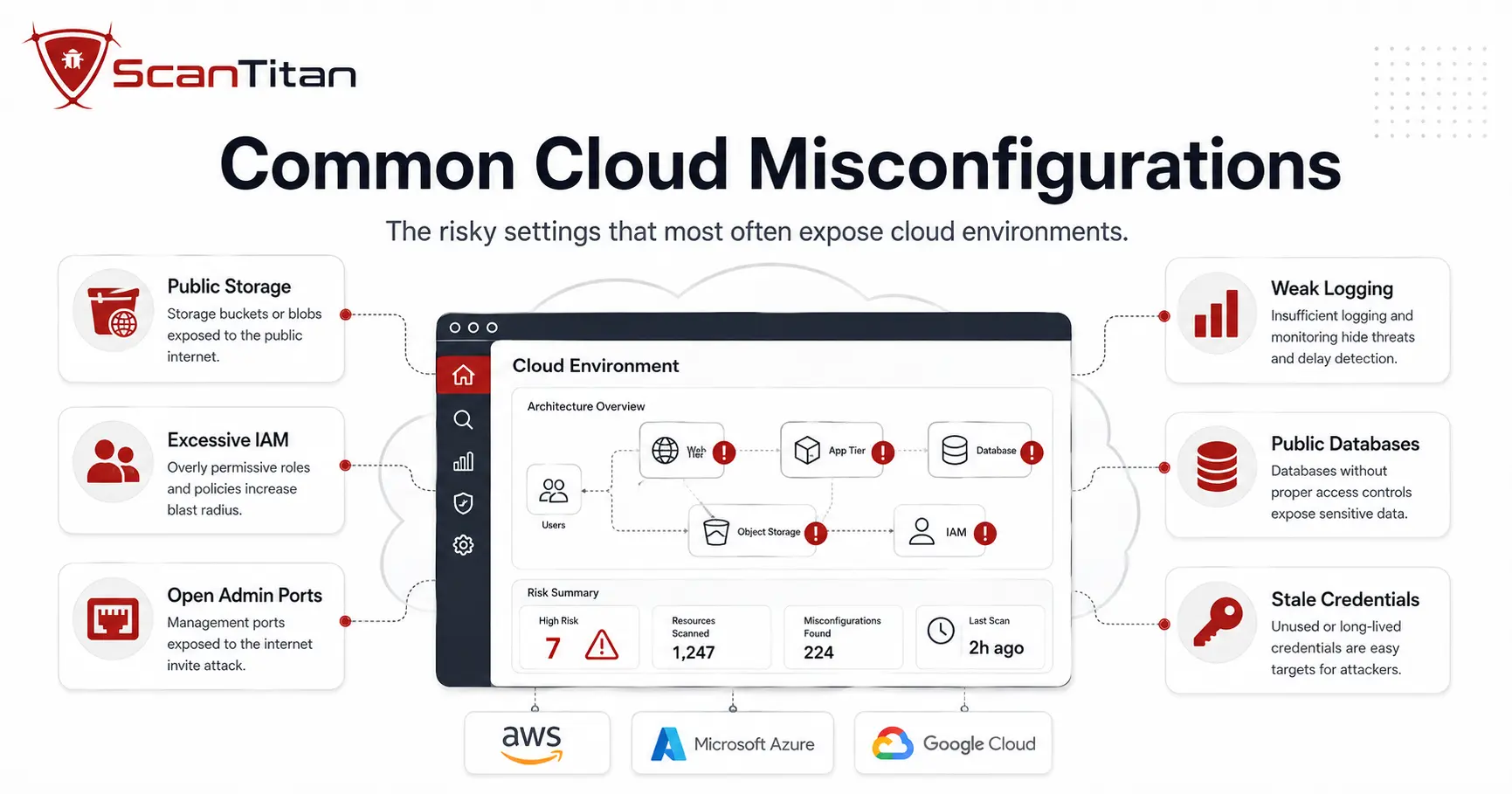
Common cloud misconfigurations are security-relevant settings that leave cloud resources more exposed than intended, for example a public data store, an overly broad IAM role, an unrestricted management port, or logging that never reaches the security team. They are usually not zero-days. They are configuration, identity, network, and governance mistakes that can turn otherwise secure […]
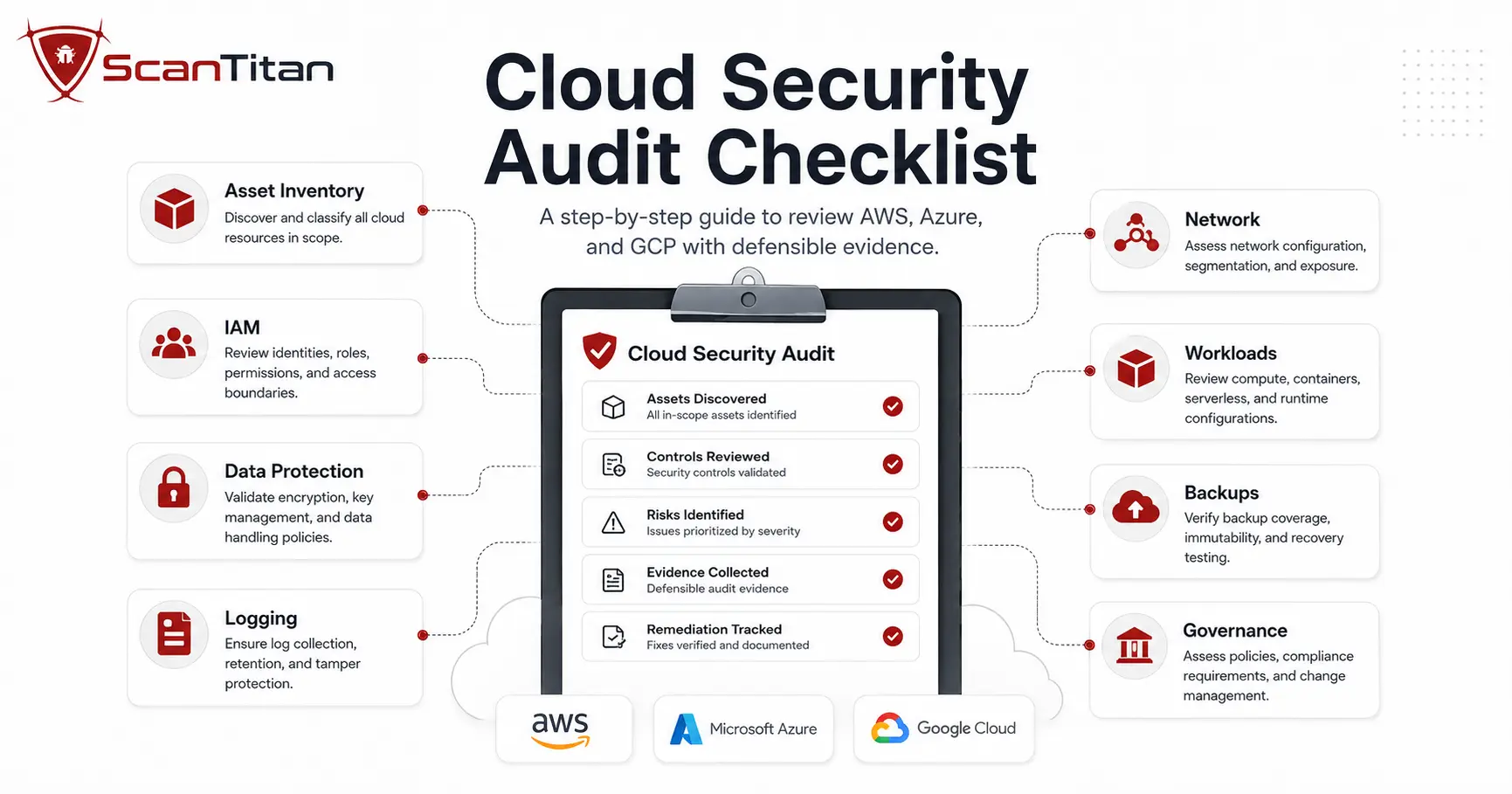
A cloud security audit checklist is the structured list of domains and controls you review to confirm your cloud environment is configured, governed, and defended as your policies and obligations require. It spans asset inventory, identity, secrets, data protection, logging, network, configuration, change management, vulnerabilities, workloads, backup, incident response, third-party assurance, and governance, each backed […]
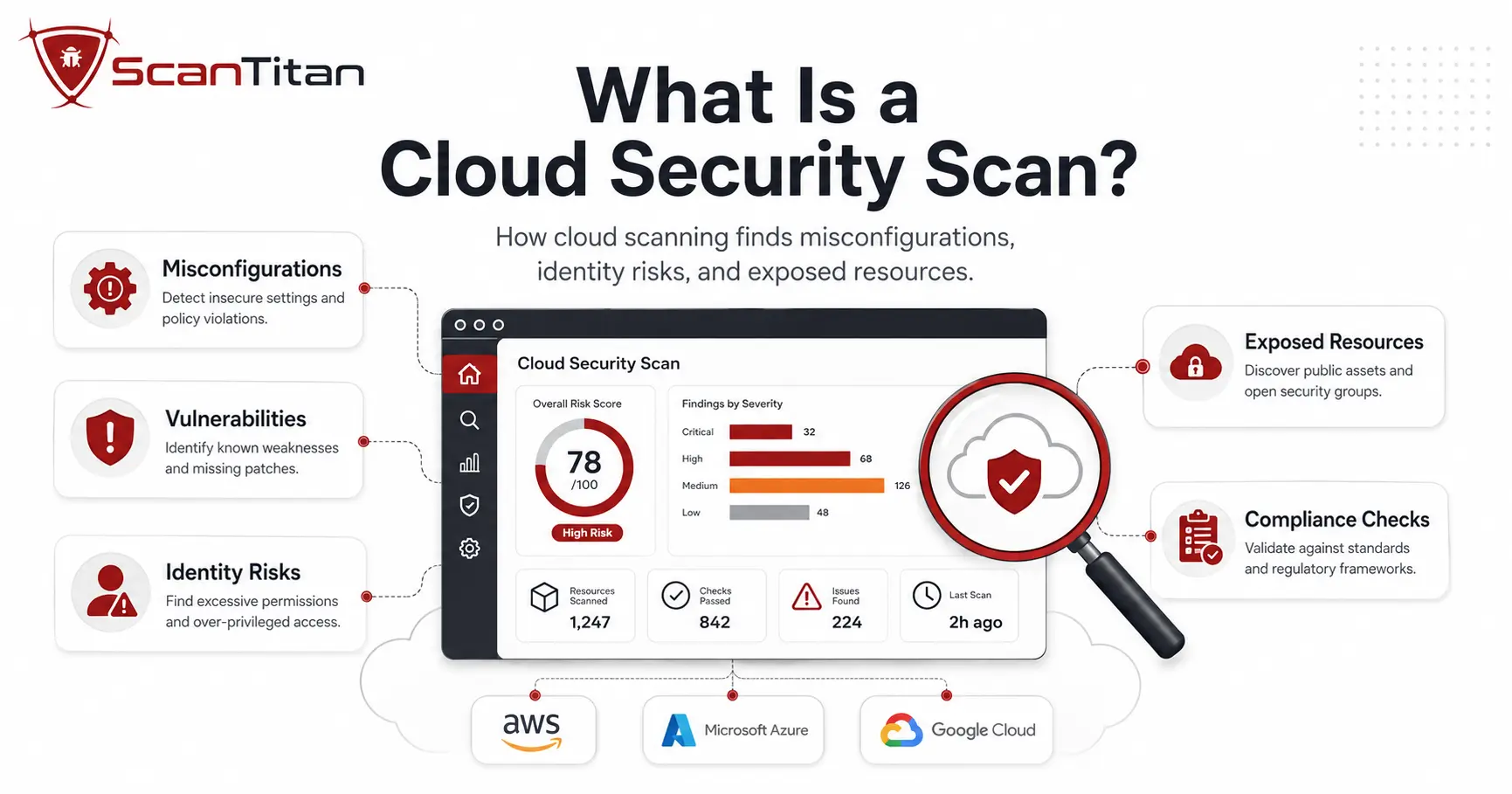
A cloud security scan is an automated assessment of cloud accounts, workloads, data, identities, and configuration settings that looks for vulnerabilities, insecure configurations, excessive permissions, exposed resources, and technical control gaps before an attacker finds them. Depending on the scanner and the integrations enabled, it may assess AWS, Azure, Google Cloud, virtual machines, containers, Kubernetes, […]
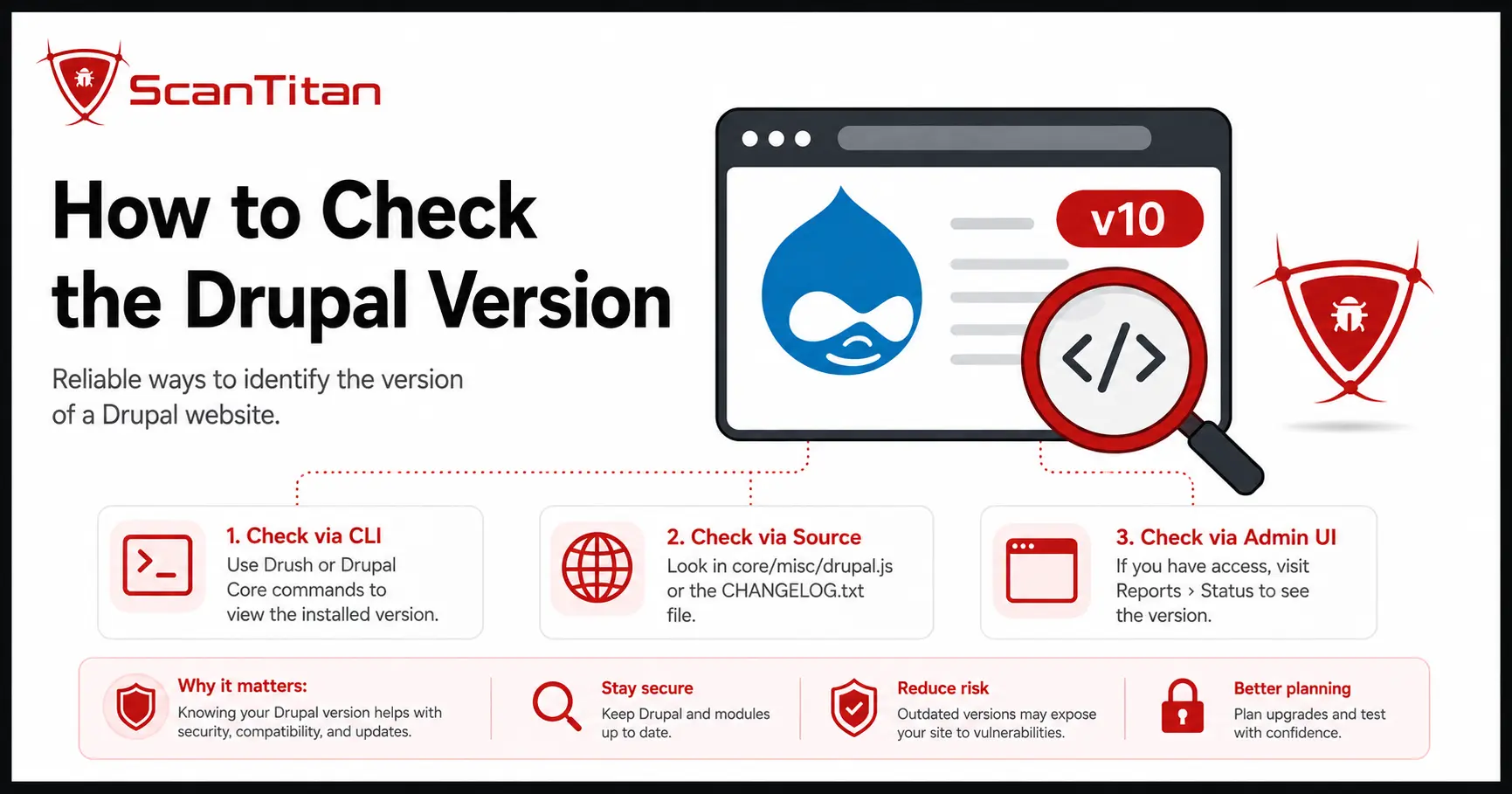
Knowing how to check the Drupal version of a website helps you answer a critical security question: does the site still receive security updates? An unsupported Drupal branch can continue running normally while accumulating publicly known vulnerabilities that will never receive an official patch, This guide explains three reliable ways to check the version of […]
Is Drupal secure? Yes, when it runs on a supported branch, receives security updates promptly, and is configured and maintained correctly. Drupal provides a strong security foundation through a dedicated Security Team, coordinated vulnerability disclosure, granular permissions, secure rendering defaults, configuration management, and public security advisories. But a secure Drupal core does not automatically make […]
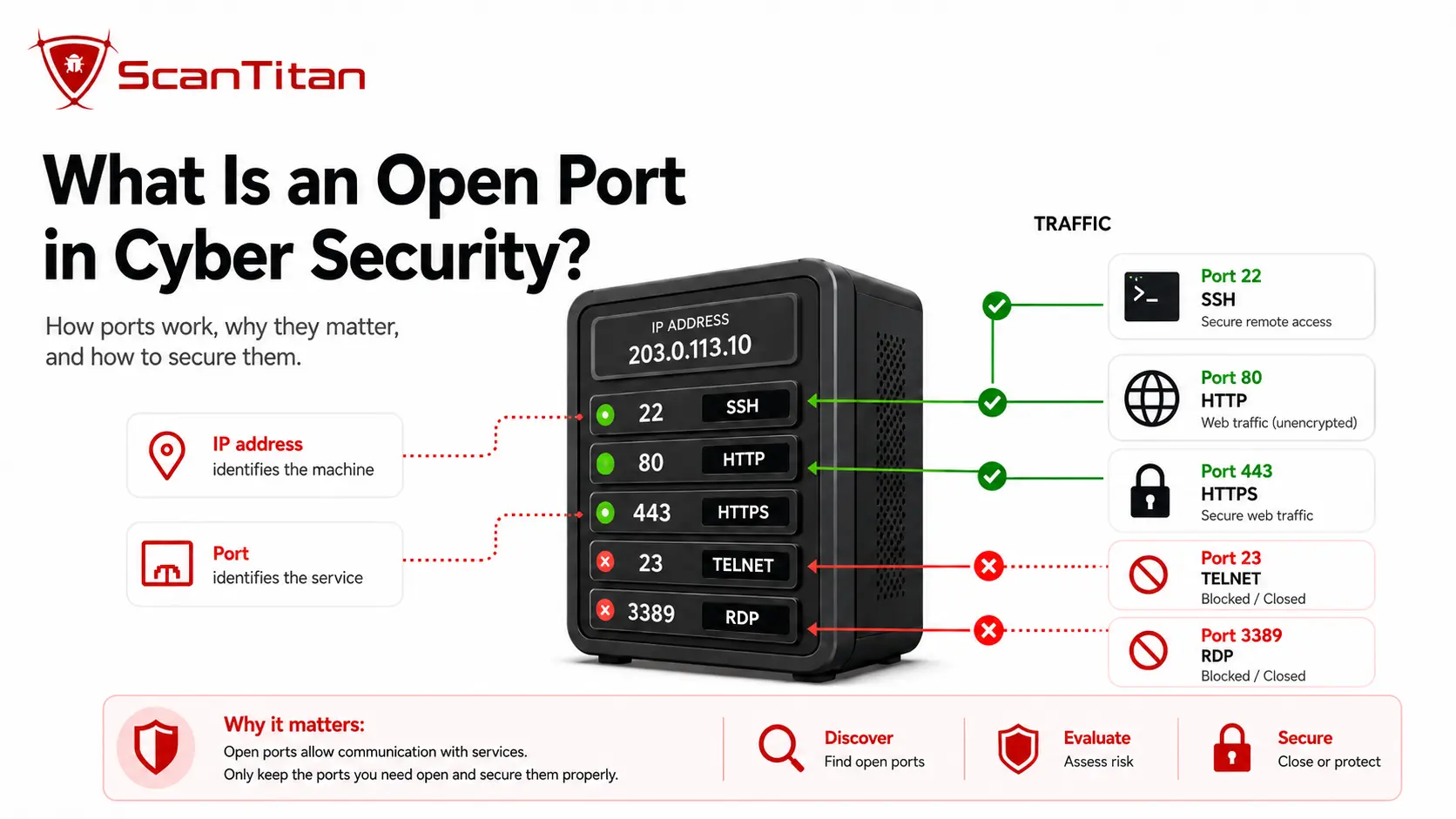
If your question is what is open port in cyber security, the answer is simple: an open port is a TCP or UDP endpoint where a service is listening and reachable from the network position testing it. Open ports are necessary for services such as HTTPS, DNS, SSH, and email. They create risk when a […]
12+ years in information security. Specialises in web application security, vulnerability management, and external attack surface reduction for SMB and mid-market organisations.
New CVEs, practical guides, and scan methodology updates. One email per week. No sales pitch.
No spam. Unsubscribe any time. GDPR compliant.
Editorial standards: All ScanTitan blog content is reviewed by certified InfoSec professionals before publication. Technical claims are tested against live scan results or cited from primary sources (CVE database, OWASP, NIST NVD). We do not accept sponsored posts or paid placements.
Try a free scan
Run a free vulnerability scan on your domain. No account required.