Website Security Blog: Vulnerability Scanning and Malware Guides
Practical website security guides on vulnerability scanning, malware removal, WordPress, APIs and attack surface management, written by practitioners for teams without a SOC.
Website Security Blog Topics: Scanning, Malware, WordPress and APIs
Each guide explains how an attack or exposure works, how to detect it and how to fix it.
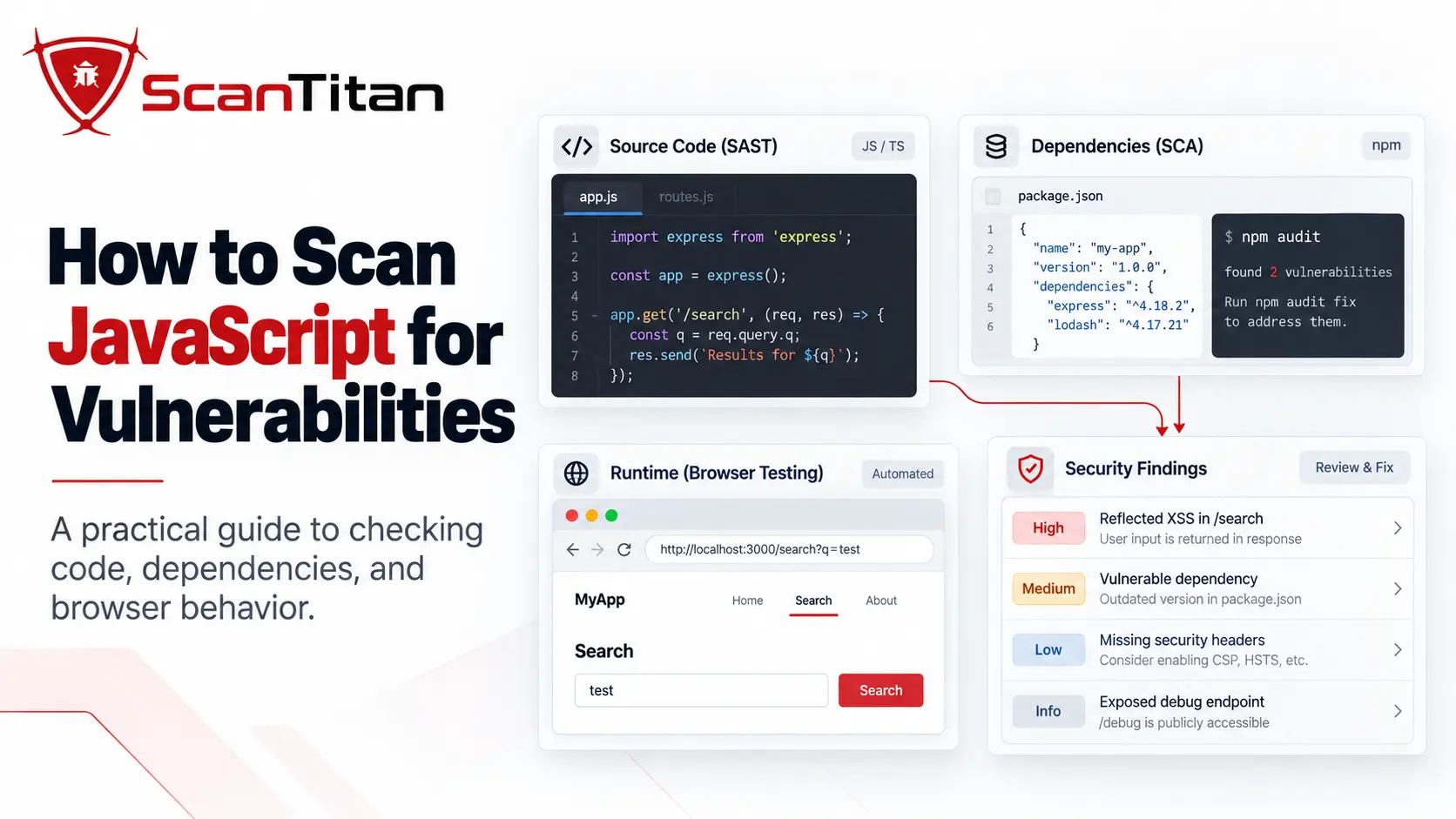
If you want to know how to scan JavaScript for vulnerabilities, do not rely on a single security check. A modern JavaScript application can contain weaknesses in the code your
Internet exposed services are applications, protocols, or management interfaces that can be reached from the public internet. A public website is intentionally exposed, while an administration panel, database, remote desktop
If you want to know how to scan an IP address for vulnerabilities, the process goes beyond checking whether a few ports are open. A proper assessment verifies the correct
An IP vulnerability scan checks a specific IP address for security weaknesses that can be detected from the scanner’s location. It identifies reachable ports and services, gathers evidence about the
API security testing is the process of checking application programming interfaces for vulnerabilities, misconfigurations, authorization failures, unsafe input handling, and business-logic weaknesses before attackers can exploit them. Effective testing combines
By Obaida Al-Sulaiman, Information Security Manager (CISSP, GXPN, GWAPT). Reviewed September 2026. REST API security is the set of methods and controls that protect RESTful APIs from unauthorized access, data
API fuzzing is an automated security testing technique that floods your API endpoints with malformed, random, and unexpected inputs to find the bugs and vulnerabilities that normal testing never triggers.
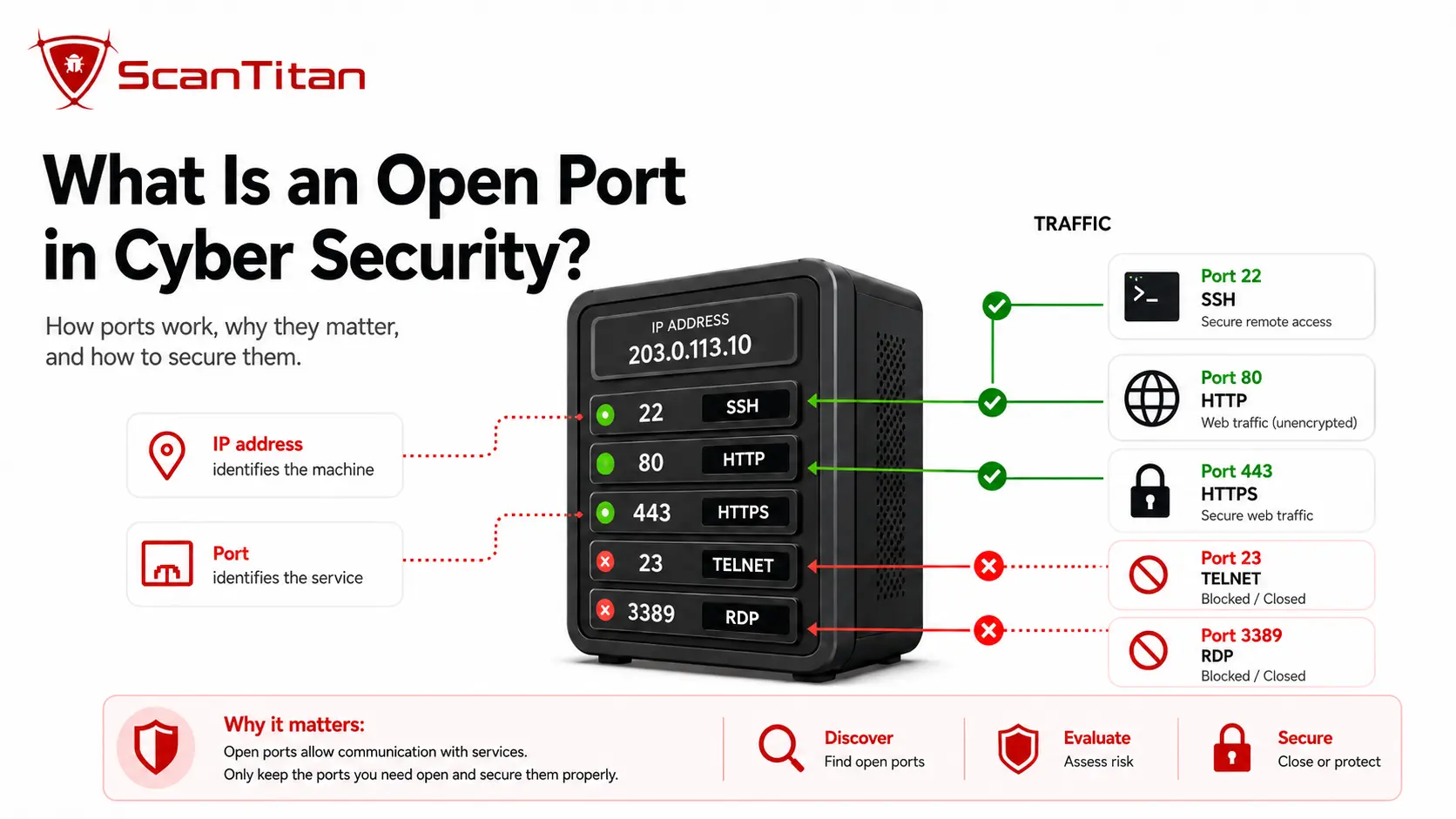
An open ports security risk assessment is the process of finding every internet-facing port, identifying the service behind it, and scoring how likely an attacker is to exploit it. Not
The port 445 vulnerability is the security risk of exposing Server Message Block (SMB) traffic, which runs over TCP port 445, to an untrusted network. Attackers target port 445 for
Network vulnerability scanning is the automated process of probing every host on a network, identifying the service behind each open port, and matching what it finds against a database of
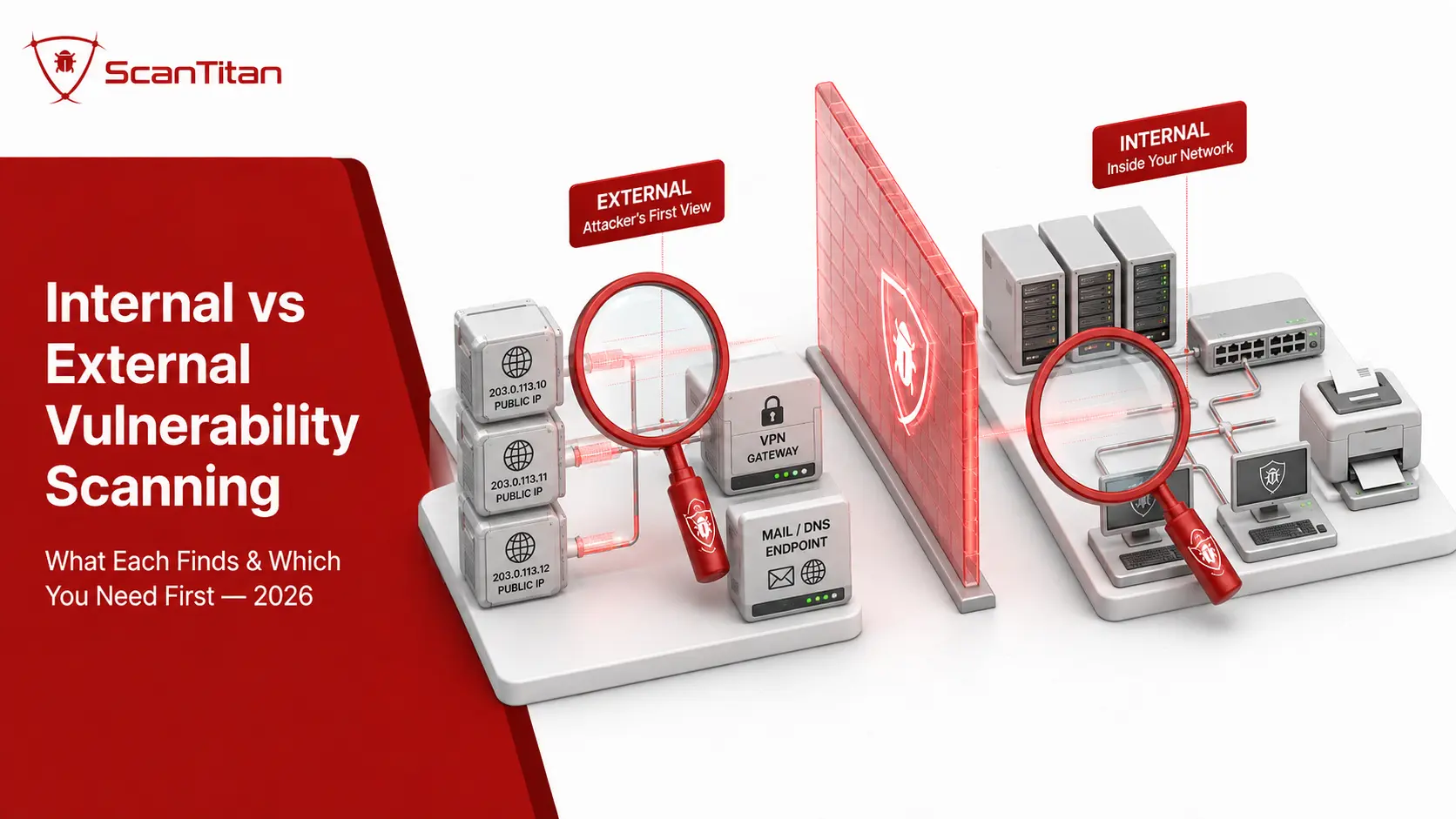
Internal vs external vulnerability scanning is primarily a difference in vantage point. An external scan tests internet-facing systems from outside your network, while an internal scan tests systems reachable from
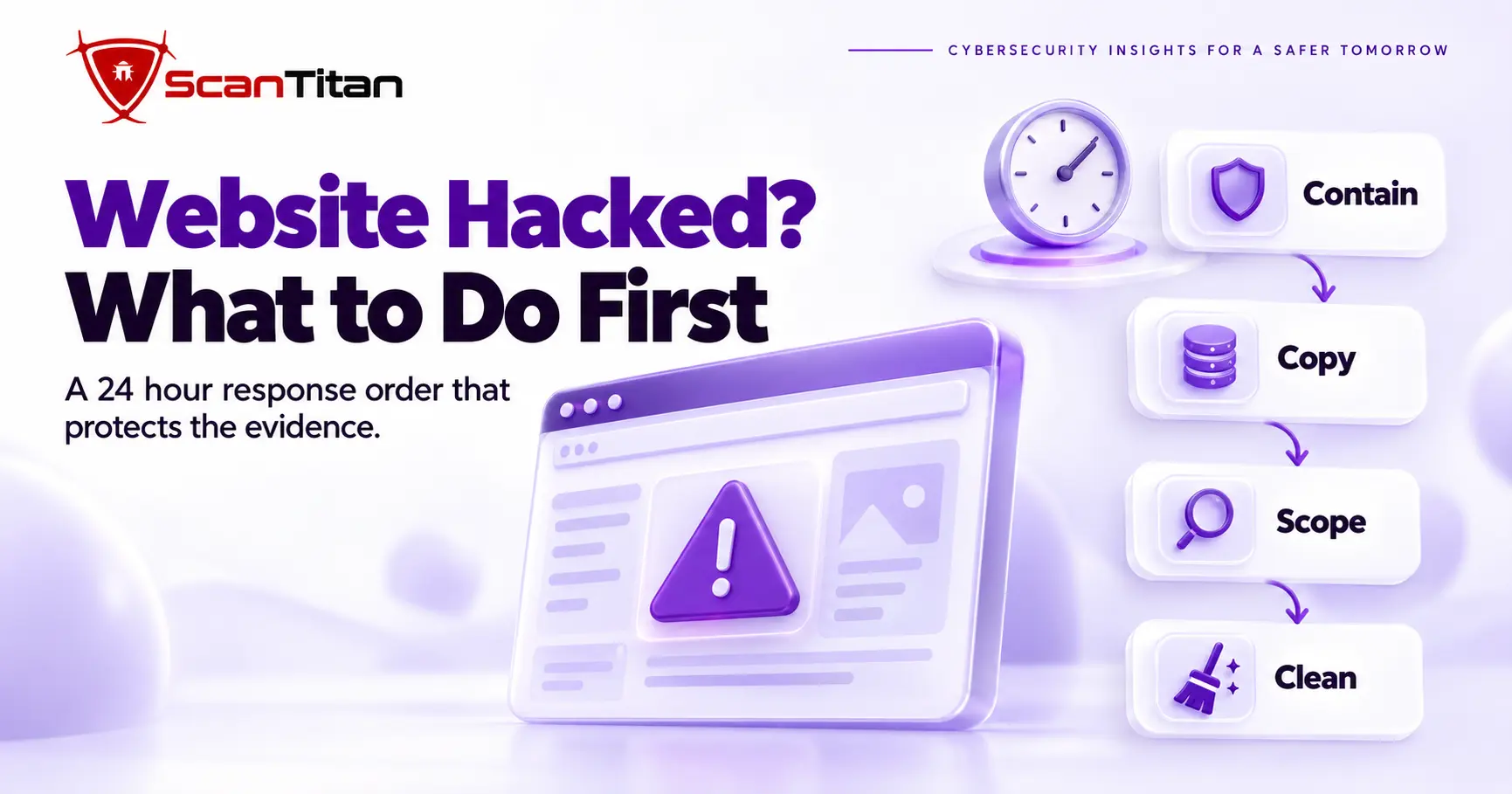
If your WordPress site has been hacked, the fastest way to fix it is to work in order rather than panic: contain the site, find and remove the malware, close
Learning how to check a wordpress version in database is useful when you are locked out of the dashboard, but it comes with a catch most guides get wrong: the
Learning how to check WordPress version without login often takes only a couple of minutes because default or lightly hardened WordPress sites may expose version clues in the page source,
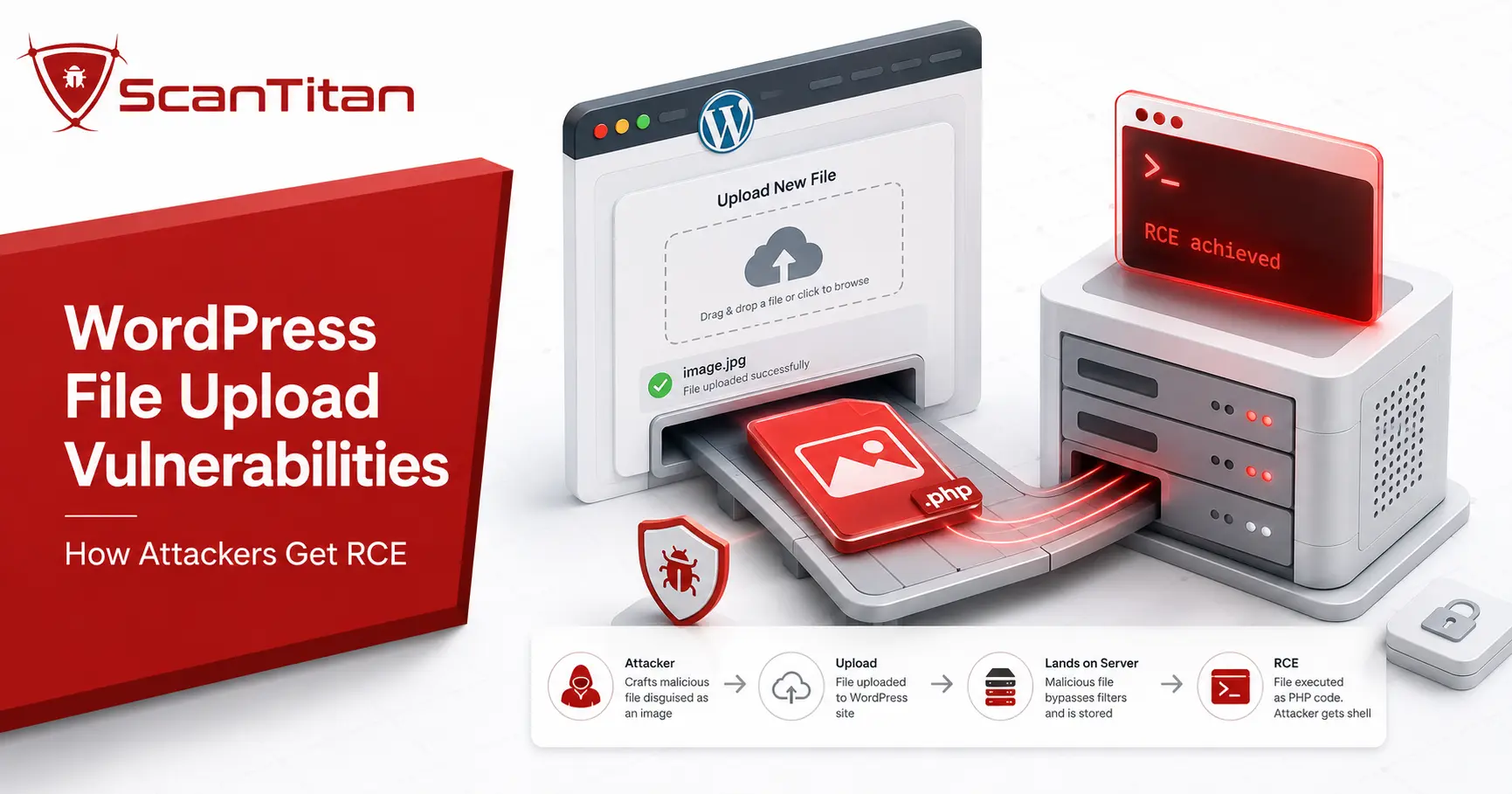
A WordPress file upload vulnerability is one of the most dangerous flaws a site can have, because it can lead straight to remote code execution when an attacker can place
WordPress SQL injection is one of the most damaging ways a WordPress site gets breached, because it reaches the database where everything lives: your users, passwords, settings, and content. The
WordPress plugin vulnerabilities are the single biggest reason WordPress sites get hacked, and the problem is growing, not shrinking. Plugins account for more than nine in ten WordPress security flaws,
API security statistics are becoming harder to interpret as APIs spread across web applications, mobile apps, microservices, SaaS integrations, artificial intelligence systems, and machine-to-machine workflows. The strongest 2026 data does
Ransomware statistics can look contradictory because attack volume, breach involvement, encryption, ransom demands, payments, recovery costs, and leak-site claims measure different parts of the same problem. The latest 2026 evidence
Vulnerability statistics are easy to inflate because raw disclosure volume is the biggest number and often the least useful one on its own. The CVE Program published 48,244 vulnerabilities in
Small business cybersecurity statistics are easy to inflate because surveys, investigated breaches, blocked attacks, ransomware incidents, and financial-loss estimates all measure different things. The clearest 2026 picture is more useful
Learning how to secure Joomla website comes down to a short list of controls applied in the right order, not a hundred obscure tweaks. Patch first, lock down the login,
The Joomla vs WordPress security debate usually gets answered with loyalty, not evidence. The honest version is duller and more useful: both platforms ship a secure core, and both get
Joomla security features are one of the platform’s real advantages: the core ships controls that most content management systems leave to plugins. Out of the box you get two-factor authentication,
Is Joomla secure in 2026? Yes, when it runs on a supported release and is maintained properly. Joomla includes multi-factor authentication, granular access control, security-header tooling, and a dedicated security-response
Joomla SQL injection is a vulnerability that lets untrusted input change the SQL query a Joomla component, extension, or API endpoint sends to its database. A Joomla SQL injection can
Threat Intelligence vs Vulnerability Management is one of the most common points of confusion in security, and the two are partners, not competitors. Vulnerability management is the internal discipline of
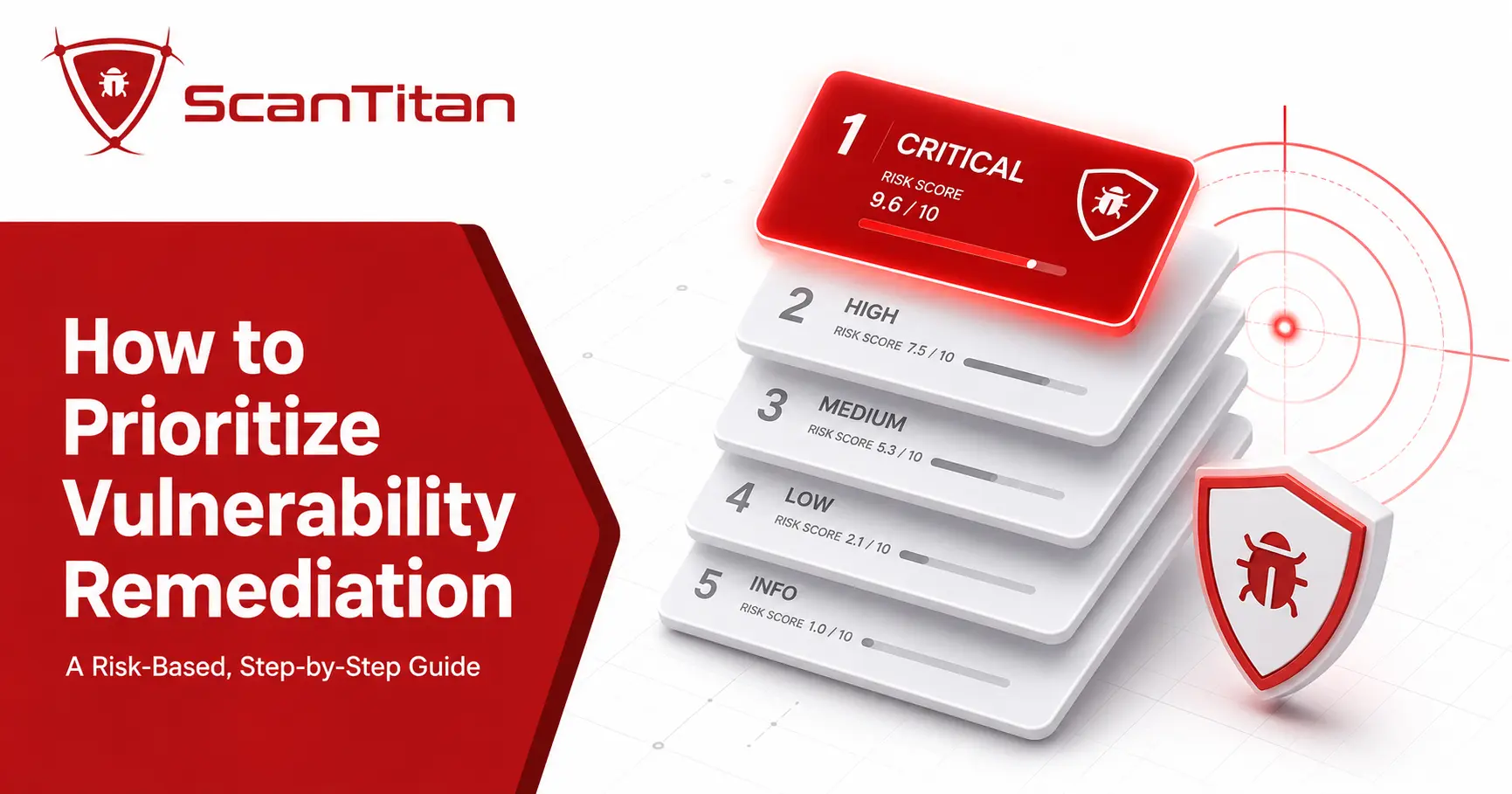
Learning How to Prioritize Vulnerability Remediation means deciding which security flaws to fix first based on the real risk they pose, not just their severity score. With scanners flagging thousands
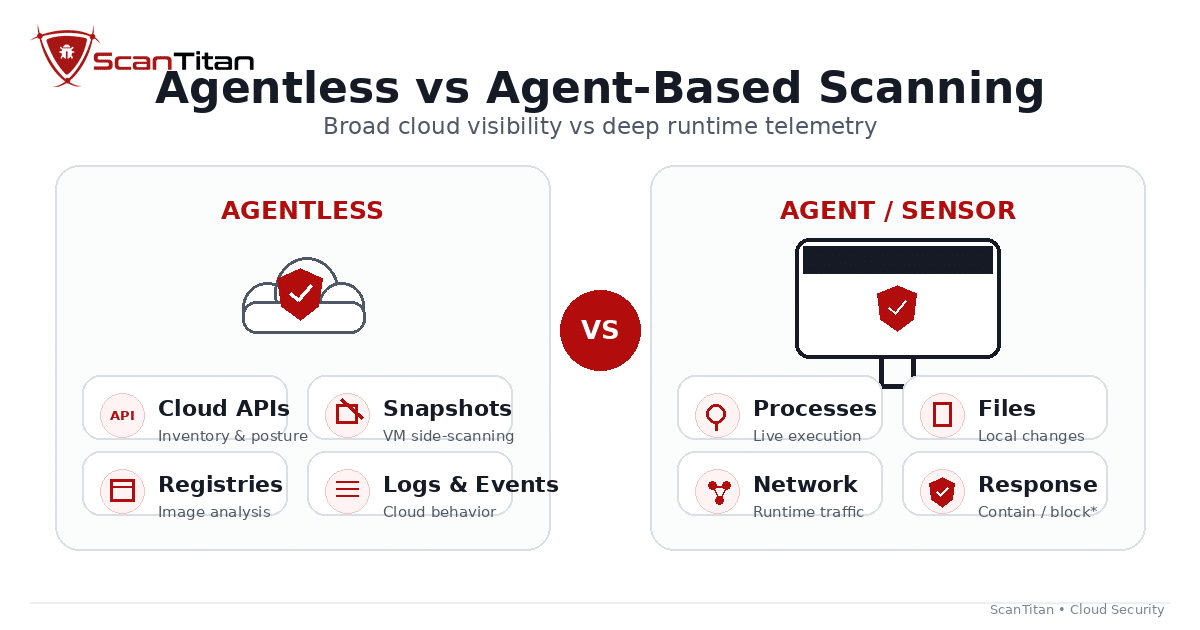
Agentless vs Agent Based scanning is the central design choice in cloud security tooling. Agentless scanning assesses your cloud without installing a security sensor inside each workload, using cloud-native techniques
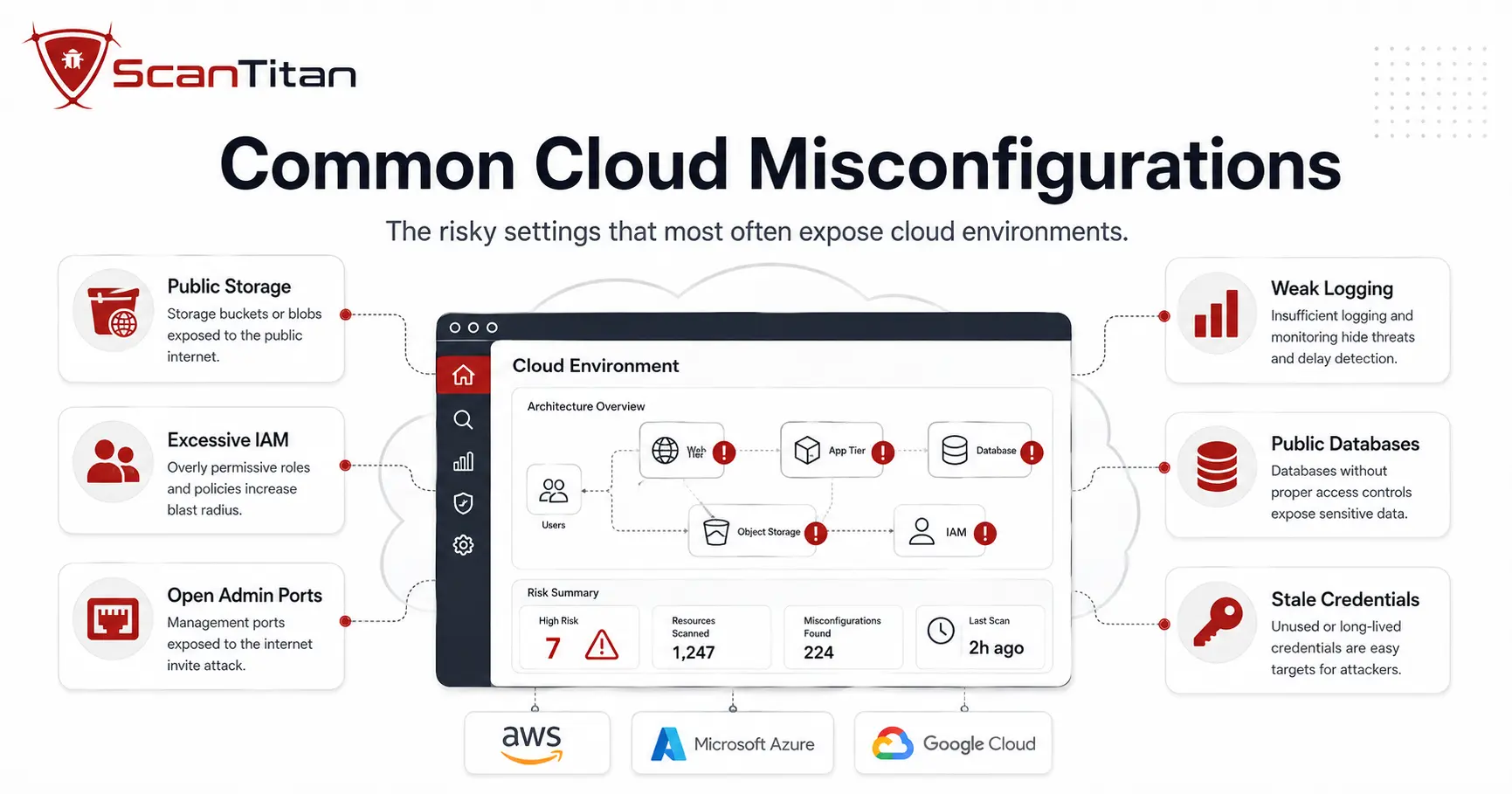
Common cloud misconfigurations are security-relevant settings that leave cloud resources more exposed than intended, for example a public data store, an overly broad IAM role, an unrestricted management port, or
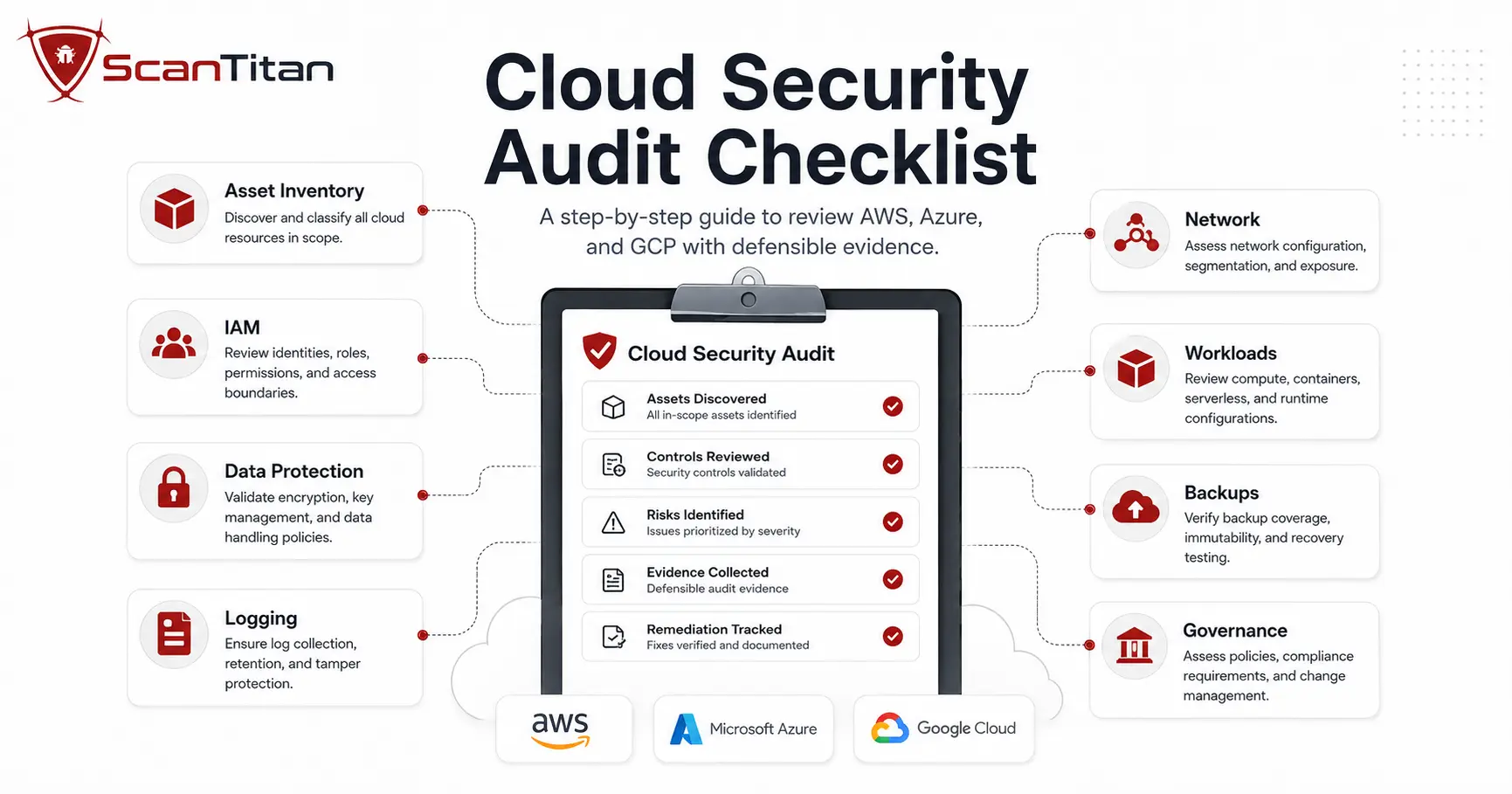
A cloud security audit checklist is the structured list of domains and controls you review to confirm your cloud environment is configured, governed, and defended as your policies and obligations
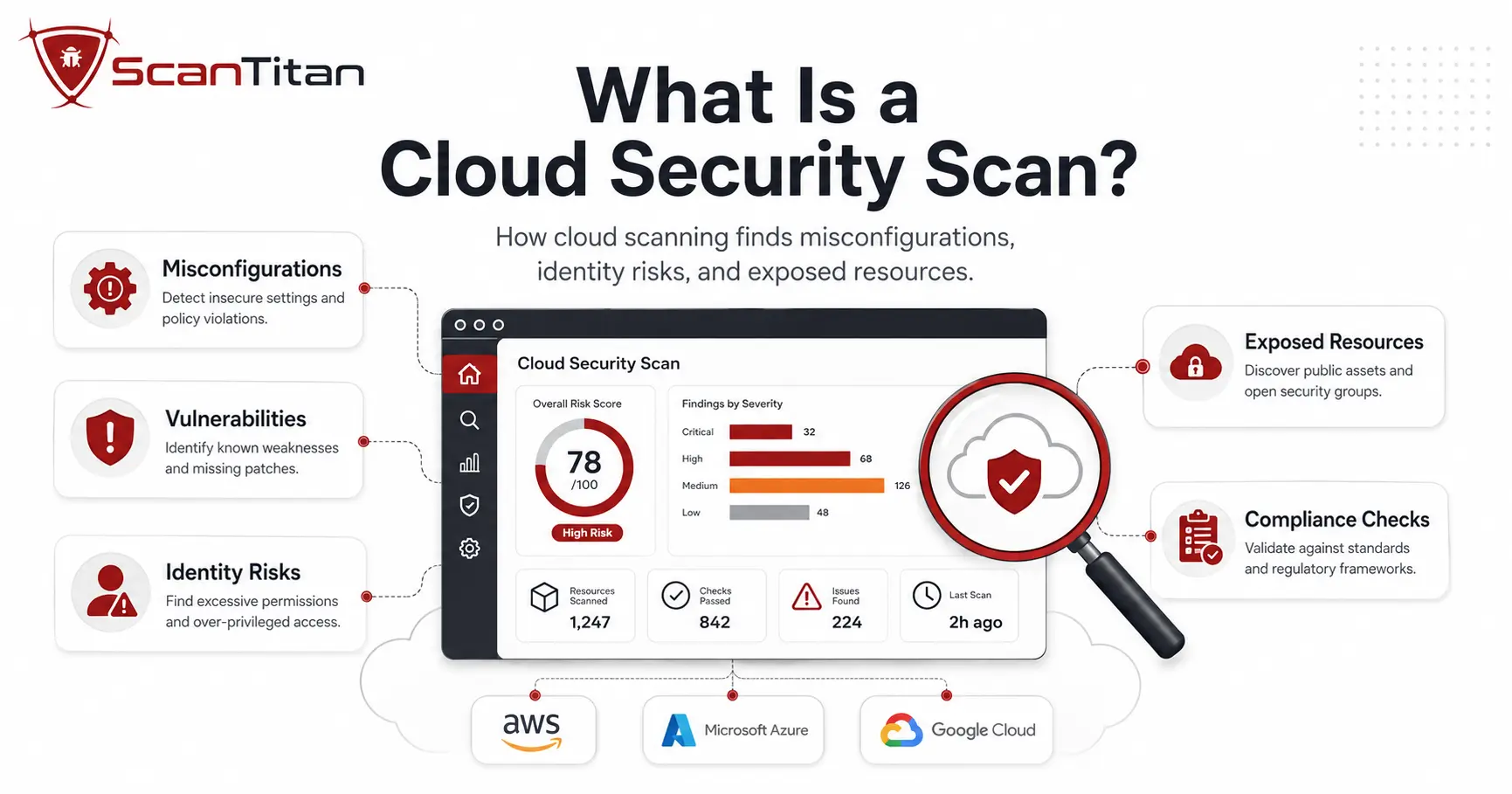
A cloud security scan is an automated assessment of cloud accounts, workloads, data, identities, and configuration settings that looks for vulnerabilities, insecure configurations, excessive permissions, exposed resources, and technical control
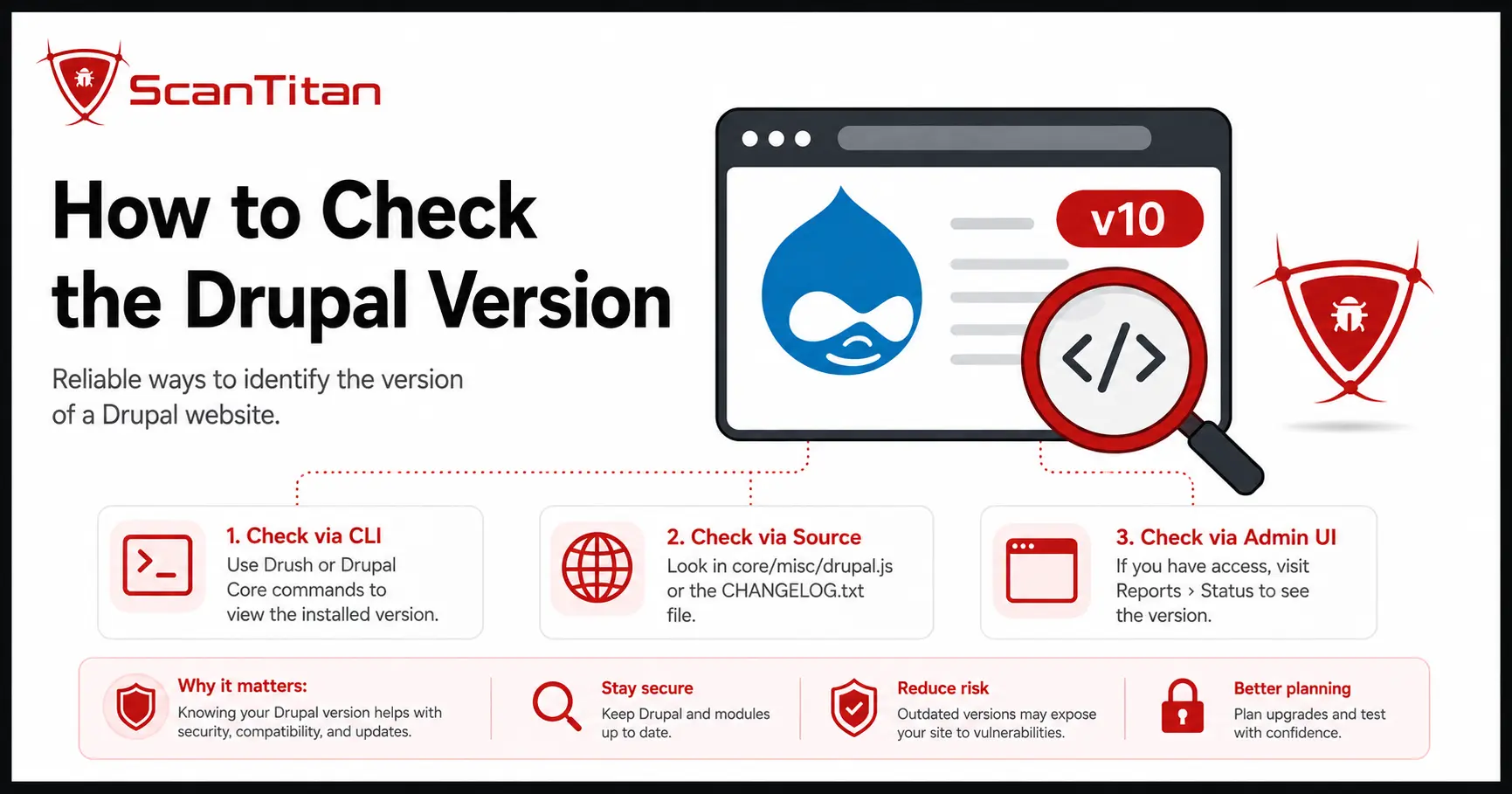
Knowing how to check the Drupal version of a website helps you answer a critical security question: does the site still receive security updates? An unsupported Drupal branch can continue
Is Drupal secure? Yes, when it runs on a supported branch, receives security updates promptly, and is configured and maintained correctly. Drupal provides a strong security foundation through a dedicated
A use-after-free vulnerability happens when a program keeps using a piece of memory after it has already handed that memory back to the system. The leftover reference, called a dangling
The most common WordPress vulnerabilities in 2026 still come mainly from plugins and themes, but the risk is more specific than “WordPress is insecure.” Patchstack recorded 11,334 new ecosystem vulnerabilities
Knowing how to check if a WordPress plugin is safe before you install it is the single most useful security habit a site owner can build, because plugins, not WordPress
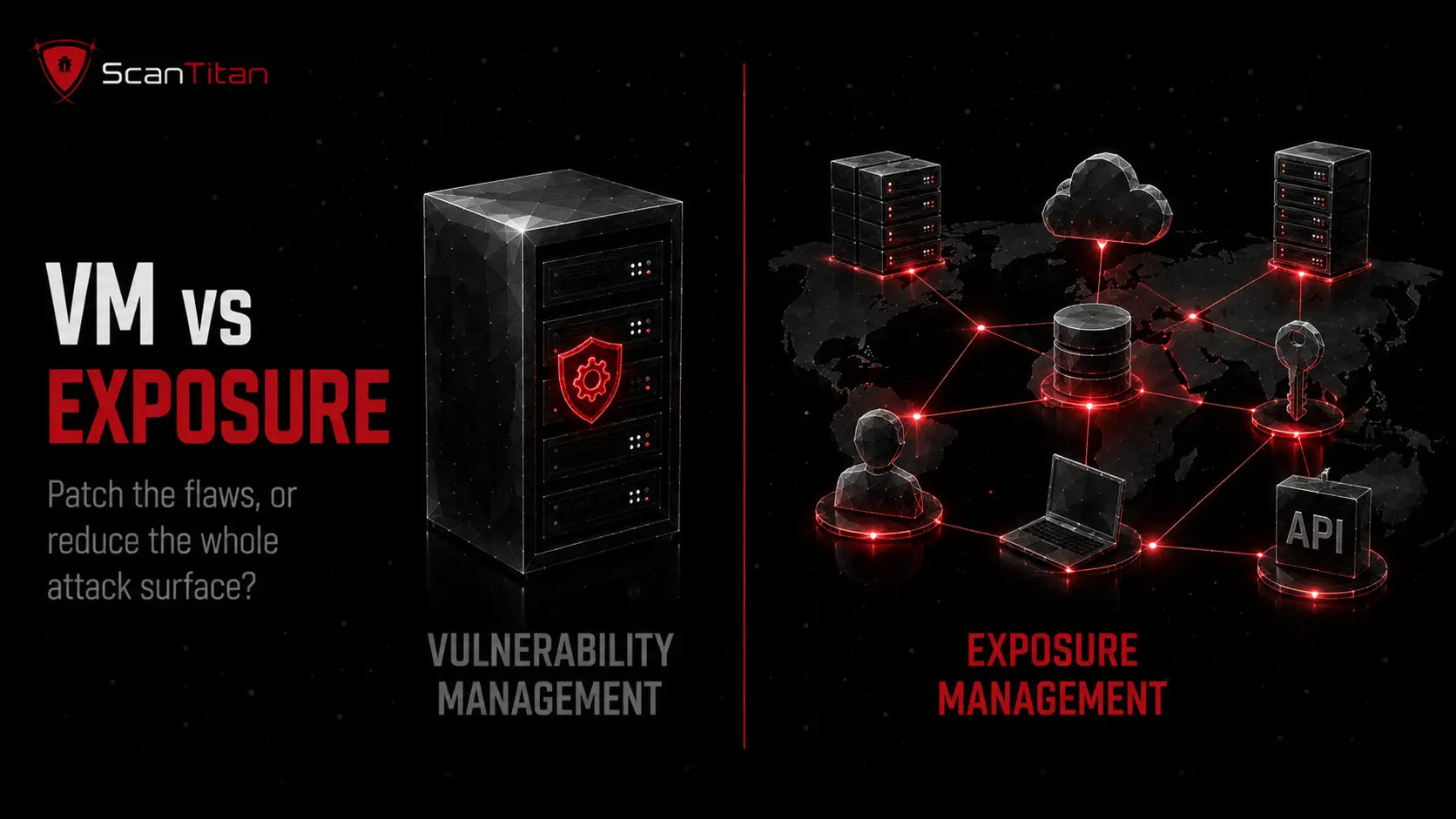
Vulnerability management vs exposure management comes down to one question: are you fixing individual software flaws, or reducing everything an attacker could actually use to get in? Vulnerability management hunts
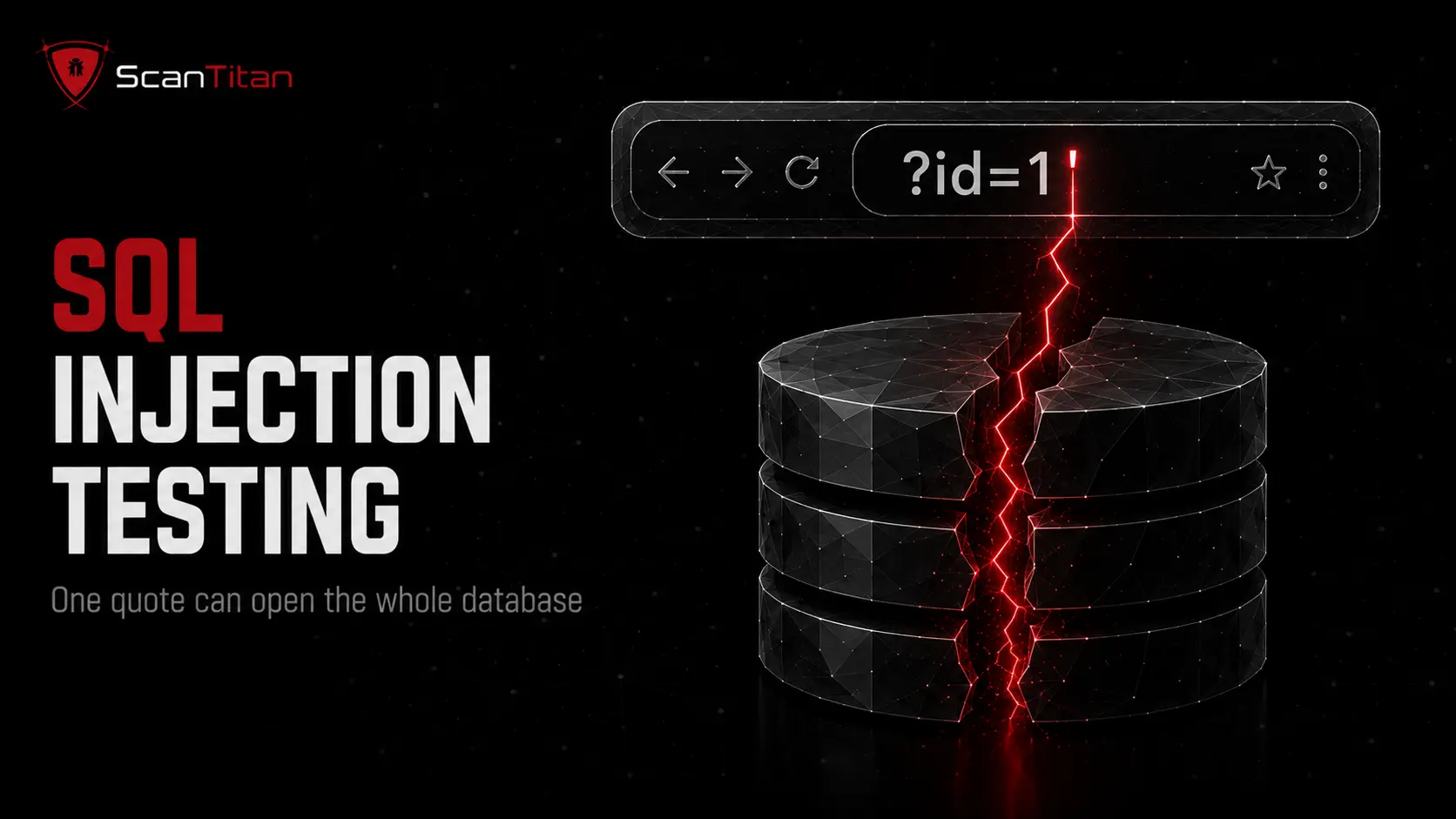
Learning how to test for SQL injection vulnerability by hand is the fastest way to understand one of the most damaging flaws on the web: a single unescaped quote in
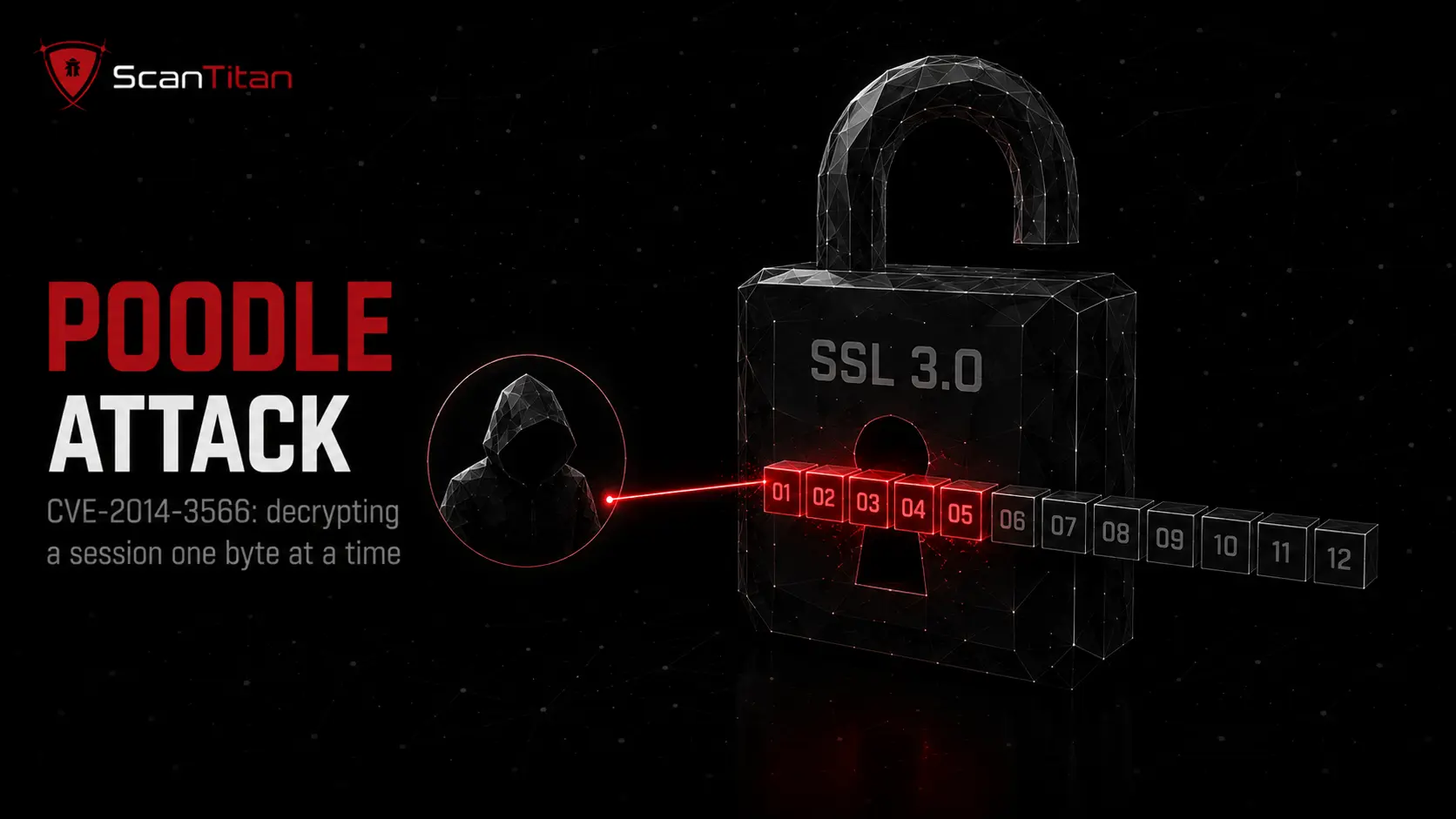
The POODLE vulnerability is a design flaw in SSL 3.0 that lets a man-in-the-middle attacker decrypt small pieces of an encrypted session, one byte at a time, until they recover
An SSL vulnerability is a weakness in Secure Sockets Layer (SSL) or Transport Layer Security (TLS) protocols, cryptographic software, certificates, or server configuration that can expose traffic that should be
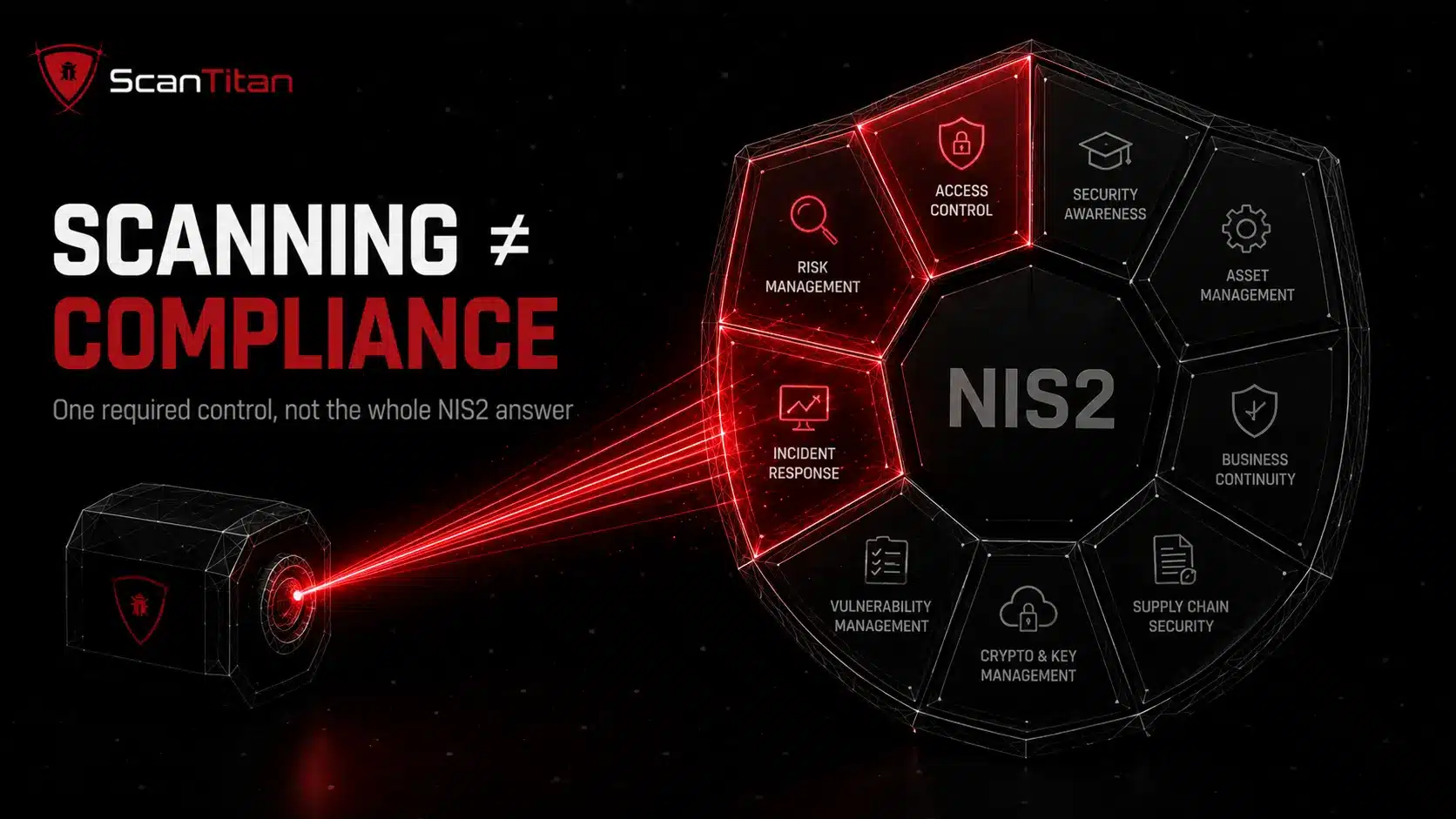
Can vulnerability scanning ensure NIS2 compliance? No, and any vendor promising otherwise is selling a false sense of safety. Vulnerability scanning is a required technical control under the NIS2 Directive
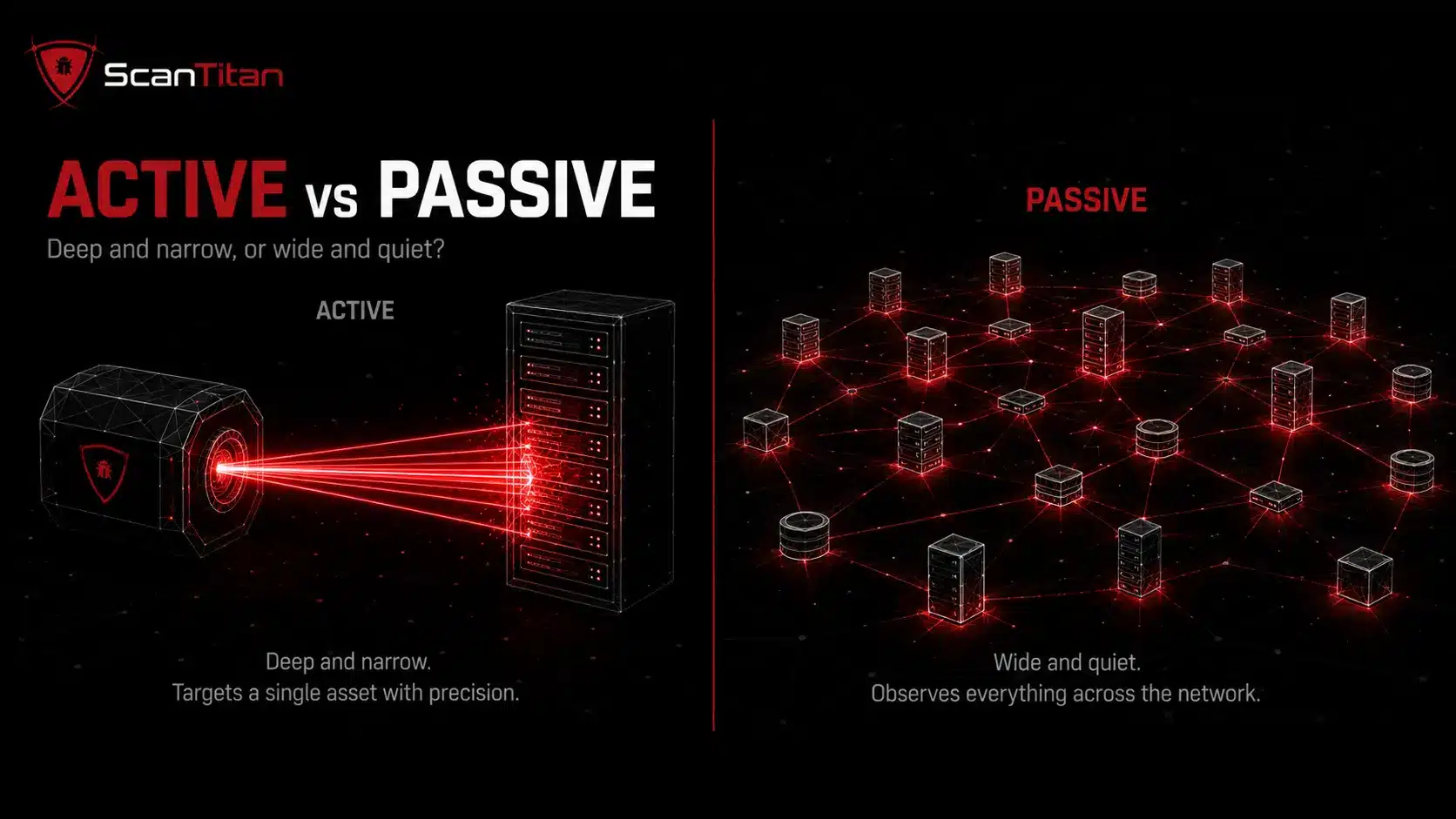
Active vs passive vulnerability scanning comes down to how the scanner looks for weaknesses. Active scanning sends probes and test traffic to your systems and reads the responses, going deep
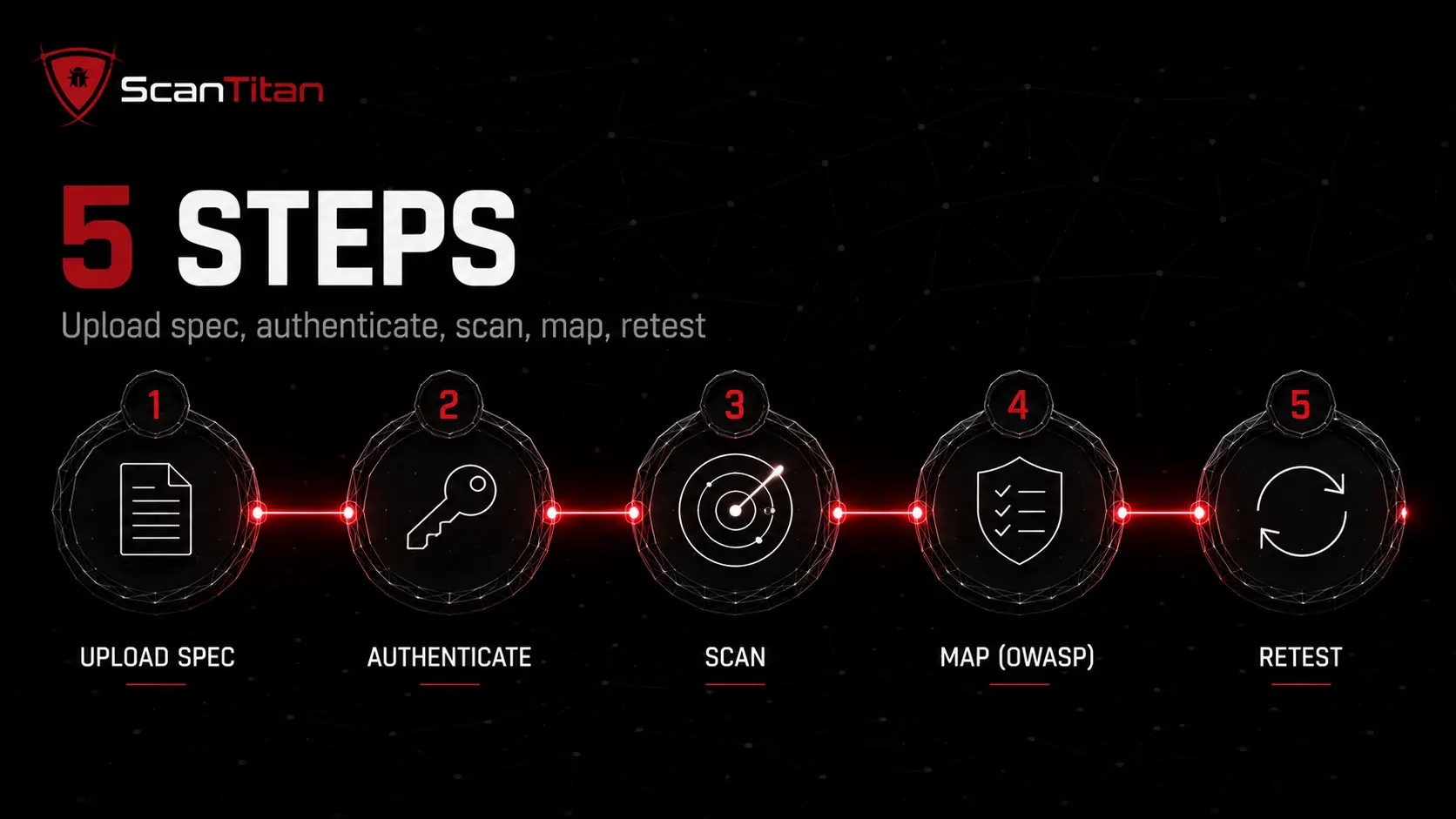
To scan an API for vulnerabilities, you discover every endpoint, feed the scanner an OpenAPI or Swagger definition, authenticate it with the right API key, OAuth, or JWT token, run
A WordPress pharma hack is a post-compromise SEO spam infection that adds pharmaceutical keywords, links, pages, redirects, or hidden content to a WordPress website without the owner’s permission. It is
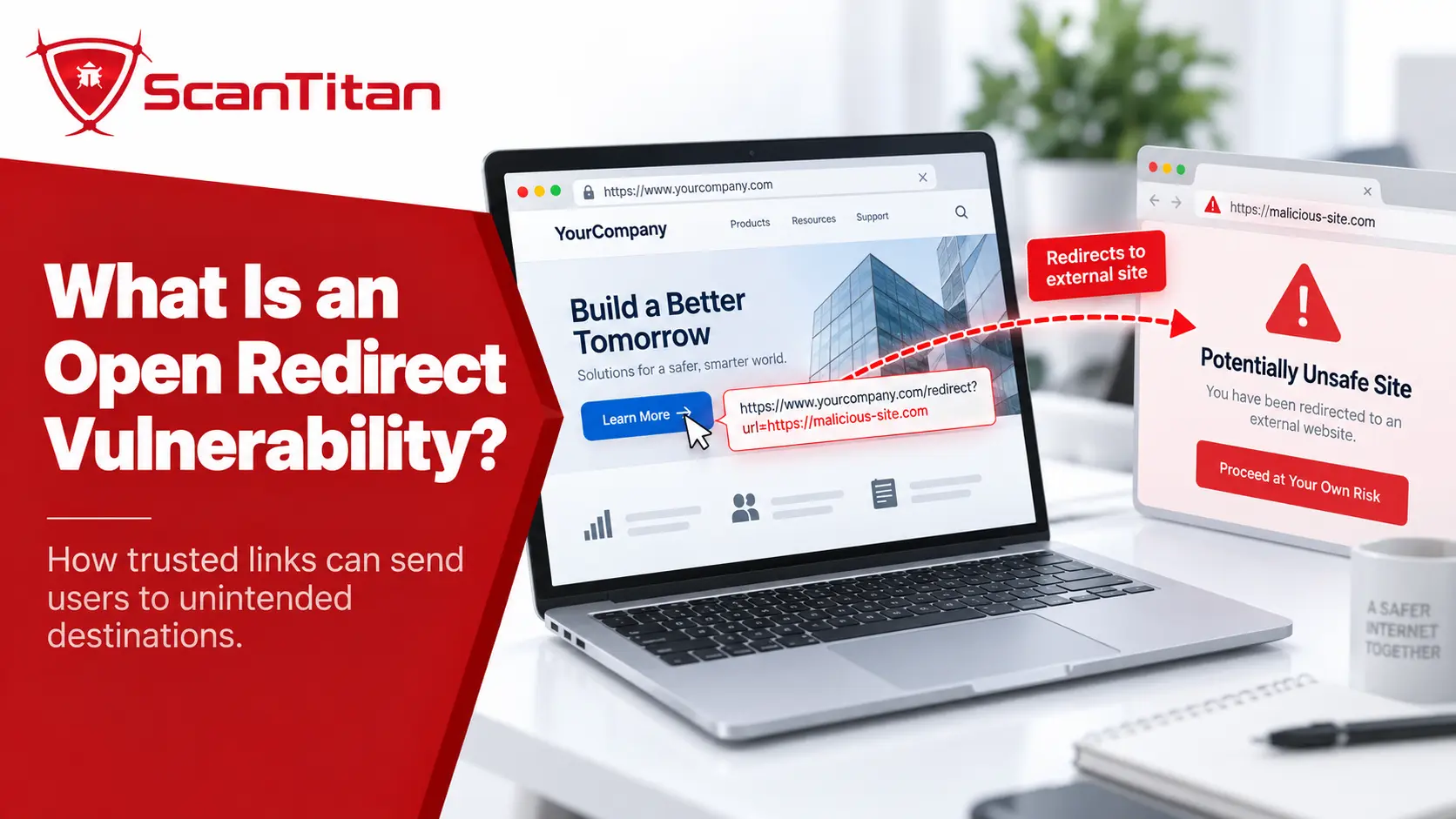
An open redirect vulnerability occurs when a web application lets attacker-controlled input determine where a user is redirected without sufficiently restricting the final destination. An attacker can then create a
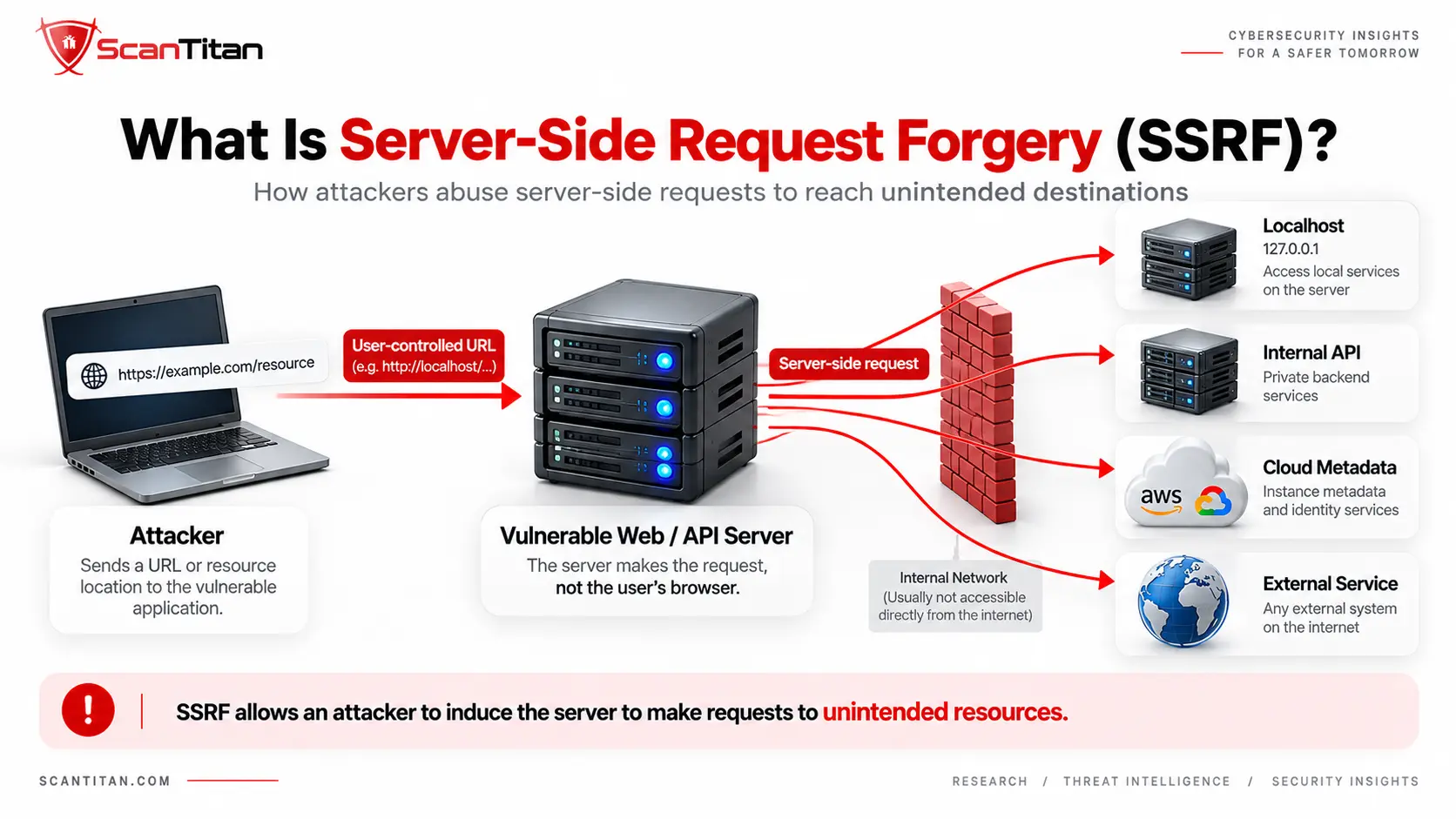
Server-Side Request Forgery (SSRF) is a web application security vulnerability in which attacker-controlled input causes a server-side component to send a network request to an unintended destination. The defining characteristic
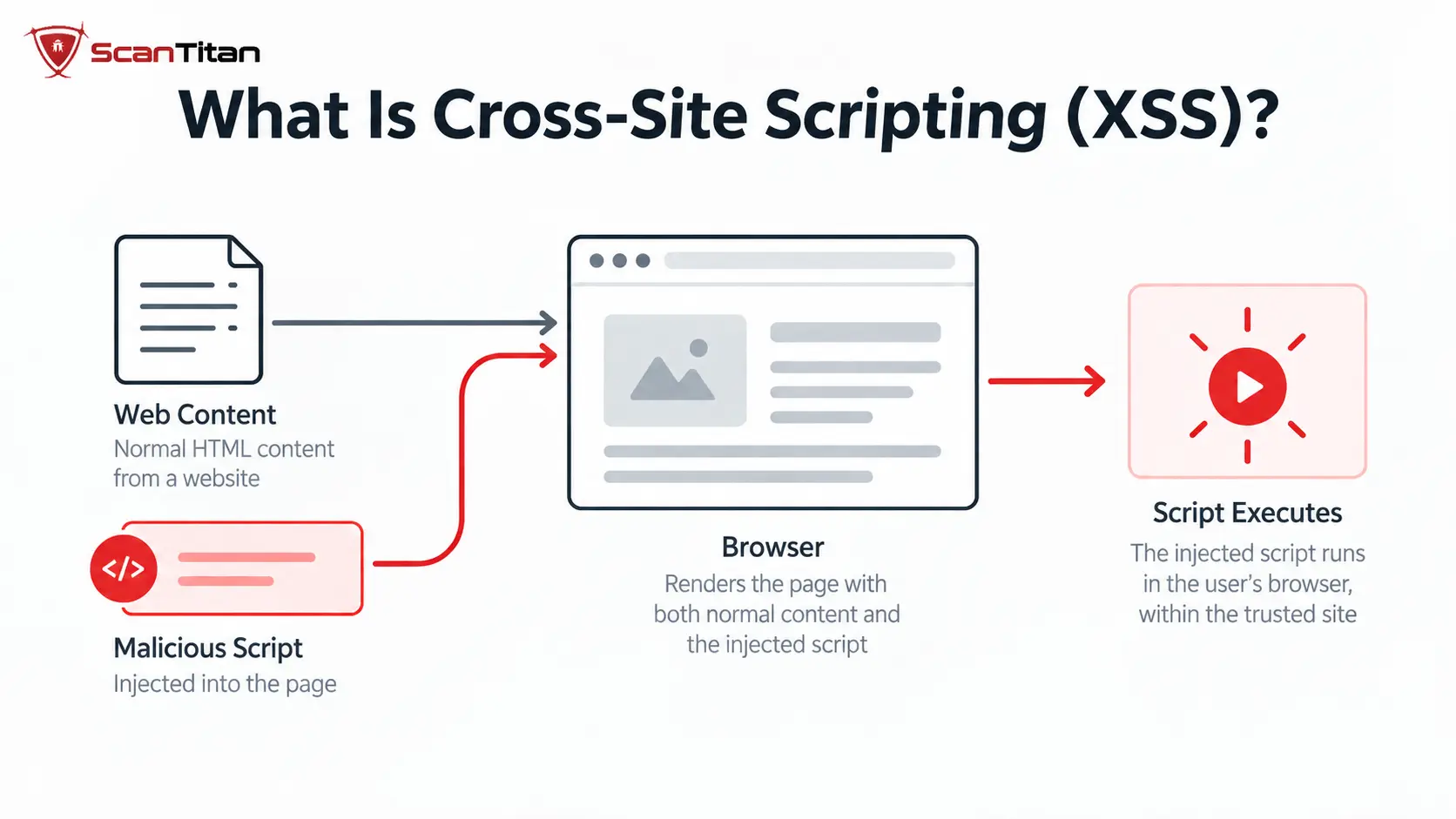
Cross-site scripting (XSS) is a web application vulnerability that allows untrusted data to reach a browser in a context where the browser interprets it as executable code instead of ordinary
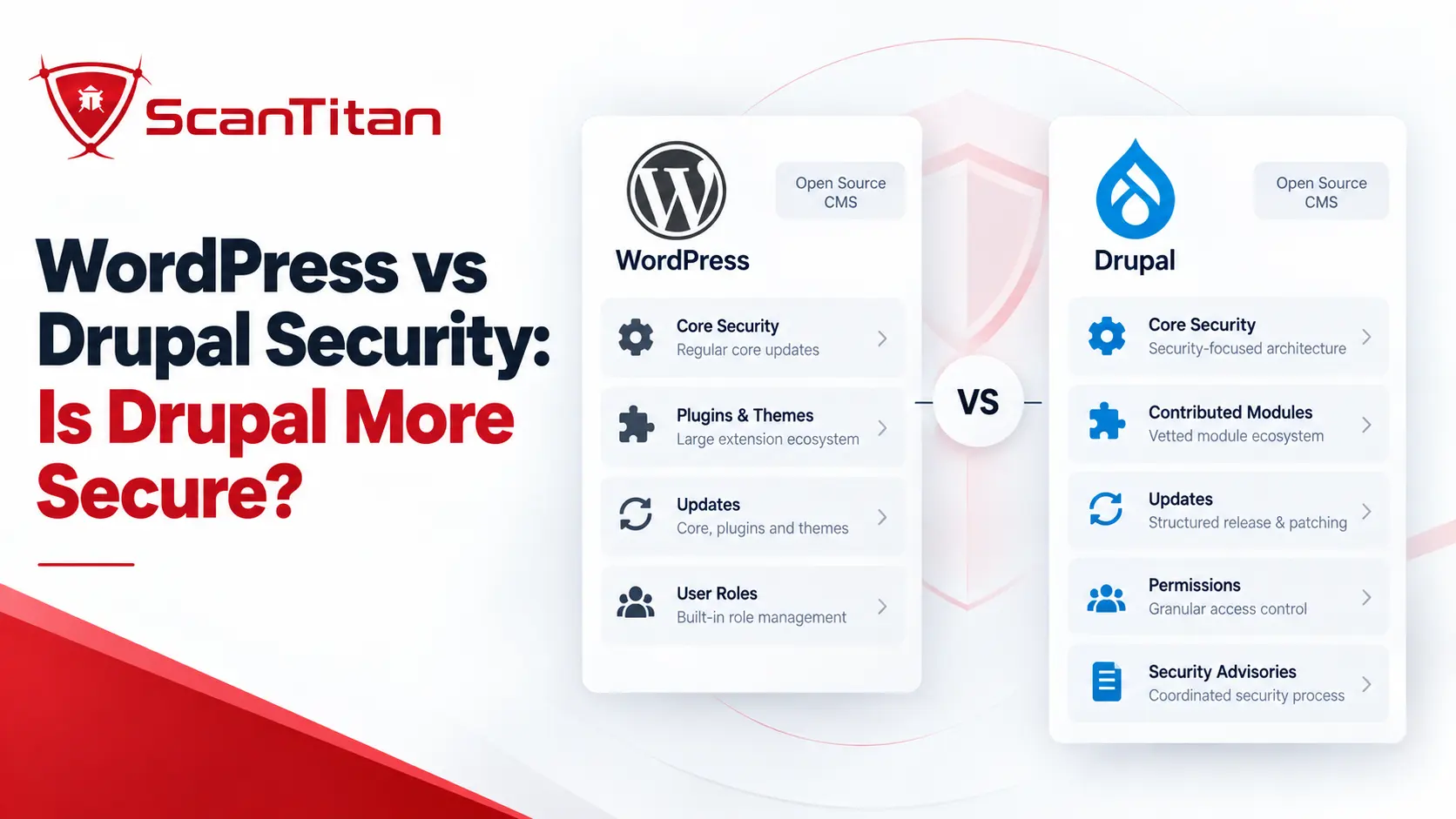
WordPress vs Drupal security is not as simple as comparing vulnerability counts. Drupal generally provides stronger security and governance defaults for complex, multi-user websites, especially around permissions, configuration management, and
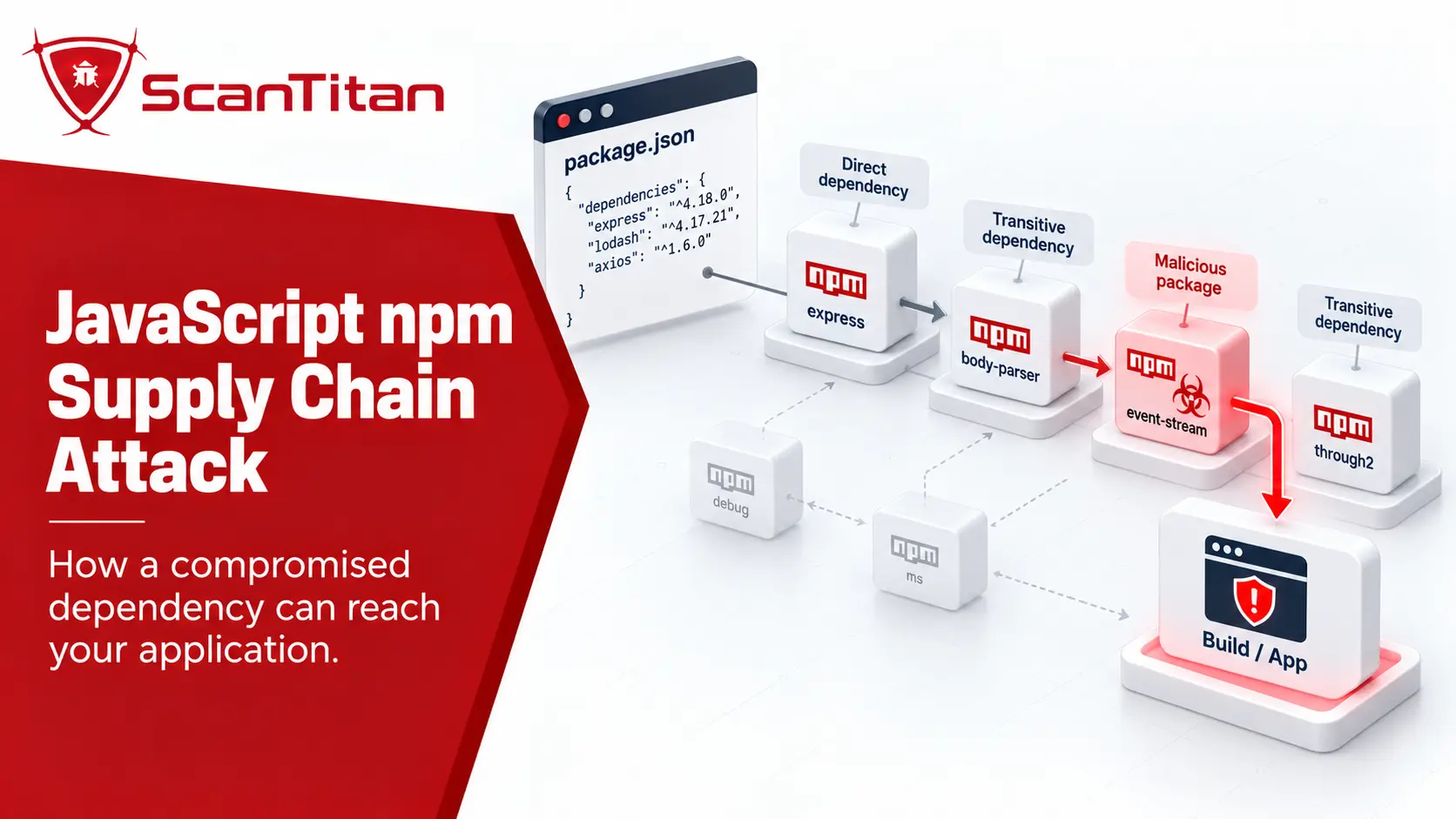
A JavaScript npm supply chain attack targets the software and infrastructure between an npm package maintainer and the application that eventually installs that package. Instead of exploiting a flaw in
If you want to know how to scan JavaScript for vulnerabilities, do not rely on a single security check. A modern JavaScript application can contain weaknesses in the code your
If you want to know how to scan an IP address for vulnerabilities, the process goes beyond checking whether a few ports are open. A proper assessment verifies the correct
An IP vulnerability scan checks a specific IP address for security weaknesses that can be detected from the scanner’s location. It identifies reachable ports and services, gathers evidence about the
API security testing is the process of checking application programming interfaces for vulnerabilities, misconfigurations, authorization failures, unsafe input handling, and business-logic weaknesses before attackers can exploit them. Effective testing combines
By Obaida Al-Sulaiman, Information Security Manager (CISSP, GXPN, GWAPT). Reviewed September 2026. REST API security is the set of methods and controls that protect RESTful APIs from unauthorized access, data
API fuzzing is an automated security testing technique that floods your API endpoints with malformed, random, and unexpected inputs to find the bugs and vulnerabilities that normal testing never triggers.
To find a backdoor in a website, run three passes: compare every file against a clean copy, search for code that behaves like a backdoor, and trace unusual requests in
How did my website get hacked? Almost always through one of nine entry points: a vulnerable plugin or theme, stolen credentials, a nulled theme, a compromised hosting account, vulnerable custom
A seo spam hack is an attack that injects spam pages, links or redirects into your site so the attacker can rank pharmacy, casino or counterfeit-goods pages on your domain.
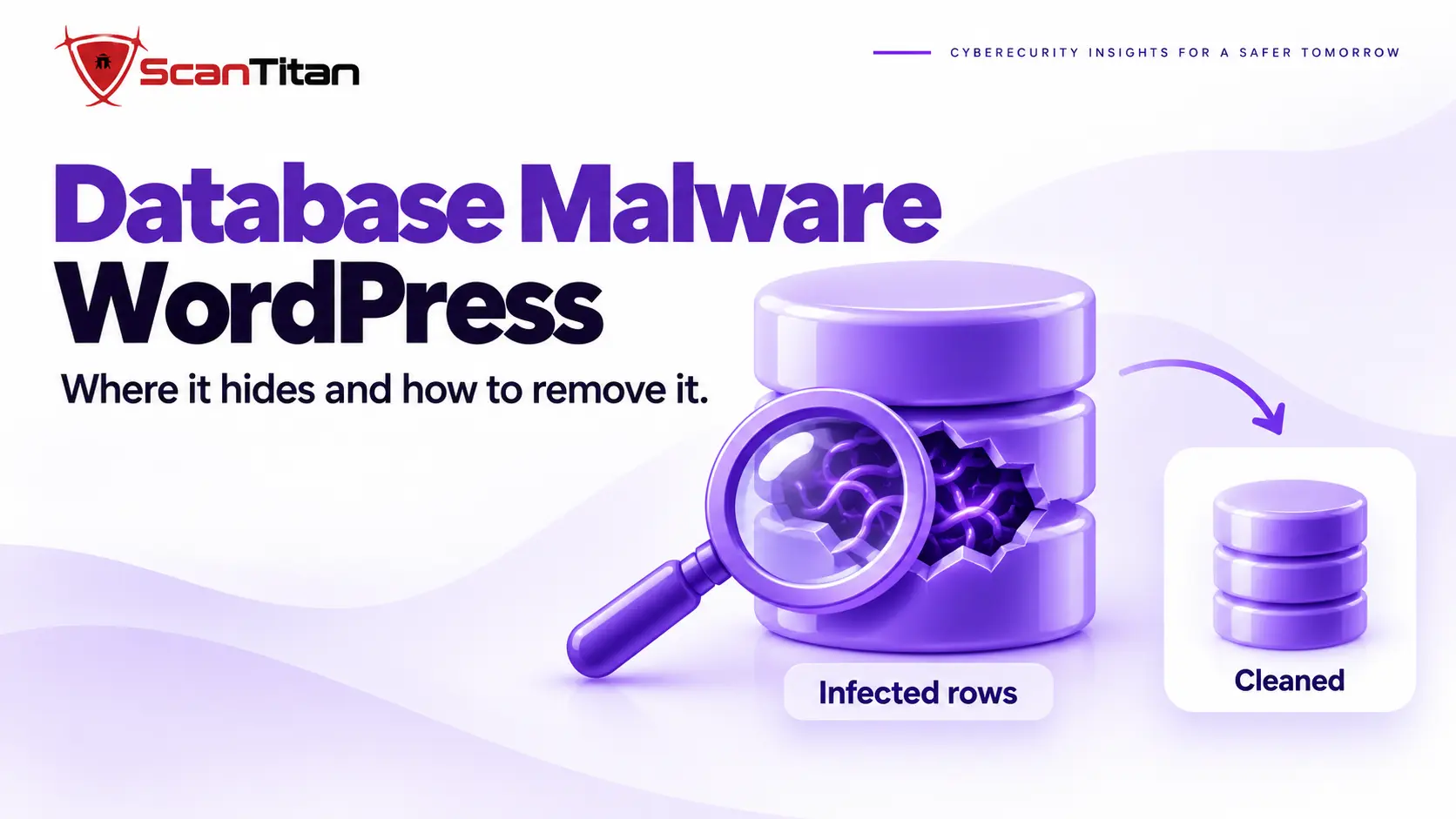
Database malware WordPress owners miss is malicious code, links or settings stored in database rows instead of files, which is why file scanners and file restores never catch it. It
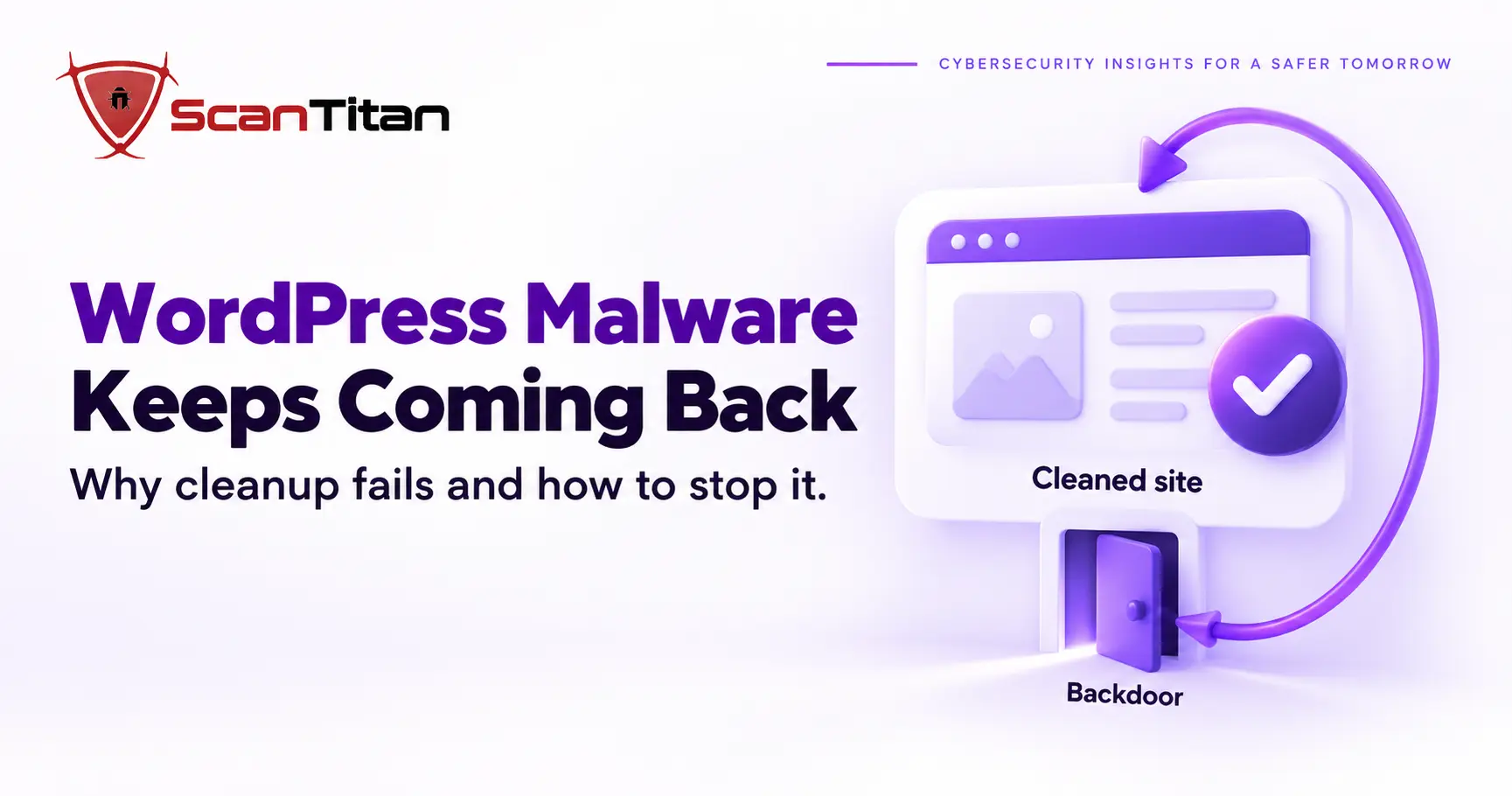
WordPress malware keeps coming back when cleanup removed what you could see and left the way back in. The usual causes are a surviving backdoor, a hidden admin user, a
Obfuscated PHP malware is malicious PHP code that an attacker has scrambled so scanners and site owners cannot read it at a glance. The scrambling uses encoding, string tricks and
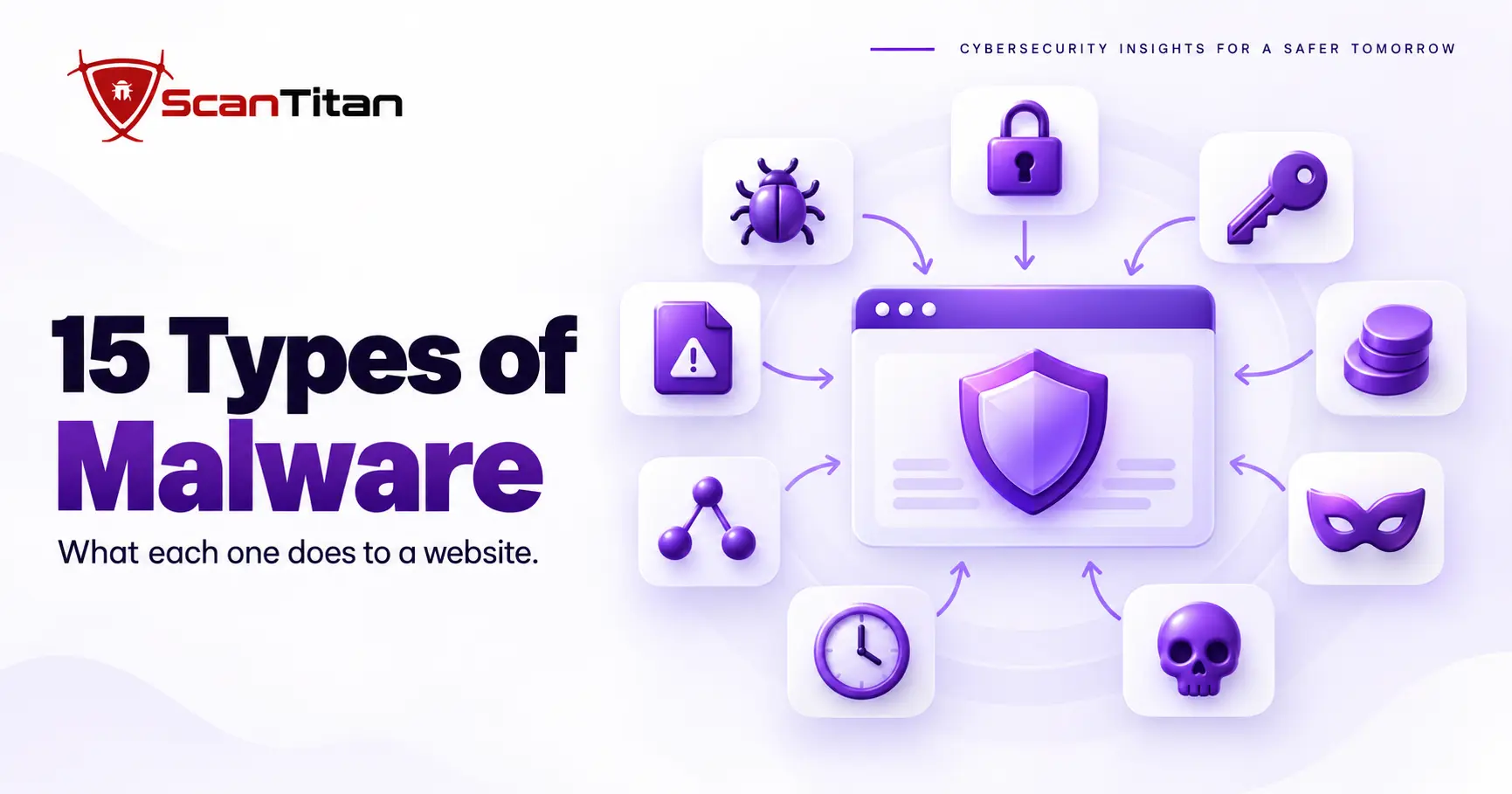
The 15 different types of malware below are the families every security guide names, and each one is explained from a site owner’s point of view: what it does to
A clean malware scan is a report that says the scanner found nothing it recognizes, and it is not proof that a site is clean. When a malware scanner says
A malicious redirect is code that sends visitors from your page to a spam, scam or malware site without their consent. It often fires only for some visitors, which is
The Japanese keyword hack is a form of SEO spam hack in which attackers inject thousands of auto-generated Japanese pages into a compromised website. It works by cloaking: Google and
A web shell is a server-side script that an attacker can use to maintain remote access to a compromised web server. Depending on its capabilities and the privileges of the
12+ years in information security. Specialises in web application security, vulnerability management, and external attack surface reduction for SMB and mid-market organisations.
New CVEs, practical guides, and scan methodology updates. One email per week. No sales pitch.
No spam. Unsubscribe any time. GDPR compliant.
Editorial standards: All ScanTitan blog content is reviewed by certified InfoSec professionals before publication. Technical claims are tested against live scan results or cited from primary sources (CVE database, OWASP, NIST NVD). We do not accept sponsored posts or paid placements.
Try a free scan
Run a free vulnerability scan on your domain. No account required.